How Does the Dental Crown Procedure Work?
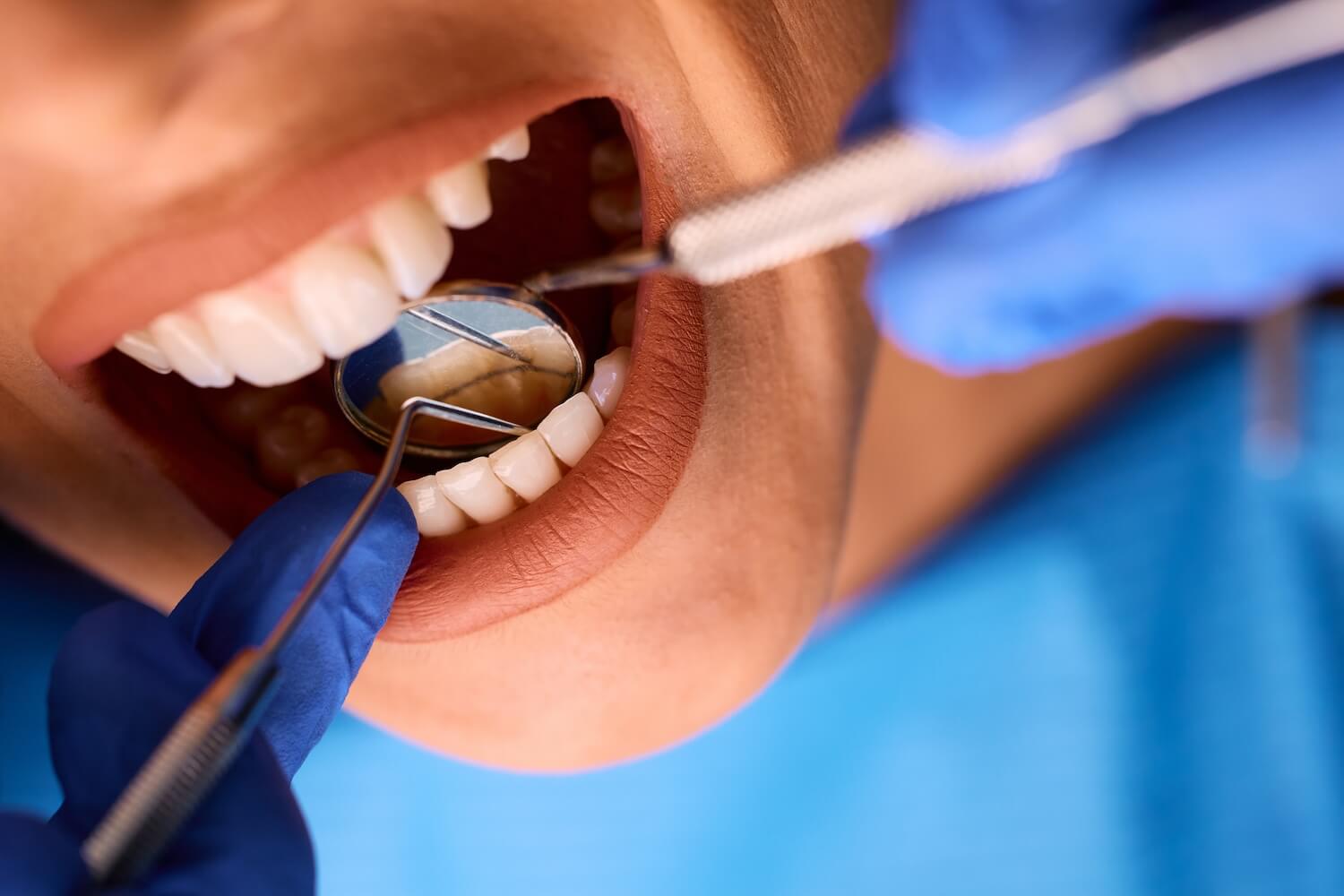
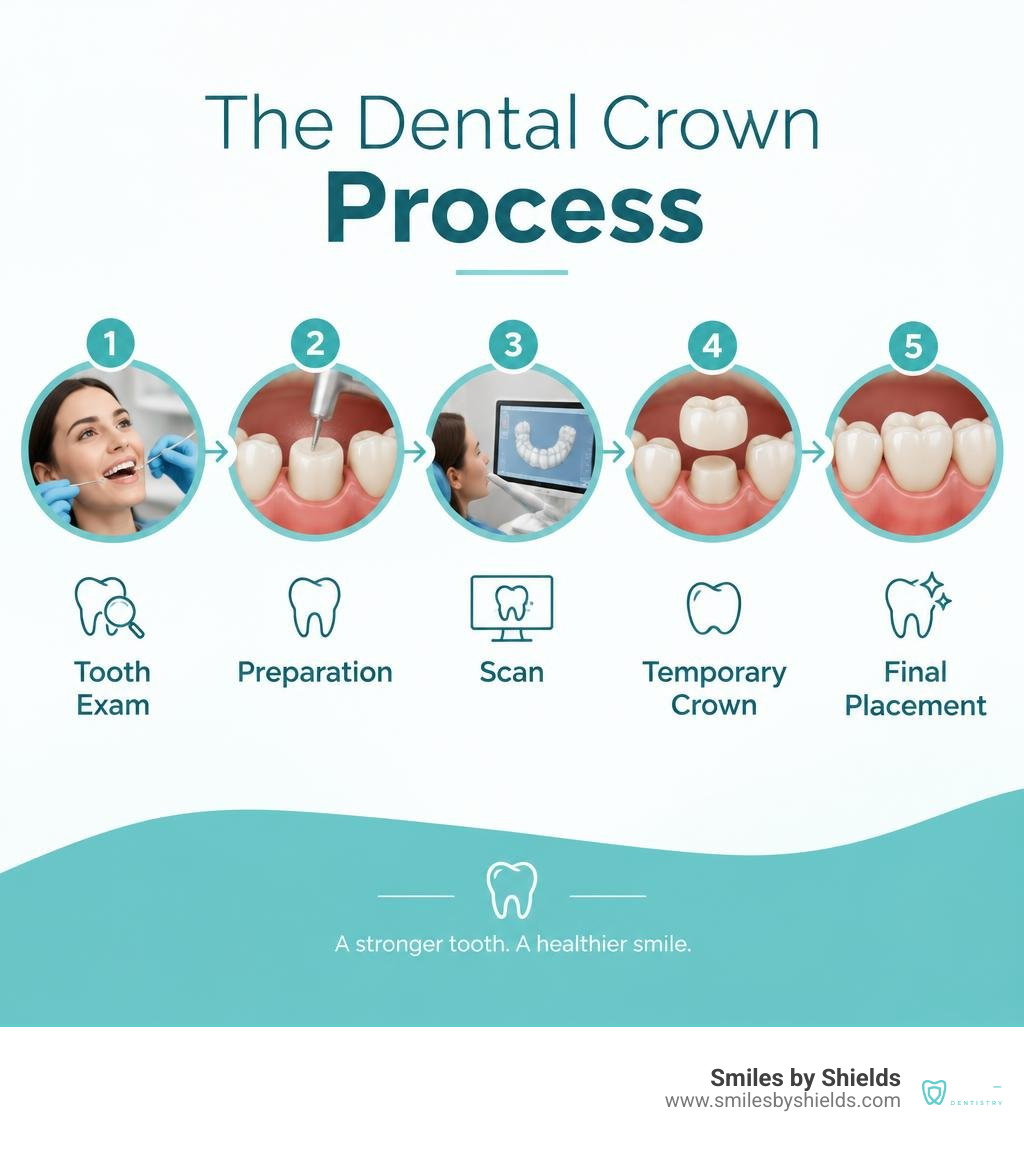
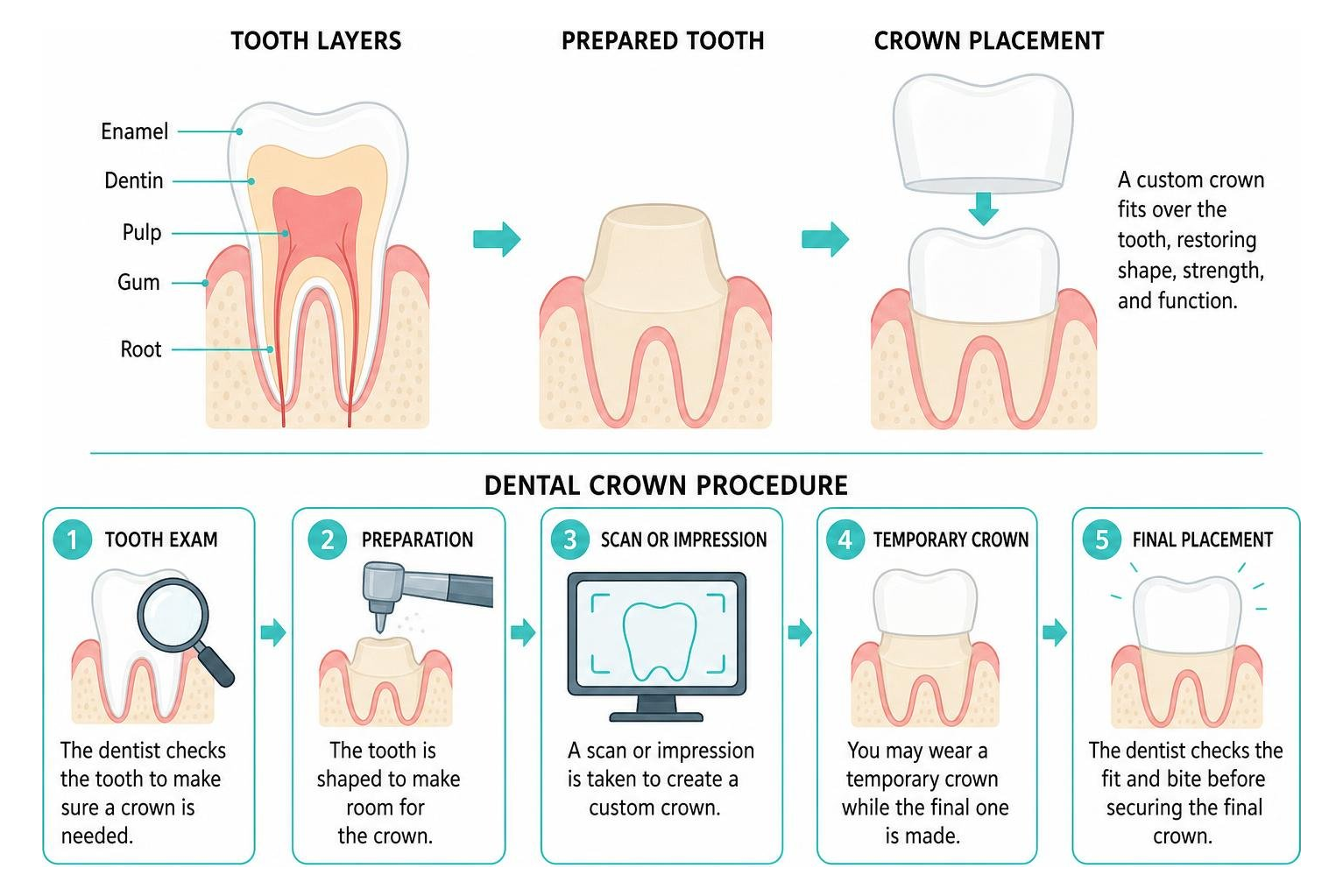
To crown teeth, a dentist first checks whether enough healthy tooth remains to support a crown. The tooth is then shaped, a scan or impression is taken, and a custom cap is made to fit over it. You may wear a temporary crown while the final one is made. At the last visit, the dentist checks the fit and bite before securing it.
A crown can help protect a weak or cracked tooth and restore its shape and chewing function. The right material and treatment plan depend on your tooth and your health goals.
I’m Dr. Tiffany K. Shields, owner and lead dentist of Smiles by Shields in Jacksonville. My dental training and whole-person approach guide how I help patients understand their options for crown teeth, starting with the steps shown below.
Crown teeth terms made easy:
What Are Dental Crowns and When Are They Necessary?
A dental crown—often referred to colloquially as a tooth cap—is a custom-crafted restoration that fits snugly over an entire prepared tooth. Think of it as a custom protective helmet for a compromised tooth. Underneath your visible enamel lies dentin, a porous layer composed of microscopic tubules leading directly to the dental pulp. While natural tooth enamel is the hardest substance in the human body (even harder than bone!), it is entirely acellular. Once damaged or worn away, enamel cannot regenerate.
When structural breakdown compromises your tooth, a full-coverage crown restores its original shape, aesthetic contour, and vertical dimension. This allows you to distribute normal masticatory forces evenly across your bite. By sealing the vulnerable inner layers of the tooth, a well-fitted crown provides complete structural reinforcement. For an overview of dental caps, understanding how they protect natural anatomy is the first step toward preserving long-term oral health.
Clinical Indications for Extensive Restoration
Not every decayed or chipped tooth requires a full crown. In biological and conservative dentistry, our goal is always to preserve as much healthy natural tooth structure as possible. However, specific clinical scenarios make full-coverage restorations essential:
- Extensive Decay: When dental caries consume more than half of a tooth’s physical structure, standard fillings cannot withstand normal chewing pressures without fracturing the remaining walls.
- Cracked Tooth Syndrome: Incomplete fractures or stress crazes can flex under biting pressure, triggering sharp pain and risking vertical root fractures. A crown bands the tooth together, preventing crack propagation.
- Severe Attrition and Acid Erosion: Habitual bruxism (teeth grinding) or systemic acid exposure can wear down enamel surfaces, collapsing bite height and compromising jaw alignment.
- Post-Endodontic Protection: Teeth that have undergone root canal therapy become inherently brittle over time due to the loss of internal vascularity and moisture. Studies indicate that post-root-canal premolars and molars restored with full crowns achieve an 88.6% functional survival rate after 7 years, with 75.1% remaining entirely free of structural complications. Knowing when to consider crowns can be the key difference in saving severely compromised teeth from eventual extraction.
Structural Differences: Natural Crown Teeth vs. Implant Crowns
While crowns placed over natural teeth and crowns placed on dental implants look identical above the gumline, their underlying biological mechanics are completely different.
- Natural Tooth Restorations: A natural tooth is anchored into the alveolar bone via the periodontal ligament (PDL). This specialized soft tissue functions as a natural shock absorber and contains mechanoreceptors that provide sensory feedback regarding chewing force. The crown is bonded directly to the prepared natural dentin and enamel core.
- Implant-Supported Restorations: When a natural tooth cannot be saved, restoring smiles with dental implants provides a permanent root replacement. An implant integrates directly with the surrounding jawbone via osseointegration, lacking a periodontal ligament. An abutment (typically made from ceramic zirconia or titanium) is screwed into the implant fixture, and the final custom crown is either cemented or screw-retained directly to that abutment.
Types of Materials Used to Crown Teeth
Selecting the appropriate material involves balancing physical durability, aesthetic harmony, and biological safety. Learning the essential facts about dental crowns allows you to choose an option tailored to your personal health needs and systemic wellness.
Biocompatible Ceramics and Zirconia Restorations
In holistic and integrative dental care, metal-free restorations are the gold standard. Modern dental ceramics seamlessly emulate natural enamel translucency while eliminating risks of galvanic toxicity, metal sensitivities, and gray lines at the gum margin.
- Monolithic Zirconia and Cubic Zirconia: Zirconium dioxide is an exceptionally durable ceramic known for its immense flexural strength. Monolithic zirconia restorations are virtually chip-proof, making them ideal for heavy chewers and posterior molars. Modern high-translucency cubic zirconia formulations blend strength with natural light-refraction properties, offering exceptional durability alongside aesthetic beauty. Explore the benefits of cubic zirconia crowns to see how modern ceramics hold up against heavy bite forces.
- Lithium Disilicate (E-Max): A glass-ceramic material that offers natural aesthetics and bonding capability. Because it chemically etches and bonds to natural enamel, it allows for conservative tooth preparation, making it a premier choice for anterior (front) and premolar teeth.
For patients with environmental illness, autoimmune conditions, or chemical sensitivities, we utilize dental biocompatibility testing to screen specific ceramic formulas, bonding agents, and cements against your blood serum prior to placement.
Traditional Metals, PFM, and Stainless Steel Options

- Porcelain-Fused-to-Metal (PFM): These restorations utilize a cast metal substructure layered with an outer shell of aesthetic porcelain. While historically common, PFM crowns can show a visible dark metal margin as gums recede over time and carry a risk of porcelain delamination under heavy chewing pressure.
- High-Noble Cast Gold: Cast gold alloys remain exceptionally wear-resistant and kind to opposing natural teeth. However, their bright metallic appearance limits their use primarily to second molars where cosmetic visibility is negligible.
- Stainless Steel Crowns (SSCs): Preformed metal shells are widely used in pediatric dentistry and occasionally as an interim measure for permanent molars affected by severe Molar-Incisor Hypomineralization (MIH). In specialized patient populations, stainless steel restorations achieve a 79.2% 10-year survival rate compared to 63.5% for amalgam. However, on permanent adult teeth, preformed metal margins exhibit adaptation discrepancies on radiographs in 37.5% of cases, making precision custom-milled ceramics the superior long-term choice.
| Crown Material | Primary Composition | Esthetic Quality | Mechanical Durability | Biocompatibility Profile | Typical Longevity |
|---|---|---|---|---|---|
| Monolithic Zirconia | Zirconium Dioxide Ceramic | High (Natural Shade Matching) | Exceptional (Bite-Resistant) | Non-Reactive & Tissue-Friendly | 15–30+ Years |
| Lithium Disilicate | Glass-Ceramic (E-Max) | Superior (Translucent Enamel) | High (Ideal for Anterior Teeth) | Excellent Tissue Integration | 10–20 Years |
| Porcelain-Fused-to-Metal | Feldspathic Porcelain on Metal | Moderate (Dark Margin Risk) | High Substructure / Fragile Veneer | Potential Metal Reactivity | 10–15 Years |
| Cast Gold Alloy | Gold, Platinum, Palladium | Metallic (Non-Esthetic) | Exceptional (Gentle on Opposing Enamel) | High (Noble Metal Stability) | 20–30+ Years |
| Stainless Steel | Nickel-Chrome-Iron Alloy | Metallic Silver | Moderate (Interim Restoration) | Variable (Potential Sensitivities) | 2–5 Years (Interim) |
Step-by-Step Dental Crown Procedure
Understanding the procedural stages eliminates anxiety and ensures realistic expectations during tooth crowning. A standard indirect crown restoration typically requires two comfortable visits spaced one to two weeks apart.
Preparing and Shaping Compromised Crown Teeth

The initial appointment focuses on removing active pathology, preparing the tooth foundation, and capturing precision measurements:
- Comfort and Anesthesia: The tooth and surrounding gingiva are thoroughly numbed using targeted local anesthesia. For anxious patients, holistic relaxation protocols ensure complete comfort.
- Caries Removal and Structural Cleanse: Any existing, deteriorating restorations and dental decay are removed. In biological dental practice, safe removal techniques prevent exposure to residual mercury vapors or bacterial debris.
- Core Build-Up: If substantial tooth volume is missing, a non-toxic composite resin build-up is bonded into the core to create a stable, retentive foundation.
- Precision Preparation: The outer circumference and chewing surface of the tooth are meticulously reduced by 1.0 to 1.5 millimeters. This precise tapering accommodates the thickness of the ceramic restoration without altering your natural bite.
- Digital Intraoral Scanning: Rather than messy, uncomfortable impression trays that can trigger gag reflexes, a high-definition 3D digital scanner captures millions of data points to generate a virtual 3D rendering of your tooth and jaw relationship.
Temporary Placement, Lab Fabrication, and Final Bonding
- Fabricating the Provisional Restoration: While our master ceramic dental laboratory mills your custom restoration, a durable temporary acrylic or composite crown is formed. This provisional cap protects the prepared dentin tubules from bacterial invasion and thermal sensitivity while preserving ideal tooth spacing.
- Laboratory Artistry: Master dental ceramists use CAD/CAM technology to mill or press your permanent crown, hand-staining and glazing the ceramic to match the shade, translucency, and natural surface character of your adjacent teeth.
- Delivery and Try-In: At your second visit, the temporary crown is gently removed and the natural tooth structure is cleaned. The permanent ceramic crown is seated to evaluate its contact points, marginal fit, color harmony, and occlusal alignment.
- Permanent Bonding and Bite Harmonization: Once fit and aesthetics are confirmed, the crown is permanently bonded using biocompatible resin cement. Your bite is checked with articulation film to ensure natural chewing alignment. If minor post-procedure temperature reactivity occurs, managing capped tooth sensitivity through simple dietary modifications can ensure rapid healing.
Longevity, Costs, and Alternatives to Full Crowns
Investing in restorative dentistry protects your systemic wellness, chewing ability, and cosmetic confidence. Our practice delivers comprehensive general dentistry crown and bridge solutions designed to last for decades with proper preventive care.
Factors Affecting Lifespan and Prevention of Failure
On average, high-quality dental crowns last between 10 and 15 years, with well-maintained ceramic and metal restorations routinely surviving 20 to 30 years.
- Marginal Adaptation: The microscopic junction where the crown meets your natural tooth root must fit within 120 microns. Gaps or overhangs collect biofilm, leading to secondary recurrent decay beneath the restoration.
- Periodontal Health: Periodontal complications account for 38.5% of restorative failures. Daily interdental cleaning prevents gum recession that could otherwise expose root dentin. Reviewing specific factors influencing crown lifespan helps you safeguard your dental restorations.
- Occlusal Trauma: Unmanaged nocturnal bruxism exerts extreme pressure on dental ceramics. Wearing a custom-fitted nightguard cushions restorations against stress fractures. Following essential crown maintenance and care tips keeps your smile healthy for years to come.
Evaluating Less Invasive Alternatives: Inlays, Onlays, and Veneers
Before committing to 360-degree tooth reduction, conservative dental alternatives should always be considered:
- Porcelain Onlays (“Partial Crowns”): When structural damage affects one or more cusps but leaves sound vertical walls intact, a bonded ceramic onlay restores strength without removing healthy tooth structure. Start by evaluating dental onlays to determine if partial coverage is the best solution for your tooth.
- Porcelain Veneers: For anterior teeth where the structural integrity is intact but cosmetic defects, intrinsic staining, or minor chips need correction, comparing veneers vs crowns helps you choose the right approach. Veneers require only minimal facial enamel preparation.
- Direct Composite Fillings: For small to moderate cavities with intact surrounding enamel, tooth-colored composite restorations preserve natural tooth structure. Comparing fillings versus full crowns ensures you receive the most conservative treatment possible.
Frequently Asked Questions About Dental Crowns
How long does a dental crown typically last?
A standard porcelain or ceramic crown typically lasts between 10 to 15 years, but with diligent oral hygiene, routine dental cleanings, and nightguard protection against teeth grinding, biocompatible zirconia and ceramic crowns can easily last 20 to 30 years or more.
What foods should be avoided with a temporary or permanent crown?
While wearing a temporary crown, avoid sticky, chewy items like chewing gum, taffy, and caramels, as well as very hard foods like raw carrots, hard pretzels, and ice. Once your permanent crown is bonded, you can resume normal eating, though you should avoid chewing on non-food items (like pen caps or fingernails) and crunching hard ice cubes to prevent chipping the porcelain.
What factors determine the overall cost of a dental crown?
The overall investment for a crown depends on the material selected (e.g., lithium disilicate, monolithic zirconia, or gold), the complexity of tooth preparation (including whether a core build-up or biological ozone disinfection is needed), and your specific dental insurance benefits.
Conclusion
Restoring a compromised tooth with a precision-crafted dental crown protects your teeth while supporting clear speech and efficient digestion. By choosing biocompatible, metal-free materials and conservative clinical techniques, you protect the crucial harmony between your oral health and total body wellness.
Understanding the profound understanding the mouth-body connection is at the heart of our practice philosophy. If you suspect you have a cracked, decayed, or weakened tooth, read our comprehensive guide to crowns or schedule a personalized consultation with Dr. Tiffany Shields at Smiles by Shields in Jacksonville, Florida. We look forward to helping you restore your vibrant, healthy smile!