Understanding Dental Crowns
When you hear the phrase getting teeth crowned, you are looking at one of dentistry’s most effective ways to preserve natural teeth that have suffered significant structural damage. A dental crown acts as a full-coverage protective shield fitted over the visible portion of a tooth above the gum line.
When a tooth develops a massive cavity, experiences a deep fracture, or undergoes endodontic therapy, its natural walls become thin and brittle. Normal daily biting forces can exert hundreds of pounds of pressure per square inch. Without reinforcement, a structurally compromised tooth is at high risk of breaking cleanly down to the root, which often leads to extraction.
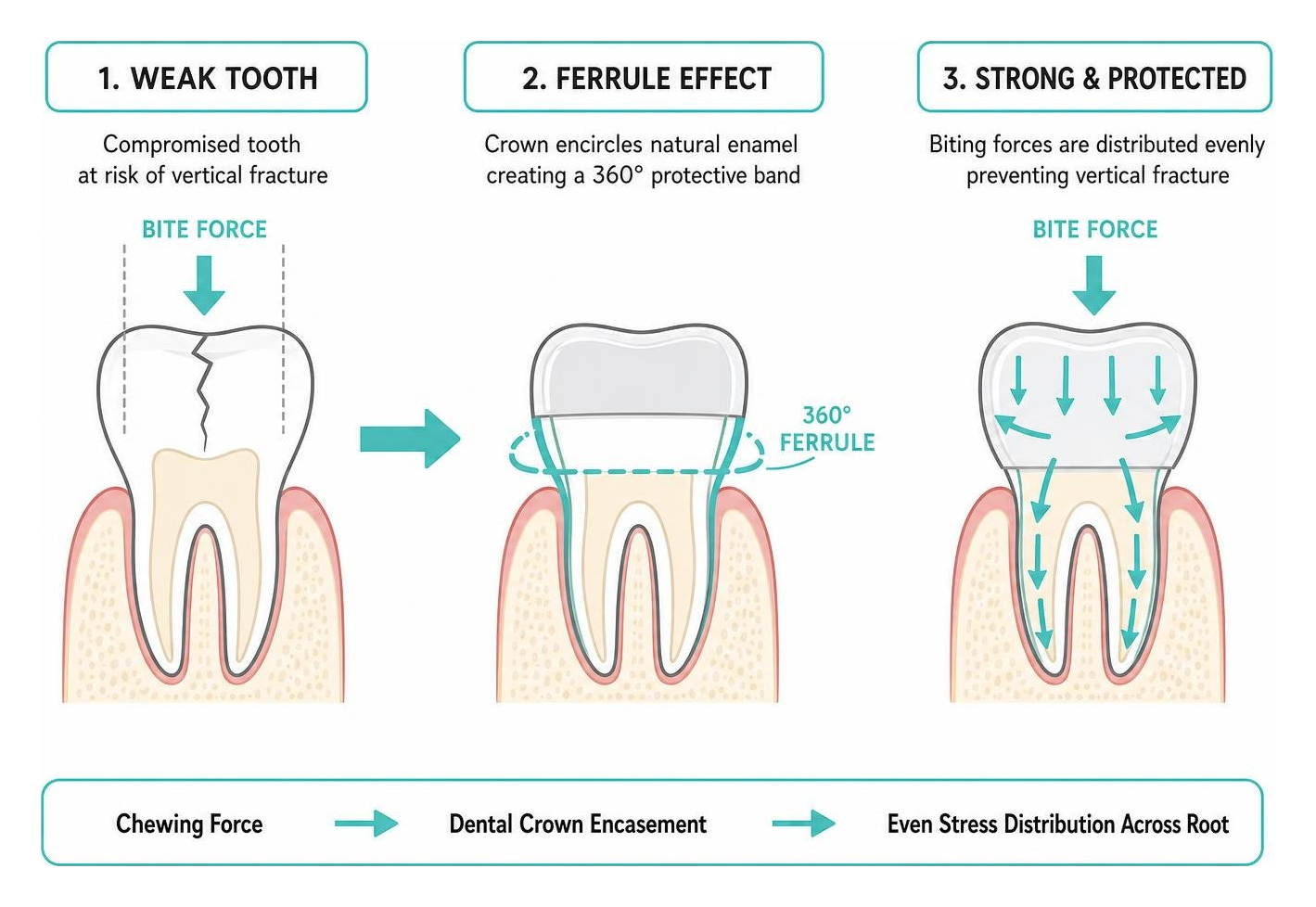
A crown solves this by encasing the tooth completely, creating what dentists call the ferrule effect. This 360-degree biological band wraps around the remaining natural tooth structure, redistributing biting pressure evenly across the root and jawbone. This prevents vertical fractures and allows you to chew comfortably.
Knowing when you should consider crowns is essential for preserving your oral health. Common indications include:
- Severe Tooth Decay: Cavities that take up more than half the width of a tooth leave too little healthy enamel to support a standard filling.
- Cracked Tooth Syndrome: Structural cracks that cause sharp twinges when biting down on bread crusts or nuts can be bound together with a custom cap before the crack reaches the nerve.
- Post-Root Canal Protection: Endodontic therapy removes the internal nerve and vital blood supply, drying out dentin and making the tooth brittle. A full-coverage restoration shields these fragile teeth from fracturing.
- Extensive Wear and Grinding: Chronic nocturnal bruxism (teeth grinding) or acid erosion can strip away protective enamel, wearing teeth down to sensitive nubs that require crowning to restore a proper bite balance and speech clarity.
- Dental Implant Restorations: When replacing a missing tooth, crowns are attached to implants, acting as the durable visible replacement tooth. You can read more about how dental implants can restore your smile after tooth loss.
Indications for Getting Teeth Crowned on Front vs. Back Teeth
The functional and cosmetic needs of your teeth depend significantly on where they sit in your mouth. Designing a crown for a front tooth requires a very different approach than crafting one for a back molar.
| Feature | Front Teeth (Anterior) | Back Teeth (Posterior) |
|---|---|---|
| Primary Focus | Aesthetics, light transmission, natural smile design | High strength, heavy masticatory bite force durability |
| Bite Load Demands | Shearing and cutting forces (30–70 lbs) | Heavy grinding and crushing forces (150–200+ lbs) |
| Material Choice | Lithium disilicate (E.max) or translucent all-ceramic | High-strength zirconia, monolithic ceramic, or gold alloy |
Front teeth sit squarely in the “aesthetic zone.” When crowning a front tooth, we pay meticulous attention to shade matching, surface texture, opalescence, and translucency so the crown reflects natural light just like neighboring natural enamel. For front teeth, materials like lithium disilicate (E.max) offer unmatched natural beauty. According to a systematic review in Dental Materials, all-ceramic single crowns on front teeth achieve an impressive 96.6% survival rate at five years.
Back teeth, on the other hand, are the powerhouses of your bite. Molars withstand immense daily crushing pressure. For back teeth, durability is paramount, making dense solid zirconia or biocompatible high-noble metals ideal for preventing chips and fractures over decades of heavy chewing.
Before placing a final crown over a tooth with very deep decay, we first assess the health of the dental pulp, which contains the tooth’s nerve and blood supply. When appropriate, we use vital pulp therapy with pulp capping, ozone, laser treatment, and homeopathics to support pulpal vitality and help reduce the need for a full root canal.
Crown Materials and Same-Day Technology Options
Selecting the ideal crown material involves balancing aesthetics, mechanical strength, and biological compatibility with your whole body. Modern dentistry offers several high-performance choices.
| Crown Material | Aesthetic Match | Longevity / Durability | Biological Compatibility & Biocompatibility | Best Used For |
|---|---|---|---|---|
| Lithium Disilicate (E.max) | Exceptional (5/5) — Chameleon translucency | High (4/5) — Excellent structural glass-ceramic | High — 100% metal-free, gentle on tissues | Front teeth, premolars, aesthetic restorations |
| Zirconia (Solid / Monolithic) | Very Good (4/5) — Modern high translucency options | Superior (5/5) — Extremely resistant to fracturing | Exceptional — Highly inert, tissue-friendly material | Back molars, bridge spans, night grinders |
| Porcelain-Fused-to-Metal (PFM) | Moderate (3/5) — Can show opaque base or grey line | High (4/5) — Strong metal core backbone | Moderate — Potential metal sensitivity or corrosion | Traditional crowns, posterior bridge work |
| Gold Alloys & High-Noble Metal | Low (1/5) — Distinct metallic appearance | Unrivaled (5/5+) — Can last 30+ years | Very High — Biocompatible noble metal profile | Unseen back molars, heavy bruxism cases |
To learn more about various material options, check out detailed guides on Teeth Cap: Costs, Procedure & Ceramic Teeth Caps as well as our What to Know About Dental Crowns resource.
Same-Day CAD/CAM Crowns vs. Traditional Lab Crowns
Modern dental technology gives patients choices when it comes to treatment speed and convenience.
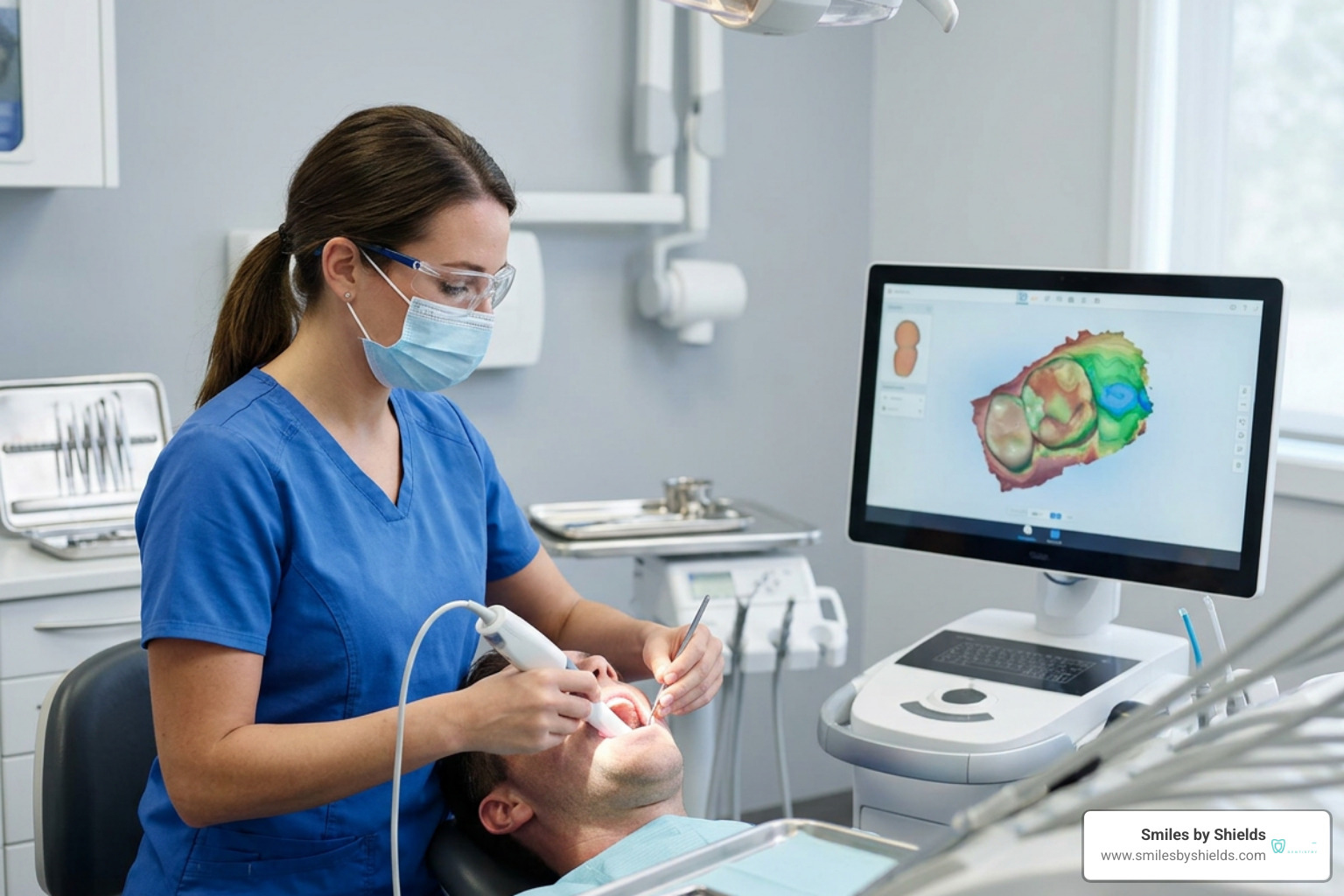
- Traditional Lab-Fabricated Crowns: Usually require two visits spaced about two to three weeks apart. During the first visit, the tooth is shaped, a digital scan or impression is taken, and a temporary crown is placed with temporary cement. The scan is sent to an off-site dental laboratory, where technicians create your custom restoration. At the second appointment, the temporary crown is removed, the fit and bite are checked, and the final crown is bonded.
- Same-Day CAD/CAM (CEREC) Technology: Also begins with a digital scan, but the design and fabrication happen in the office. Using 3D computer design and high-precision milling, your custom crown can often be made from a ceramic block during the same appointment. The best option depends on factors like tooth location, bite forces, esthetic goals, and the final crown material chosen. Your dentist will recommend the most appropriate approach for your case.
What to Expect During the Step-by-Step Process of Getting Teeth Crowned
Understanding what happens during a crown procedure helps ease anxiety. Here is the step-by-step process of getting teeth crowned:
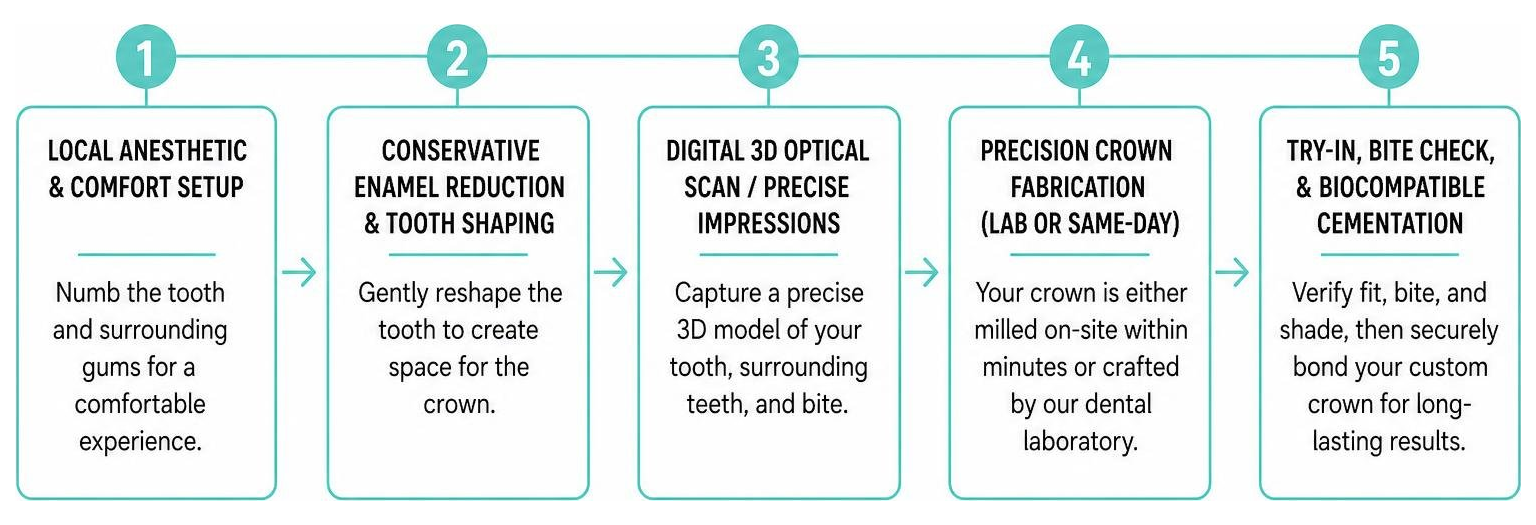
- Preparation and Numbing: We administer local anesthesia to completely numb the target tooth and surrounding gum tissue.
- Conservative Enamel Reduction: Using precise instruments, we gently reshape the outer enamel and dentin to create room for the crown to slide over top cleanly without feeling bulky.
- Taking Impressions or Digital Scans: Instead of messy traditional putty, a compact digital optical camera scans your prepared tooth, neighboring teeth, and bite alignment to create a precise 3D digital model.
- Fabrication: Depending on your personalized treatment plan, your crown is either milled on-site within minutes or sent to our trusted dental laboratory while you wear a protective temporary crown.
- Fitting and Permanent Cementation: Once ready, we try the custom crown on, evaluate contact points, ensure bite harmony, check shade matching under natural light, and securely bond it using non-toxic cements.
Reviewing a complete overview on What Is a Dental Cap for Teeth? A Complete Guide to Dental Caps for Teeth or reading through general insights on General Dentistry can offer additional peace of mind before your visit.
Dental Crowns vs. Alternatives: Veneers, Fillings, and Onlays
A dental crown is not the only way to repair a tooth. Depending on how much healthy tooth structure remains, a more conservative option may be appropriate.
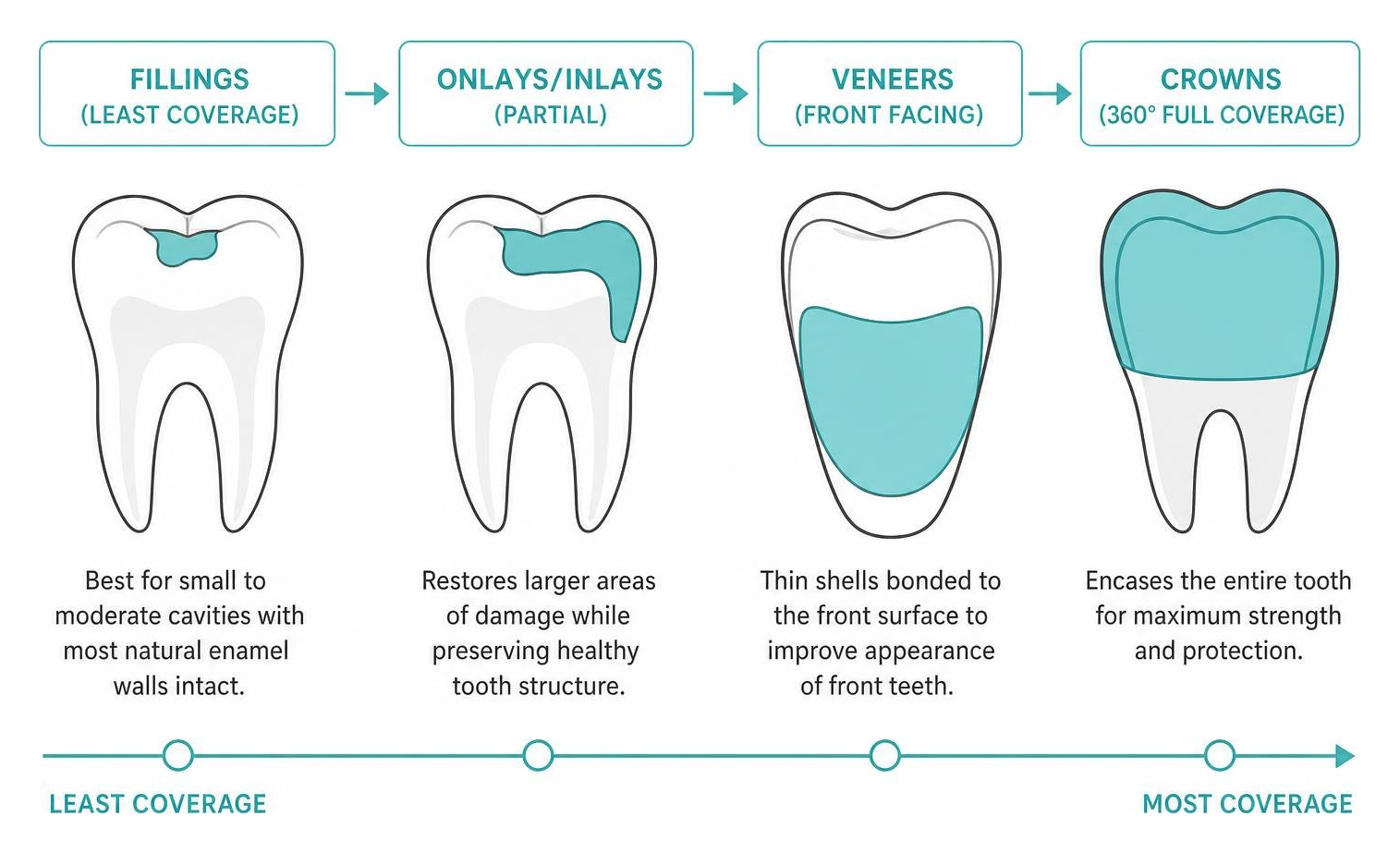
- Standard Dental Fillings: Ideal for small-to-moderate cavities where most natural enamel walls remain intact. However, filling a massive hole that spans over half the tooth can weaken the remaining structure, making a crown necessary.
- Porcelain Veneers: Wafer-thin ceramic shells bonded exclusively to the front surface of teeth in the smile zone. They are ideal for severe discoloration, gaps, or mild chips, but do not provide the structural reinforcement needed for heavy chewing molars or cracked teeth.
- Inlays and Onlays (Partial Crowns): Excellent conservative alternatives when a tooth has too much damage for a simple filling, but enough strong enamel to avoid a full 360-degree crown. An onlay preserves healthy natural cusps while rebuilding compromised chewing surfaces. Read more on whether Onlays Could Be Right for You or explore if Are Onlays an Option for your specific situation.
Costs, Recovery, Risks, and Long-Term Crown Care
Understanding financial costs, recovery timelines, and proper aftercare helps protect your new smile investment for decades.
Recovery Expectations and Potential Risks
- Temporary Discomfort: Localized gum tenderness for 24 to 48 hours following enamel preparation or tissue retraction is normal and resolves quickly.
- Temperature Sensitivity: Cold or hot sensitivity may linger for a few days to weeks after cementation. Using a gentle, natural desensitizing toothpaste helps soothe nerve endings.
- High Bite Spots: If your crown feels uneven when biting down after numbing wears off, contact your dentist for a minor polish adjustment to avoid ligament inflammation.
- Margin Decay Risk: While the ceramic or zirconia crown itself cannot decay, the underlying natural root edge at the gum line remains susceptible to secondary cavities if oral hygiene is neglected.
Longevity and Maintenance Best Practices
How long does a crown last? Extensive data published in General Dentistry shows short-term 5-year single-crown survival rates remain consistently above 90% to 95%. With meticulous daily home care, high-quality crowns routinely last 20 to 30+ years.
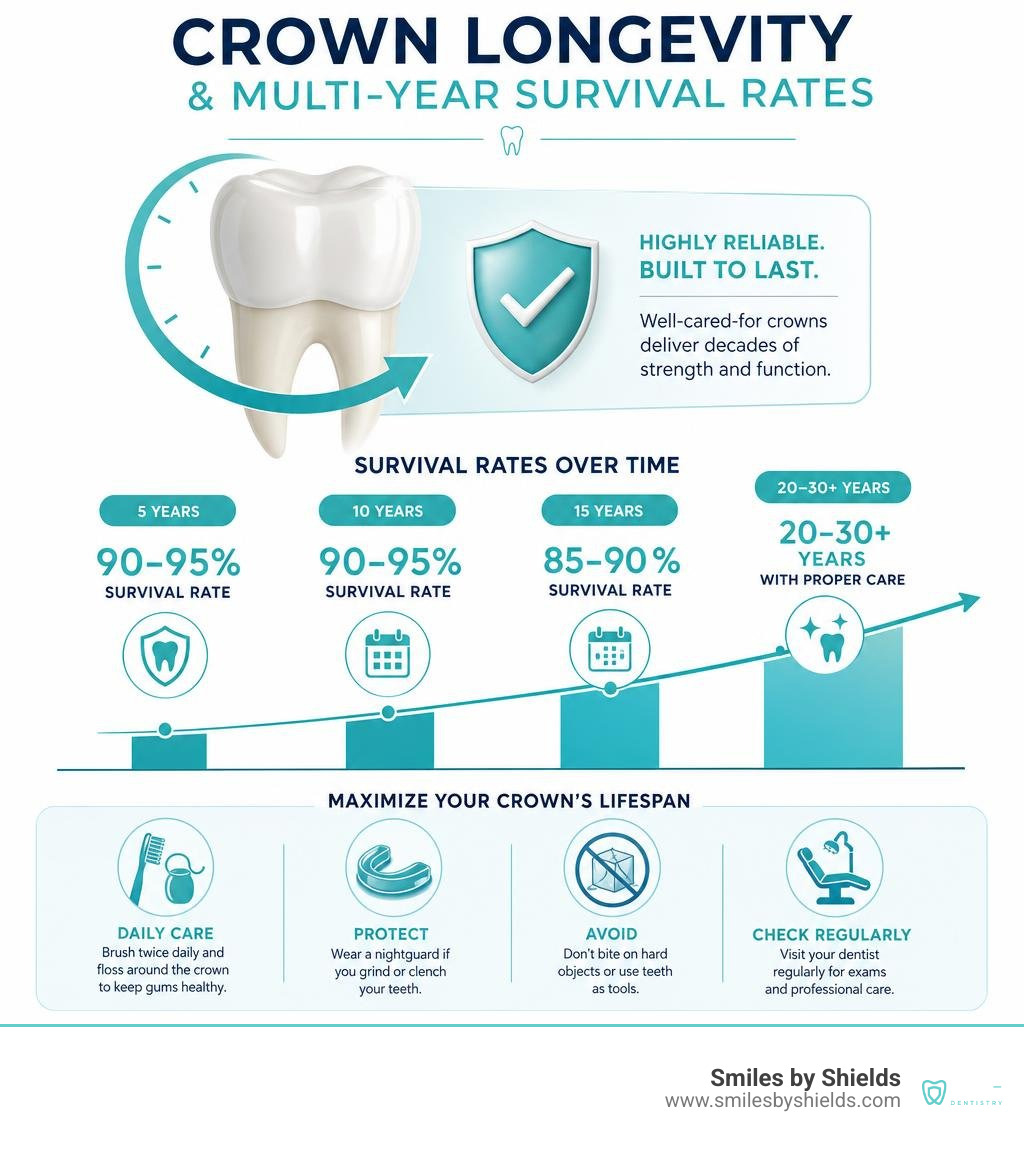
To maximize crown longevity:
- Daily Interdental Cleaning: Brush twice daily with a soft-bristled toothbrush and floss thoroughly around the base of the crown to keep gum margins free of plaque.
- Protect Against Nighttime Clenching: If you grind or clench your teeth, wear a custom nightguard to protect porcelain surfaces from extreme pressure.
- Avoid Unhealthy Habits: Avoid chewing ice cubes, opening plastic packages with your teeth, or biting on hard objects like pen caps.
- Schedule Routine Professional Care: Maintaining regular checkups ensures early detection of micro-leakage or bite shifts. Learn more about Understanding the Importance of Regular Dental Visits to keep your restorations in peak condition. For international context on material longevity, see this guide on Dental Caps: Materials, Fitting Process and Prices.
Frequently Asked Questions
How long do dental crowns usually last?
On average, a well-made dental crown lasts between 10 and 15 years. However, with meticulous home care, daily flossing around margins, and regular checkups, ceramic and zirconia restorations can last 20 to 30 years or more.
Is getting a tooth crowned painful?
No. The procedure is performed under effective local anesthesia, so the tooth stays numb during preparation and placement. Afterward, mild gum tenderness and temperature sensitivity can be normal for several days to a few weeks. Think of it as surgery on the tooth while it settles and heals.
Conclusion
Getting teeth crowned is a proven, reliable way to save cracked, weak, heavily decayed, or root-canal-treated teeth, preserving your natural smile and chew function. Whether you need a highly translucent ceramic crown for a front tooth or a high-strength zirconia restoration for a back molar, modern dental crown technology delivers natural beauty, strength, and durability.
At Smiles by Shields in Jacksonville, FL, we believe structural dental restoration should support your whole-body health. Our integrative, non-toxic approach uses biocompatible, metal-free materials designed to harmonize with your body’s natural system.
If you suspect you have a cracked or decaying tooth, schedule a consultation today to Explore Comprehensive Dental Crown Solutions and learn more about our whole-body approach to restorative dentistry. For additional details on our restorative options, visit our page on General Dentistry/Crowns and Bridges.