Why a Crown Is Sensitive to Cold
When crown is sensitive to cold, the crown itself is usually not the source of the pain. The living tooth, nerve, gumline, or root beneath and around it may be reacting to temperature changes.
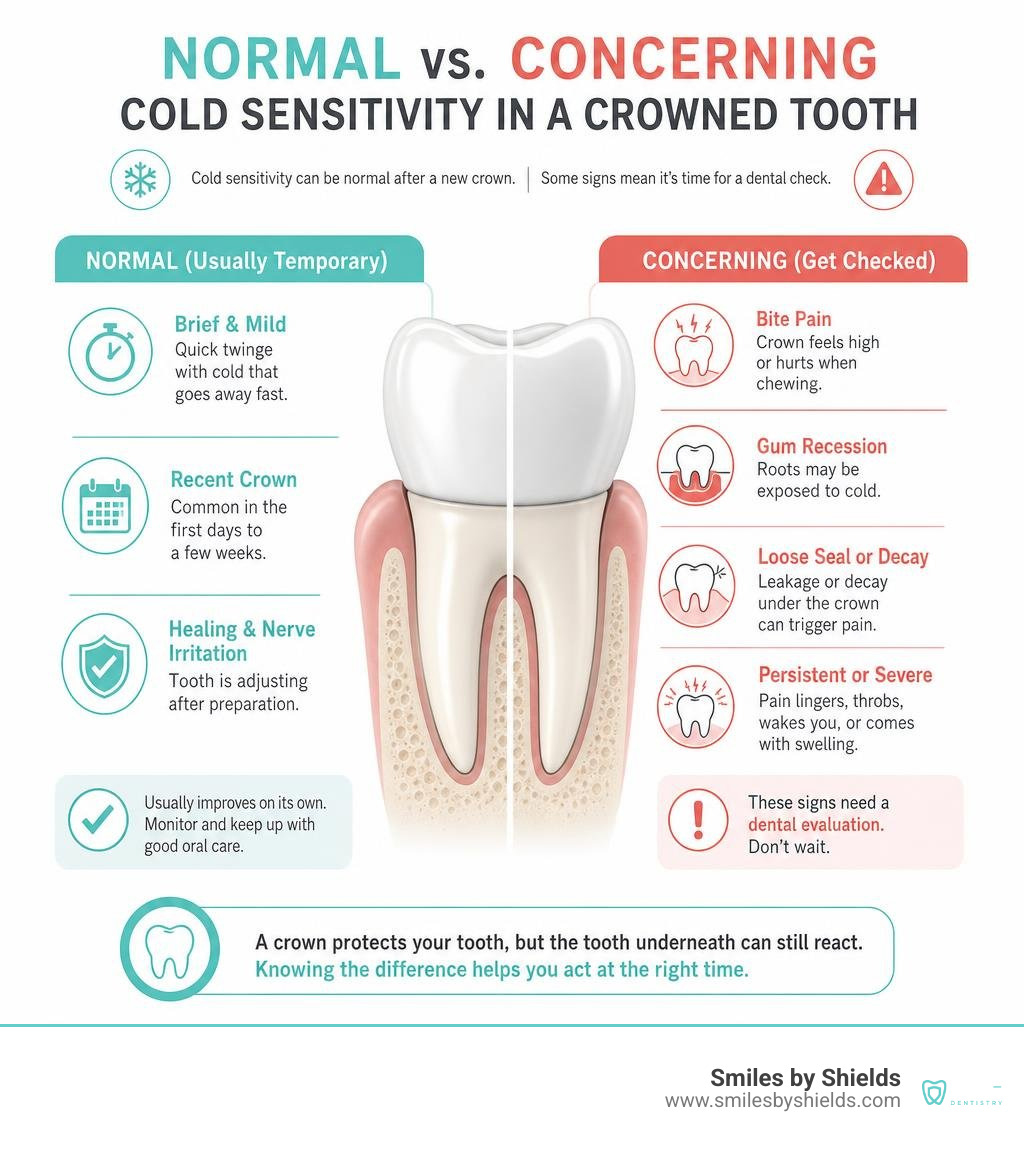
A brief cold twinge can be common after a new crown. Preparing a tooth for a crown removes some enamel and can irritate the nerve for a short time. Most mild sensitivity improves within days to a few weeks.
But cold sensitivity that starts suddenly in an older crown, gets worse, or lingers after the cold drink is gone deserves a dental check. Common reasons include gum recession that exposes the root, a crown that hits too hard when you bite, a weakened seal at the crown edge, or decay affecting the natural tooth under the crown.
| What you notice | What it may mean |
|---|---|
| Quick, mild pain with cold after a new crown | Often normal healing and nerve irritation |
| Crown feels high or hurts when chewing | Bite pressure may be stressing the tooth |
| Sensitivity begins years after placement | Gum recession, leakage, decay, or nerve changes may be involved |
| Pain lingers, throbs, wakes you, or comes with swelling | Prompt dental evaluation is important |
A crown can protect a damaged tooth, but it cannot make the tooth underneath immune to change. This guide explains what may be happening, what is normal, and when sensitivity needs professional care.
Primary Causes: Why Your Crown Is Sensitive to Cold
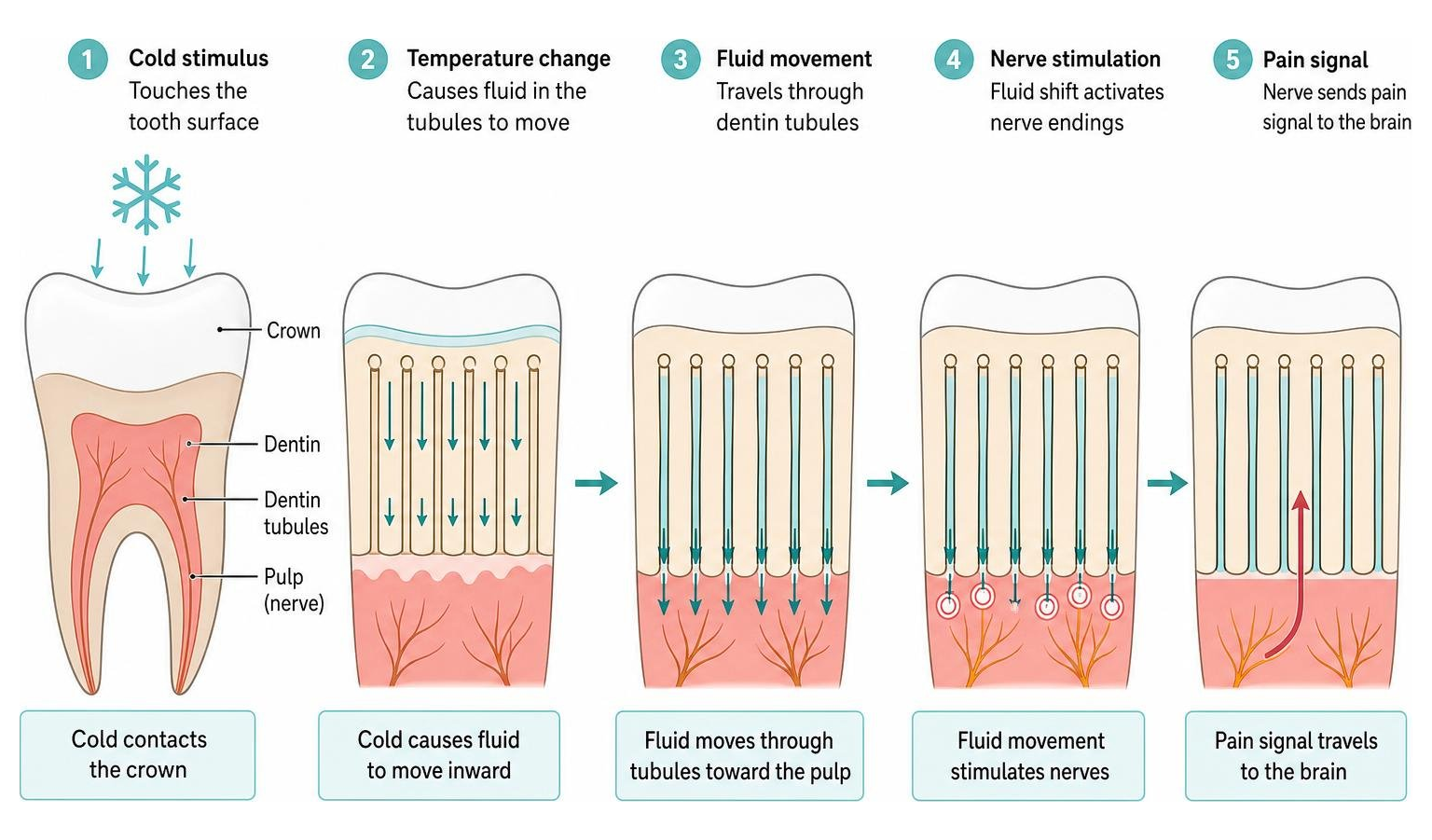
Understanding why a capped tooth reacts to thermal shifts starts with tooth anatomy. Before a crown is seated, we must shape the natural enamel to ensure a precise, protective fit. Enamel acts as your tooth’s hard, insulating outer shell. Stripping away part of that armor exposes dentin—the softer layer beneath that contains millions of microscopic, fluid-filled channels known as dentinal tubules.
These tubules connect directly to the dental pulp, the internal chamber containing nerve fibers and blood vessels. Did you know that general dentin hypersensitivity affects 15% to 20% of the population, but jumps to roughly 57% after a dental procedure? That is because removing enamel and setting a restoration temporarily changes internal fluid pressure within those tubules, putting the nerve on high alert.
Here are the primary biological and mechanical reasons a crowned tooth triggers a pain response when exposed to cold water, ice cream, or chilly air:
- Exposed Dentin and Microscopic Tubules: If the crown margin (where the ceramic meets the natural tooth near the gumline) leaves exposed dentin, cold drinks cause rapid fluid movement inside the tubules, shocking the nerve.
- Recent Procedure Trauma: Preparing a tooth generates friction and pressure. Even with cooling water sprays, the internal pulp experiences mild, temporary inflammation.
- Dental Cement Reactions: As setting agents cure, chemical or pressure changes across dentinal tubules can cause localized nerve hyper-reactivity for several days.
- Thermal Conductivity: While ceramic and porcelain crowns offer superb thermal insulation, traditional metal-based crowns transfer cold and hot temperatures faster into the tooth root.
- Pre-Existing tooth sensitivity: Teeth that already had large fillings or deep fractures prior to crowning often start with a more reactive nerve.
To help you distinguish between routine postoperative discomfort and a condition requiring clinical care, review the comparison below:
| Symptom Feature | Temporary Post-Op Sensitivity | Serious Nerve Condition (e.g., Irreversible Pulpitis) |
|---|---|---|
| Pain Duration | Lasts 1 to 5 seconds after stimulus leaves | Lingers for 30+ seconds or throbs continuously |
| Trigger | Triggered only by direct contact with cold | Occurs spontaneously, waking you from sleep |
| Bite Comfort | Normal biting pressure, no localized soreness | Sharp pain when chewing or releasing pressure |
| Tissue Appearance | Gums look pink, clean, and normal | Swollen, red, or tender gum tissue near root |
| Progression | Gradually diminishes over 1 to 3 weeks | Worsens over time or shifts from cold to heat sensitivity |
What to Do When an Older Crown Is Sensitive to Cold Years Later
It can be baffling when a crown that served you comfortably for 5, 7, or 10 years suddenly reacts sharply to a cold drink. When an older crown becomes sensitive, it usually means an underlying structural shift has occurred beneath or around the restoration.
As we age, naturally changing oral conditions affect how our restorations perform. You can read more about these natural transformations in our guide on aging and your smile. When late-onset cold sensitivity pops up, three main factors are usually responsible:
- Recurrent Micro-Leakage and Decay: While ceramic and gold crowns cannot decay, the natural tooth structure underneath them remains vulnerable. Over years of chewing, microscopic gaps can open along the crown margin. Oral bacteria invade these tiny crevices, eating away at natural dentin. This secondary decay exposes fresh tubules or allows temperature changes to reach deep internal tooth structures.
- Gum Recession and Exposed Root Surfaces: Gums naturally recede over time due to mechanical brushing, wear, or periodontal shifts. When the gum margin pulls back, it uncovers the natural root surface below the crown edge. Tooth roots lack protective enamel; they consist of exposed, highly sensitive dentin that flashes with sharp pain upon contact with cold liquids.
- Internal Nerve Degeneration: A tooth that underwent extensive work years ago may slowly suffer nerve degradation. Slow-burning inflammation can persist silently for years until the pulp finally enters an acute state of distress.
Signs That Your Crown Is Sensitive to Cold Due to High Bite Alignment
A frequent cause of persistent post-crown pain is malocclusion—commonly called a “high bite.” Human teeth are remarkably perceptive; your periodontal ligament (the shock-absorbing tissue anchoring your tooth root to the jawbone) can detect height discrepancies as thin as a single strand of hair!
If a new crown sits even a fraction of a millimeter too high, it contacts the opposing tooth before the rest of your mouth closes properly. Every time you swallow, chew, or clench, that single tooth absorbs excessive force.
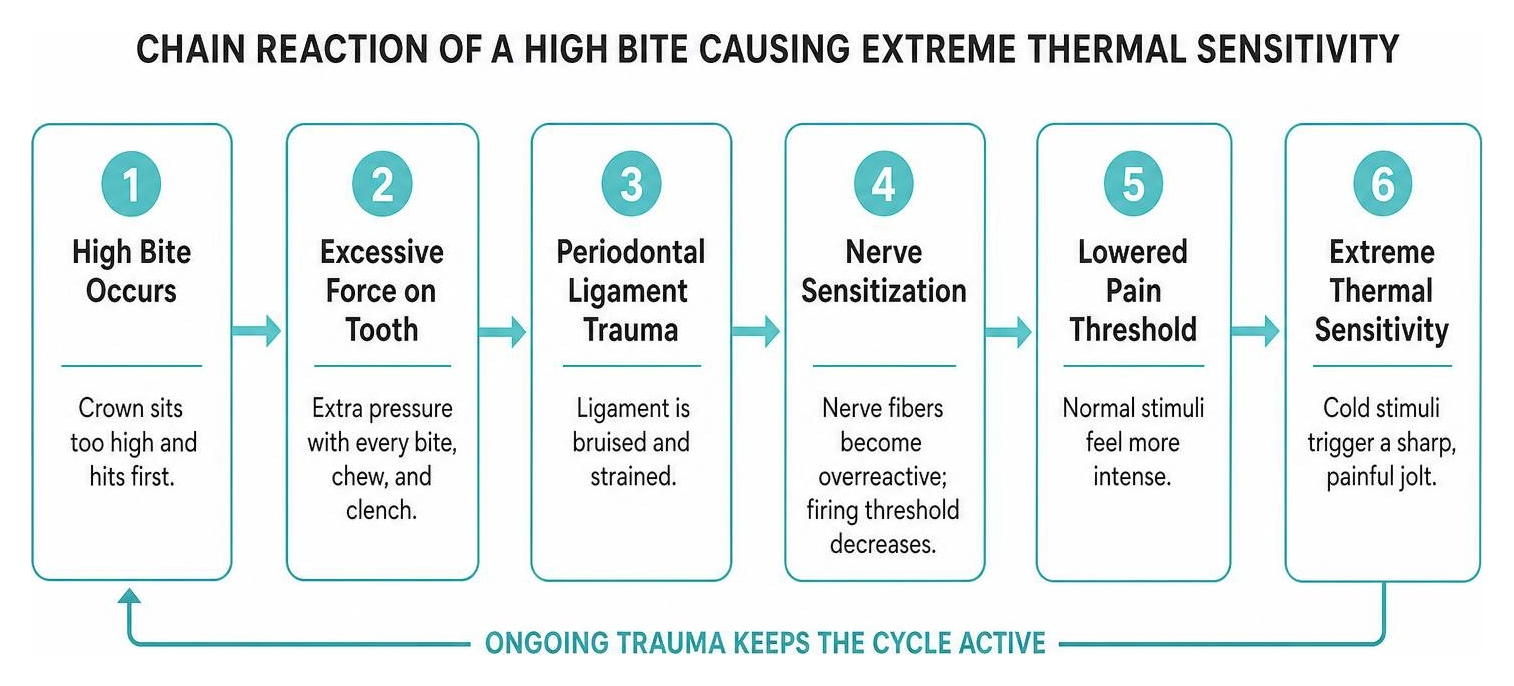
How does a high bite make a tooth cold-sensitive? Constant traumatic occlusion bruises the periodontal ligament and strains the nerve fibers entering the tip of the tooth root. This persistent mechanical trauma lowers the nerve’s firing threshold. As a result, stimuli that would normally feel fine—like a glass of iced tea—suddenly provoke a sharp, painful jolt.
Key signs that your cold sensitivity stems from high bite alignment include:
- You feel the crowned tooth hitting first whenever your back teeth come together.
- The tooth feels sore or tender to bite down on, especially in the morning.
- You have a history of night grinding (bruxism) or jaw muscle tightness.
- Cold sensitivity gets worse after eating meals that require heavy chewing.
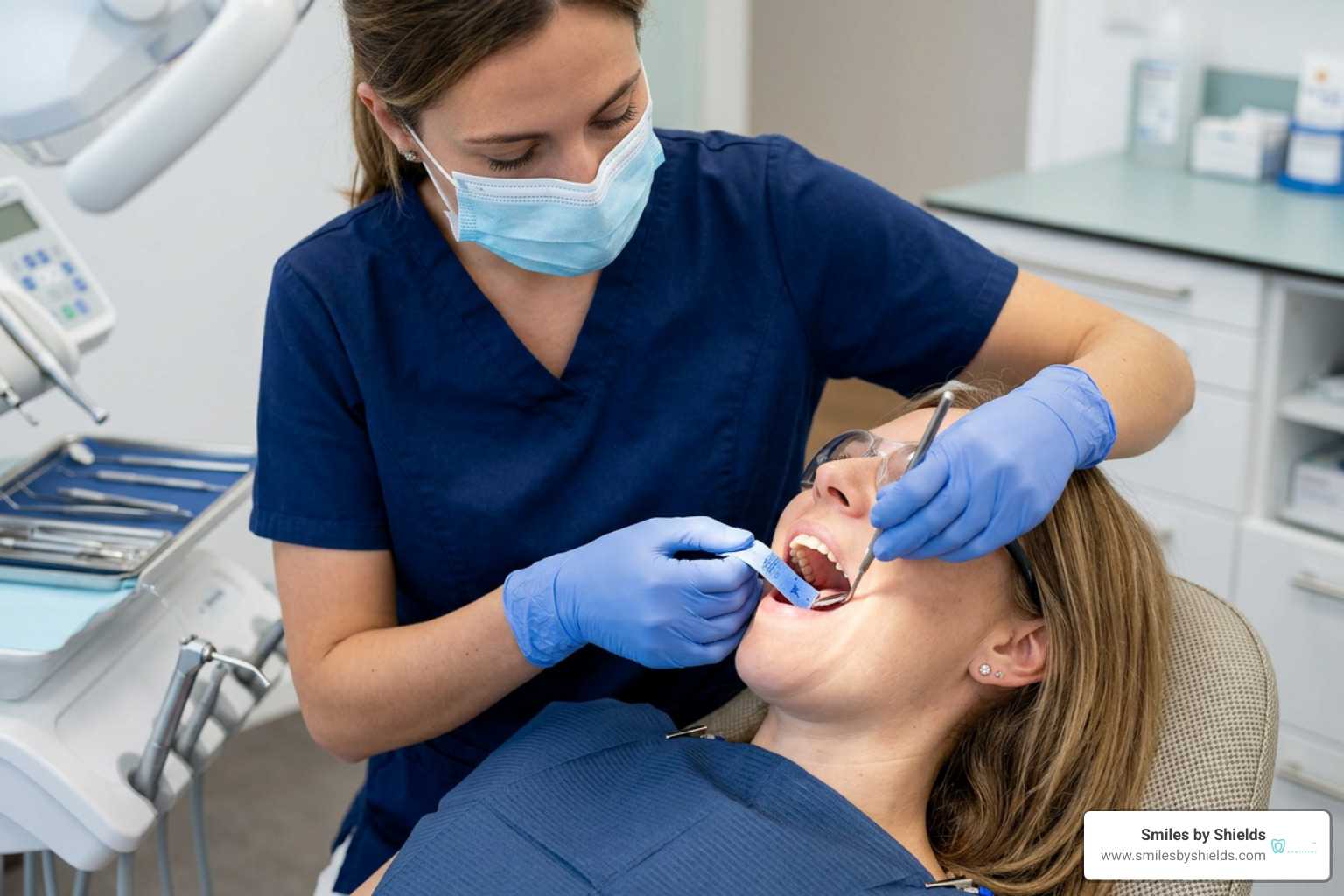
A quick, painless occlusal adjustment—where we polish away microscopic high spots using articulating paper—can relieve this ligament stress and allow the nerve to recover.
Understanding the Timeline of Tooth Crown Sensitivity
When you leave the dental chair with a permanent crown, your tooth begins an adaptation period. Knowing what to expect during recovery helps ease anxiety and prevents unnecessary concern. You can also explore expert care advice in these Tips to Soothe Sensitive Teeth After a Crown to complement your healing process.
Most restorations last for many years when properly cared for. To learn more about crown durability, explore our complete overview on lifespan dental crowns.
Normal Post-Placement Recovery (1 to 6 Weeks)
For the vast majority of patients, cold sensitivity follows a predictable healing curve. During crown preparation, enamel removal and tissue manipulation create localized irritation. The living pulp needs time to calm down and generate secondary dentin—a natural insulating barrier the tooth builds internally to shield its nerve.
- Days 1 to 3: Mild to moderate sensitivity to cold and warm temperatures is very common. The surrounding gums may also feel tender from matrix bands or crown margins.
- Weeks 1 to 2: Cold flashes should shorten in duration, fading within 1 to 3 seconds after you stop drinking cold liquids. Biting comfort should steadily improve.
- Weeks 3 to 6: Sensitivity should fade to a distant memory as the pulp adapts to the crown’s seal and thermal insulation properties.
If your mild sensitivity gradually decreases week by week, your tooth is healing naturally.
When Sensitivity Signals Irreversible Nerve Inflammation
Sometimes, despite immaculate clinical placement, an overworked tooth nerve reaches a point of no return called irreversible pulpitis. This occurs when internal nerve tissue becomes hyper-inflamed and can no longer heal itself.
A critical red flag is lingering cold pain. If drinking ice water produces a sharp pain that hangs around for 30 seconds, a minute, or longer—or transforms into a deep, spontaneous throb—the nerve pulp is severely distressed. In clinical studies on Persistent Cold-Sensitivity in Root Canal Treated Teeth, ongoing thermal sensitivity often points to untreated canal branches, compromised marginal seals, or deep pulpal damage.
In these cases, ignoring symptoms will not make them disappear. Irreversible pulpitis can eventually lead to tissue necrosis or root end infection. An endodontic evaluation or gentle biological root canal treatment can remove the damaged internal tissue, clear bacterial inflammation, and save the original tooth structure beneath your custom crown.
Effective Home Remedies and Holistic Sensitivity Relief
While your tooth nerve settles, thoughtful home care can minimize discomfort and support overall tissue recovery. Modern biological dentistry highlights gentle care strategies that calm nerve endings while preserving a balanced oral microbiome.
To understand how active ingredients relieve nerve hyper-reactivity, explore recent treatment developments for sensitive teeth.
Here is a practical list of at-home sensitivity management strategies:
- Switch to Potassium Nitrate Toothpaste: Active compounds containing potassium nitrate penetrate dentin tubules to calm nerve impulses. Use it consistently twice daily for best results.
- Apply Remineralizing Hydroxyapatite: Toothpastes containing hydroxyapatite (HA) or milk-derived CPP-ACP help plug open dentin tubules with natural tooth minerals, blocking temperature shifts at the source.
- Nighttime Bedtime Paste Application: Dab a small spot of desensitizing or hydroxyapatite toothpaste directly along the gumline of the sensitive crown before sleeping—do not rinse it off.
- Adopt a Lukewarm Diet: Avoid temperature extremes for 48 to 72 hours. Choose warm or room-temperature water, soups, and teas instead of ice-cold beverages.
- Chew on the Unaffected Side: Temporarily shift heavy chewing to the opposite side of your mouth to prevent pressure on irritated root ligaments.
- Avoid Osmotic Triggers: Highly acidic citrus juice, soda, and concentrated sweets draw fluid rapidly through open dentin tubules, triggering thermal-like nerve shocks.
Gentle Hygiene Habits Around Capped Teeth
Protecting a crowned tooth requires effective daily oral hygiene that respects delicate gum tissues. Scrubbing aggressively with hard bristles can accelerate gum recession, exposing sensitive roots beneath crown margins.
Maintain your restoration with these gentle techniques:
- Use an ultra-soft electric brush head or soft manual toothbrush. Hold the brush at a 45-degree angle toward the gumline and execute small, circular strokes.
- Floss with care around crown margins. Instead of snapping floss upward against the crown contact (which can irritate tissues or loosen temporary seals), glide the floss between teeth, curve it around the root in a “C” shape, and gently pull it out sideways.
- Choose non-abrasive, low-RDA (Relative Dentin Abrasivity) toothpastes to prevent enamel and dentin scratching over time.
For additional guidance on caring for your restorations, check out the art of crown and bridge maintenance tips for prolonging their lifespan.
Soothing Inflammation with Biocompatible Options
At Smiles by Shields in Jacksonville, Florida, our holistic dentistry philosophy focuses on soothing dental discomfort using non-toxic solutions that work in harmony with your body:
- Medical-Grade Ozone Therapy: In-office ozone gas and ozonated water applications sterilize exposed dentin margins, eliminate lingering bacteria, and stimulate cellular oxygenation to encourage root healing.
- Soothing Natural Rinses: Alcohol-free botanical rinses with aloe vera, calendula, or chamomile soothe tender gum tissue around new crowns without disrupting beneficial oral bacteria.
- Homeopathic Relief: Natural remedies like Hypericum perforatum are often used in holistic practice to relieve nerve-related dental discomfort, while Arnica montana helps soothe surrounding soft tissue swelling.
Professional Dental Treatments for Temperature Sensitivity
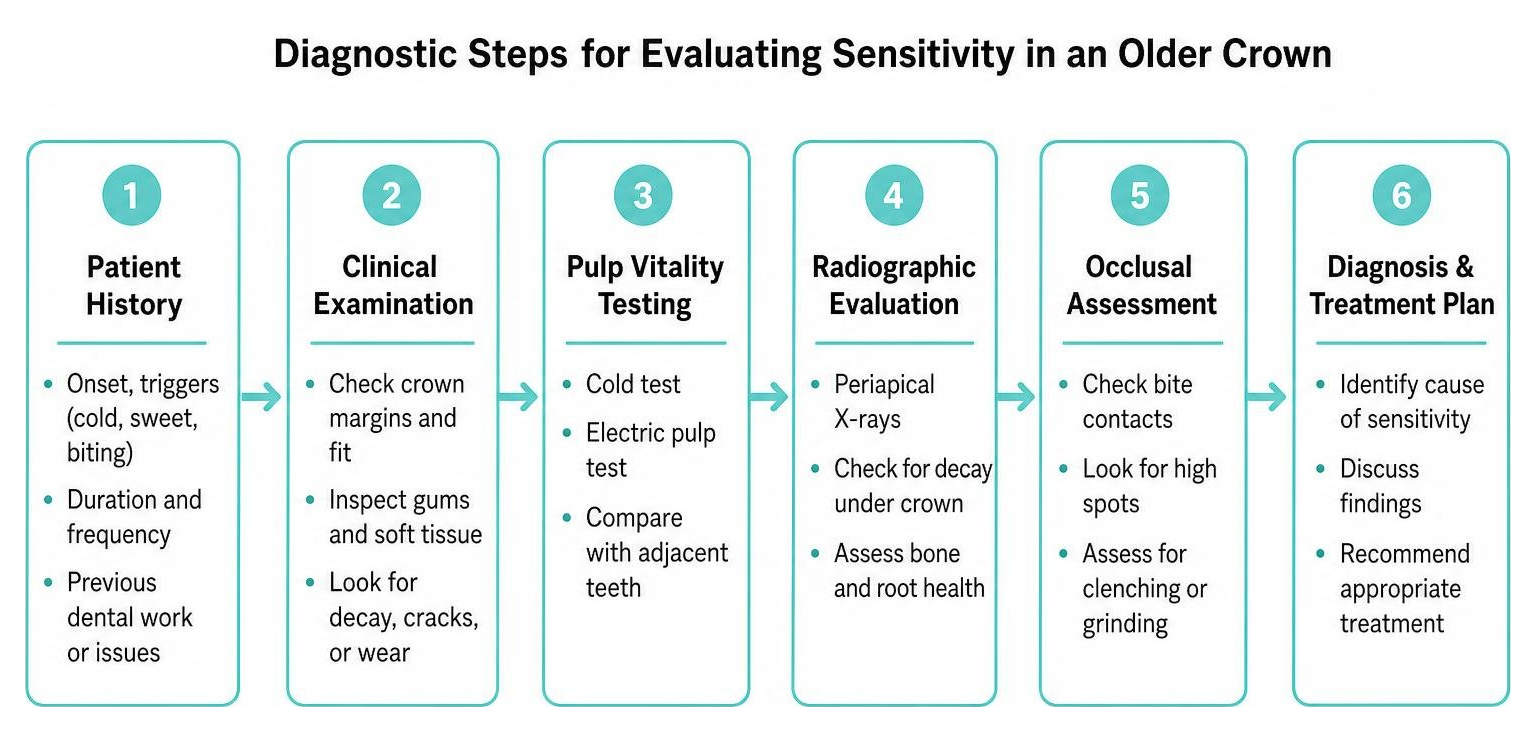
When home care is not enough, professional dental evaluation is the safest way to address ongoing cold sensitivity. During an in-office exam, we thoroughly evaluate your crown fit, check marginal integrity, take digital X-rays, and test nerve vitality.
To learn more about restoration options and design, read our comprehensive resource on what to know about dental crowns.
Margin Repairs and Decay Remediation
If diagnostic imaging reveals a leaking crown seal or recurrent decay underneath, prompt treatment prevents deeper tooth damage.
When caught early, minor marginal exposure can sometimes be smoothed, sealed, or repaired with biocompatible restorative materials. However, if decay extends deep beneath the crown body, removing the old restoration, clearing infected dentin, and fabricating a new custom crown is necessary. If you are wondering whether a minor flaw requires a touch-up or a total replacement, our guide on when do you need a filling vs a crown understanding the difference offers helpful insights.
Occlusal Balancing and Night Guard Therapy
If bite pressure is driving your cold sensitivity, professional occlusal balancing provides fast relief. Using digital bite registration, we identify exact spots where the crown contacts opposing teeth too hard. Gently polishing these microscopic high spots takes stress off the periodontal ligament, allowing the nerve to recover.
If you clench or grind your teeth while sleeping, custom night guard therapy provides essential relief. A custom guard cushions your teeth, evenly distributes jaw forces, and protects your crowns from heavy bite pressure.
Frequently Asked Questions About Crown Sensitivity
How long should cold sensitivity last after getting a new crown?
Mild cold sensitivity typically lasts between a few days and two weeks after a permanent crown is placed. As the tooth nerve recovers from enamel reduction and cementation, discomfort should steadily lessen. If cold sensitivity persists beyond 4 to 6 weeks, or if it grows progressively worse, schedule a follow-up visit with your dentist to check bite alignment and marginal seals.
Can a crowned tooth develop a cavity underneath and react to cold?
Yes. While porcelain and ceramic crowns cannot decay, the natural tooth structure at the crown margin remains vulnerable. Over time, bacteria can enter micro-gaps along the seal, causing hidden decay on the natural tooth beneath. This secondary decay exposes sensitive dentin tubules and can irritate the pulp, causing sharp cold sensitivity years after placement.
When is cold sensitivity in a crown considered a dental emergency?
Cold sensitivity requires urgent dental care if it is accompanied by severe, lingering pain (lasting longer than 30 seconds after exposure), spontaneous throbbing that keeps you awake, visible facial swelling, gum abscesses (pus nodules), fever, or a loose crown. These symptoms often point to irreversible pulpitis or active infection that requires immediate attention.
Conclusion
A crowned tooth that reacts to cold is telling you that the living tissue beneath or around your restoration needs attention. Whether your sensitivity stems from recent placement, a high bite, exposed roots, or an aging seal, identifying the cause is key to restoring lasting comfort.
At Smiles by Shields in Jacksonville, Florida, our integrative, holistic approach focuses on preserving natural tooth structure, using biocompatible materials, and supporting whole-body wellness. If your crown is sensitive to cold or you want expert care tailored to your overall health, reach out to our warm team today. Explore our complete guide on all about crowns to learn how custom dental restorations can keep your smile strong, comfortable, and vibrant.