Can Ozone Therapy Help Stop Early Tooth Decay?
Ozone therapy for tooth decay may help disinfect early, non-cavitated cavities and support remineralization without drilling. It is not a replacement for fillings when a tooth has a hole, weakened structure, or deep decay. The best next step is a dental exam to determine whether the lesion can be monitored and remineralized or needs restorative care.
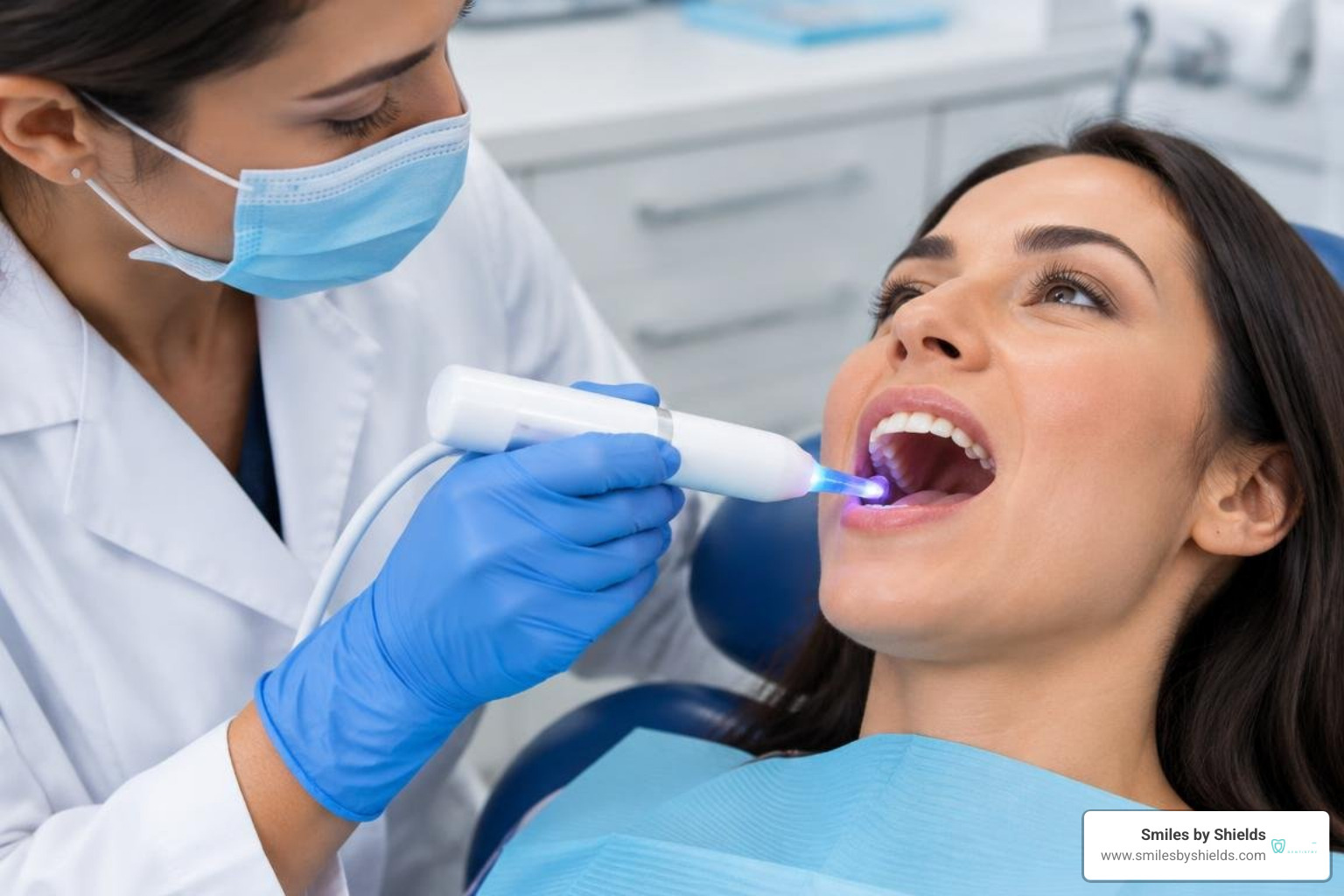
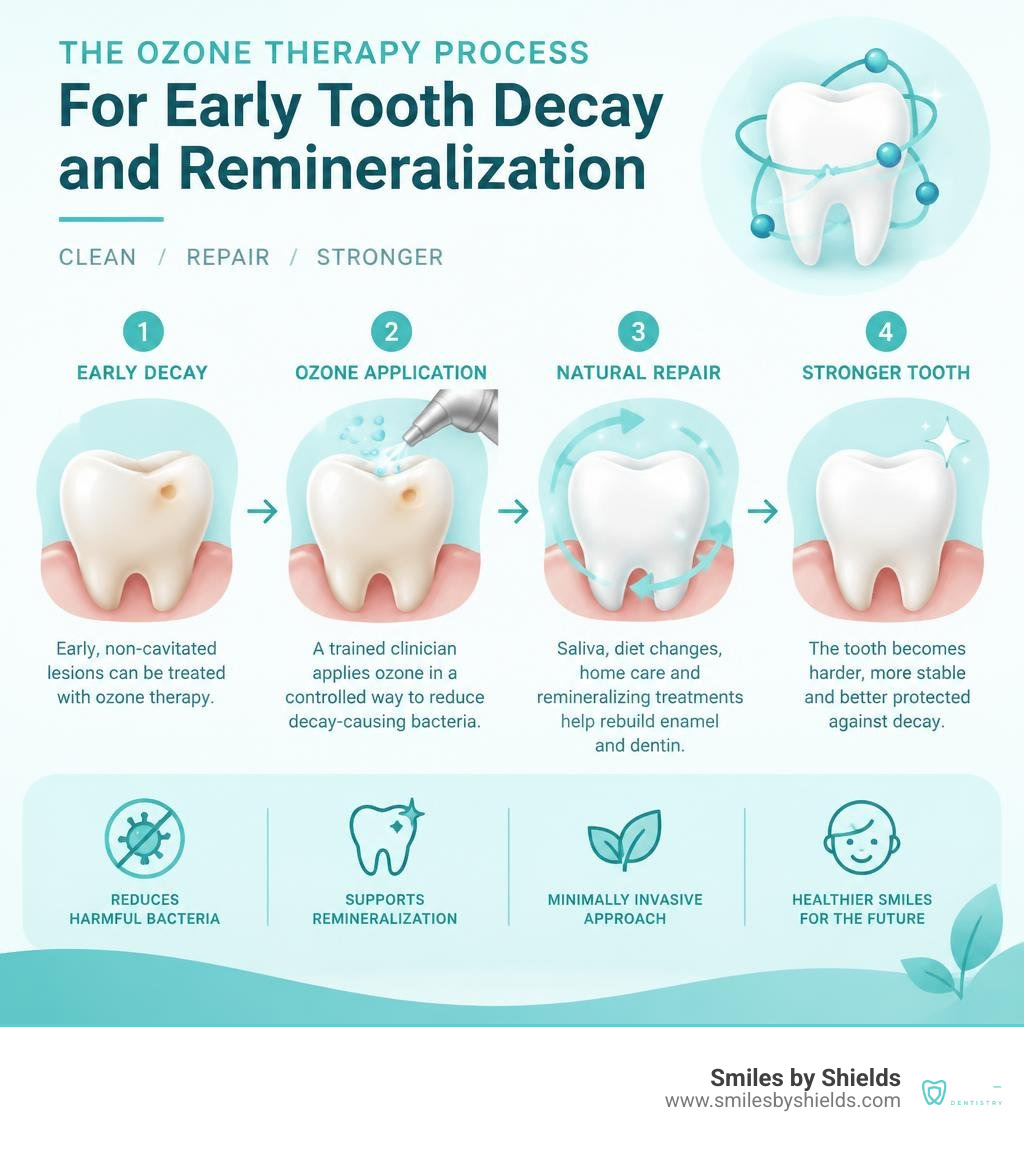
Ozone is a form of oxygen made of three oxygen atoms. In dentistry, a trained clinician applies it in a controlled way to reduce decay-causing bacteria, including Streptococcus mutans. After the bacterial load is reduced, saliva, diet changes, home care, and remineralizing treatments can help early enamel or dentin lesions become harder and more stable.
Research is promising but still limited. In a small prospective study of 20 children with early childhood caries, decayed dentin became significantly more compact after an ozone treatment cycle, and most children who initially tested positive for S. mutans tested negative afterward. Ozone is best viewed as a minimally invasive tool and adjunct, not a universal cure for every cavity.
I am Dr. Tiffany K. Shields, a Jacksonville dentist with training and professional involvement in biological and integrative dentistry. At Smiles by Shields, I use an individualized approach to ozone therapy tooth decay care that considers tooth structure, oral health risks, biocompatible materials, and each patient’s comfort.
Learn more about ozone therapy tooth decay:
How Ozone Therapy Tooth Decay Protocols Work in Modern Dentistry
When exploring how to halt cavity progression, understanding ozone therapy begins at the molecular level. Ozone (O3) is an energized allotrope of pure oxygen. While the air we breathe consists of stable diatomic oxygen molecules (O2), ozone carries a third oxygen atom. This triatomic configuration makes the gas biologically active and an exceptionally powerful oxidizing agent.
Tooth decay is not merely an inconvenience; it is an active microbial infection driven by acid-producing pathogens residing within sticky dental biofilms. In our practice, we often remind patients about the real cause of tooth decay: bacteria consume dietary carbohydrates and produce acidic byproducts that leach vital minerals out of the tooth.
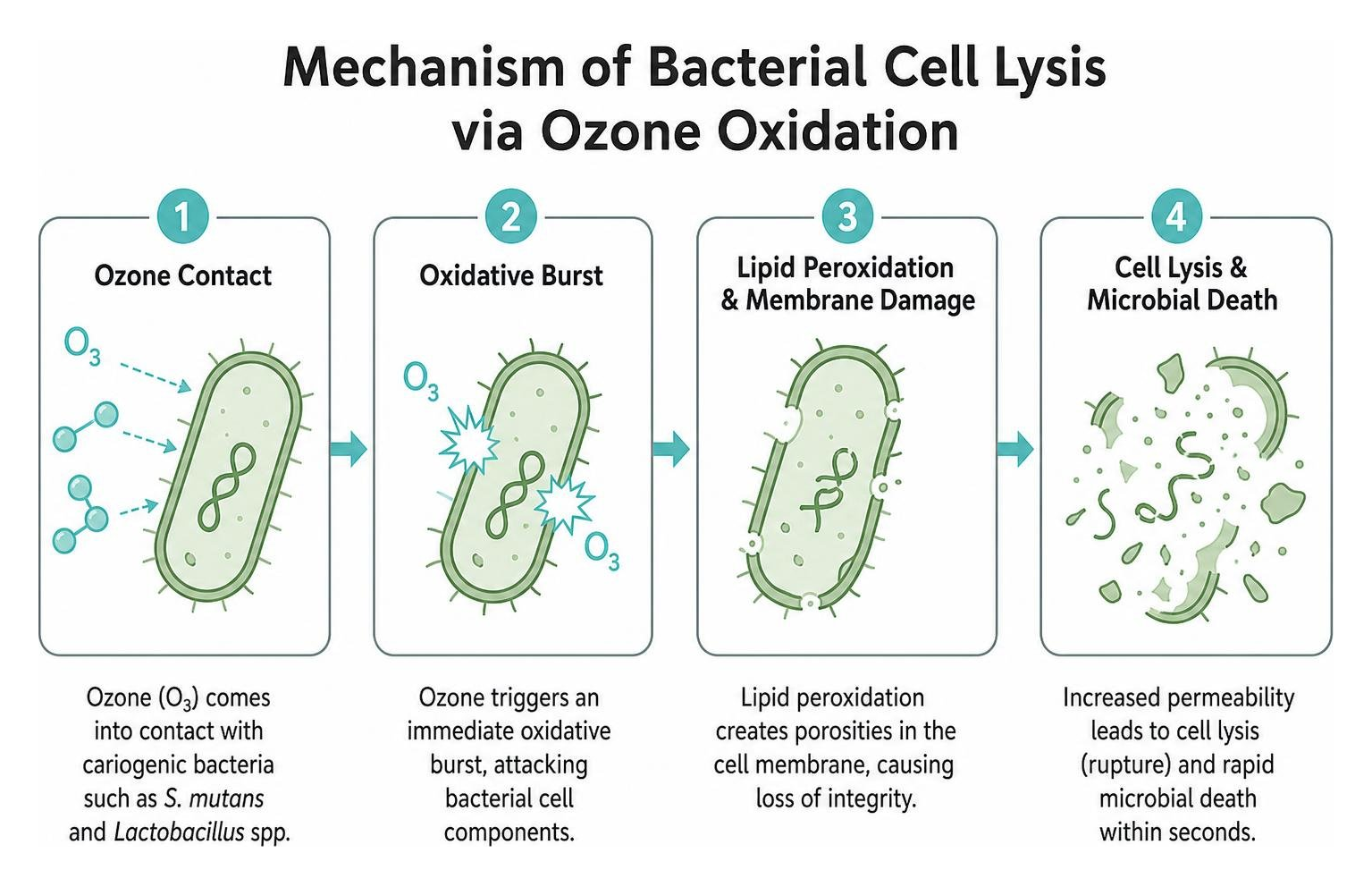
When medical-grade ozone comes into contact with cariogenic microorganisms such as Streptococcus mutans and Lactobacillus spp., it sparks an immediate oxidative burst. Because primitive bacterial cells have negligible antioxidant defenses compared to human cells, ozone induces rapid lipid peroxidation in their cell membranes. This process creates porosities in the bacterial walls, triggering swift cell lysis (rupture) and microbial death within seconds—all while leaving surrounding healthy oral tissues unharmed.
Ozone Gas, Ozonated Water, and Ozonated Oils
In contemporary clinical practice, we deliver ozone in three distinct therapeutic modalities:
- Gaseous Ozone (O3/O2 Mixture): Generated chairside via corona discharge units using pure medical-grade oxygen, ozone gas is applied directly to compromised enamel or dentinal surfaces using specialized, sealed delivery handpieces. It is the gold standard for treating localized demineralization and disinfecting deep fissures.
- Ozonated Water: High-purity water saturated with dissolved ozone serves as an exceptional subgingival irrigant. We utilize it to cleanse deep pockets, flush out root canals, and sanitize operational waterlines.
- Ozonated Plant Oils: Pure plant oils (such as olive or sesame) infused with ozone form stable ozonides. These soothing, oxygen-rich salves offer sustained topical antimicrobial release, making them ideal for healing soft tissue lesions and calming localized inflammation.
Tailoring the exact delivery system allows us to maximize the benefits of ozone therapy and dental care across both preventive and restorative settings.
Ozone vs. Traditional Dental Drilling
For generations, the standard response to any detected cavity was immediate mechanical excavation: the dreaded dental drill. While high-speed rotary instruments remain necessary when significant structural breakdown has occurred, using them on early-stage, non-cavitated lesions often removes excessive amounts of healthy tooth structure.
By adopting the complete guide to non-invasive dental treatments, we offer patients a conservative alternative that preserves natural tooth structure.
| Clinical Parameter | Ozone Therapy Protocol | Traditional Drill-and-Fill |
|---|---|---|
| Tissue Preservation | 100% of healthy enamel and dentin preserved | Inevitable removal of some sound tooth structure |
| Anesthetic Requirement | Needle-free; zero local anesthetic needed | Infiltration or nerve block injections typically required |
| Sensation During Care | Painless, silent, non-vibrational gas delivery | Audible high-pitch whine, thermal friction, pressure |
| Aerosol Generation | Completely non-aerosol application | Significant splatter and aerosol production |
| Patient Anxiety | Exceptionally low; comfortable for all ages | High trigger for dental phobia and avoidance |
| Structural Goal | Disinfects and promotes hard-tissue remineralization | Excises tissue and fills void with artificial material |
Biological Mechanism and Remineralization of Dental Hard Tissues
The ultimate objective of modern biologic dentistry is preserving native tooth anatomy whenever possible. Discovering the top benefits of ozone therapy reveals that its clinical value extends far beyond simply neutralizing bacteria.
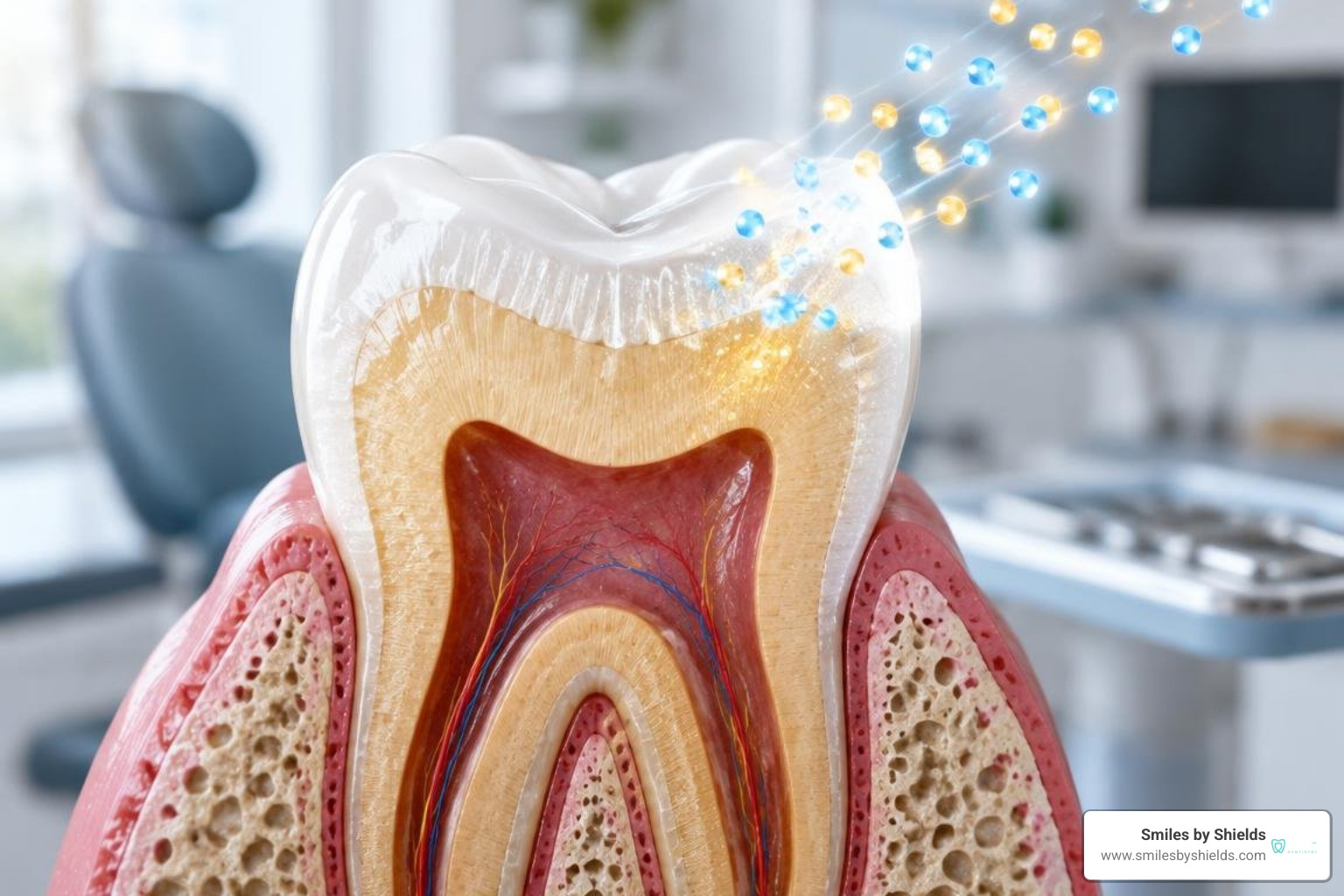
Once ozone eliminates bacterial biofilms and oxidizes acidic waste products within an active lesion, it fundamentally alters the local microenvironment. Acidic niches shift back toward an alkaline pH, creating optimal conditions for preventing tooth decay without harsh chemicals.
When exposed to natural salivary minerals (calcium and phosphate) alongside non-toxic remineralizing agents, the disinfected tooth structure absorbs these essential ions back into its crystal matrix. In deeper dentinal layers, this biological shift encourages odontoblasts inside the dental pulp to lay down a protective layer of tertiary, reactive dentin.
Clinical tools like the Affected Dentine Scale (ADS) measure this transition from soft, infected tissue to firm, arrested dentin. In clinical trials, teeth treated with structured ozone cycles demonstrated statistically significant improvements, with mean ADS scores improving from 3.2 down to 2.1 ($p = 0.000$), confirming that softened, demineralized dentin regained notable compactness and structural integrity.
Resolution of Dentin Hypersensitivity
Dentin hypersensitivity occurs when protective enamel wears thin or gingival margins recede, leaving microscopic dentinal tubules exposed to the oral cavity. According to Brännström’s hydrodynamic theory, changes in temperature or osmotic pressure cause fluid within these tubules to shift rapidly, irritating the underlying nerve endings.
Ozone application offers immediate relief for sensitive teeth. By eliminating bacterial irritants and accelerating mineral precipitation, ozone promotes the natural occlusion (plugging) of these open tubular pathways. Research demonstrates that ozone can decrease dentin hypersensitivity discomfort by roughly 55%. In pediatric clinical trials, every child reporting baseline sensitivity (averaging 3.5 on the Wong-Baker Faces Pain Rating Scale) achieved complete pain resolution after finishing an ozone treatment cycle.
Clinical Evidence: Can Ozone Reverse Early Lesions?
A common question we hear is whether early demineralization can truly be reversed. The scientific literature confirms that when lesions are caught early—before physical cavitation occurs—the answer is a resounding yes.
Learning practical steps on how to fight tooth decay naturally works hand-in-hand with medical ozone. Controlled trials show that applying gaseous ozone for 40 to 120 seconds directly over non-cavitated white spot lesions or exposed root surfaces halts bacterial progression.
In microbiological evaluations, 8 out of 9 patients (89%) who were positive for active Streptococcus mutans baseline colonies became completely negative after their ozone therapy cycle. With the bacterial driving force eliminated, the underlying enamel matrix arrests and hardens.
Evidence-Based Clinical Applications and Pediatric Caries Management
Ozone is particularly valuable in pediatric dentistry. Treating early childhood caries (ECC) traditionally presents significant challenges; young children often struggle to sit through noisy drilling procedures, and severe cases historically required treatment under hospital general anesthesia.
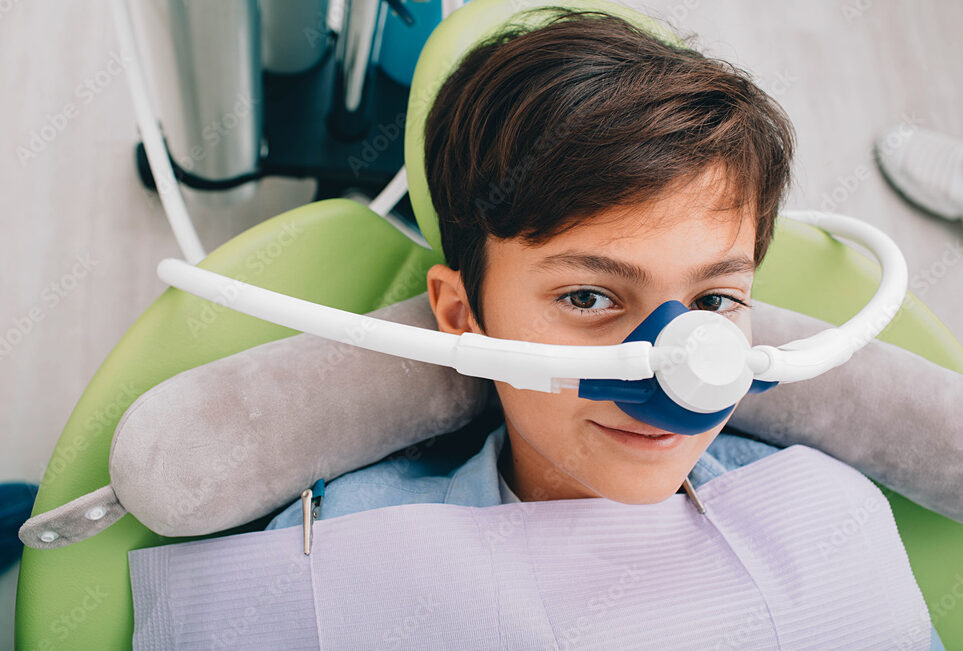
Reviewing what to know about ozone therapy underscores its gentle nature. Because ozone application is silent, needle-free, and pain-free, it transforms the pediatric dental visit. Clinical studies reveal that 93% of children lost their dental anxiety after being treated with ozone for carious lesions.
Furthermore, parental and child quality-of-life scores—evaluated through the Early Childhood Oral Health Impact Scale (ECOHIS)—improved substantially from a baseline average of 9.4 down to 5.9 after ozone treatment cycles, proving that non-invasive care relieves physical symptoms while protecting emotional wellness.
Adjunctive Uses: Root Canals and Periodontal Care
Because ozone acts as a broad-spectrum antimicrobial agent, its utility extends across multiple dental disciplines:
- Endodontic Disinfection: Root canal anatomy is filled with microscopic, winding accessory canals that liquid rinses cannot always navigate. Understanding how ozone therapy enhances root canal treatment highlights how ozone diffuses deep into these complex dentinal tubules to eradicate entrenched anaerobic pathogens, significantly reducing post-treatment pain and inflammation.
- Periodontal Therapy: Insufflating ozone gas or irrigating with ozonated water directly within deep periodontal pockets eliminates pathogens responsible for gum disease, stimulating local microcirculation and accelerating soft tissue healing.
- Surgical Extractions: Flushing fresh extraction sockets with ozone eliminates residual bacterial contamination, controls bleeding, and substantially reduces common complications such as dry socket.
Restorative Limitations: When Fillings Are Still Required
While ozone is an exceptional tool for bio-preservation, holistic dentistry is built on clinical honesty: ozone cannot regrow missing tooth structure. When a cavity has progressed past the initial demineralization stage and created an open hole (cavitation), the structural integrity of the tooth is compromised.
In these instances, ozone therapy serves as a powerful preparatory step rather than a standalone cure. We use ozone to sterilize the excavated preparation, destroying residual microbes beneath the surface before placing biocompatible restorations.
However, restorative material timing requires clinical precision. Because residual oxygen on the tooth surface can temporarily reduce dentinal bond strength, our protocols ensure appropriate surface neutralization before bonding durable, aesthetic tooth colored fillings.
Procedure Protocol: What to Expect During Treatment
Visiting us for an ozone appointment is straightforward, relaxing, and entirely comfortable. Here is our step-by-step clinical protocol:
- Diagnostic Evaluation: We examine your teeth using advanced digital imaging and diagnostic transillumination to assess the precise depth and mineral density of any suspicious areas.
- Surface Preparation: The target tooth is gently cleaned of superficial plaque and isolated using soft dental barriers.
- Hermetic Seal Application: A soft, custom-fitted silicone suction cup is placed snugly over the specific tooth crown, creating an airtight, hermetically sealed micro-environment.
- Controlled Ozone Delivery: Medical-grade ozone gas is introduced under calibrated negative pressure for 40 to 120 seconds. The closed-loop system ensures continuous contact while preventing any gas from escaping into the operatory air.
- Neutralizing Evacuation: Built-in suction purges the chamber, passing any remaining ozone through an internal catalytic destructor that instantly converts it back into pure oxygen.
- Remineralization Boost: We apply a rich topical blend of bioavailable minerals to nourish the newly disinfected enamel rods.
By uniting gentle ozone therapy with the overarching philosophy of integrative dentistry, we support your body’s innate healing capacity while prioritizing total-body wellness.
From a financial perspective, standard dental insurance plans do not always cover newer, non-invasive therapies like ozone. However, incorporating ozone at the earliest sign of demineralization provides substantial long-term value. Halting early decay preserves natural tooth structure, often preventing the need for complex multi-surface fillings, crowns, or root canals down the road.
Frequently Asked Questions About Dental Ozone
Can ozone therapy completely replace dental fillings?
Ozone therapy cannot replace a dental filling if structural cavitation has occurred. Ozone is uniquely effective at arresting non-cavitated, early enamel demineralization, white spot lesions, and superficial root caries. Once a physical cavity has formed, ozone is used adjunctively to sterilize the area before placing a non-toxic composite filling.
Does dental ozone treatment cause any pain or side effects?
Dental ozone treatment is completely painless. The gas flows gently over the tooth surface without requiring needles, shots, drilling, or numbing agents. Some patients notice a fleeting, clean scent reminiscent of fresh air after a summer thunderstorm, but there is no lingering discomfort or downtime following your visit.
How long does a dental ozone treatment take?
The active application of ozone gas takes only 40 to 120 seconds per tooth. Because the procedure requires no local anesthesia or numbing onset time, an entire preventive appointment is quick, efficient, and stress-free.
Conclusion
Modern biological dentistry focuses on addressing the root causes of oral imbalance rather than merely managing symptoms through invasive surgical intervention. By harnessing the natural, non-toxic power of pure oxygen, ozone therapy enables us to neutralize harmful decay-causing bacteria, alleviate sensitivity, and stimulate biological remineralization while preserving your natural tooth structure.
Whether you want to protect your child’s developing smile, reverse early enamel demineralization, or explore conservative restorative options, our team is here to guide you toward lasting health. We invite you to schedule a comprehensive wellness consultation with Smiles by Shields today.