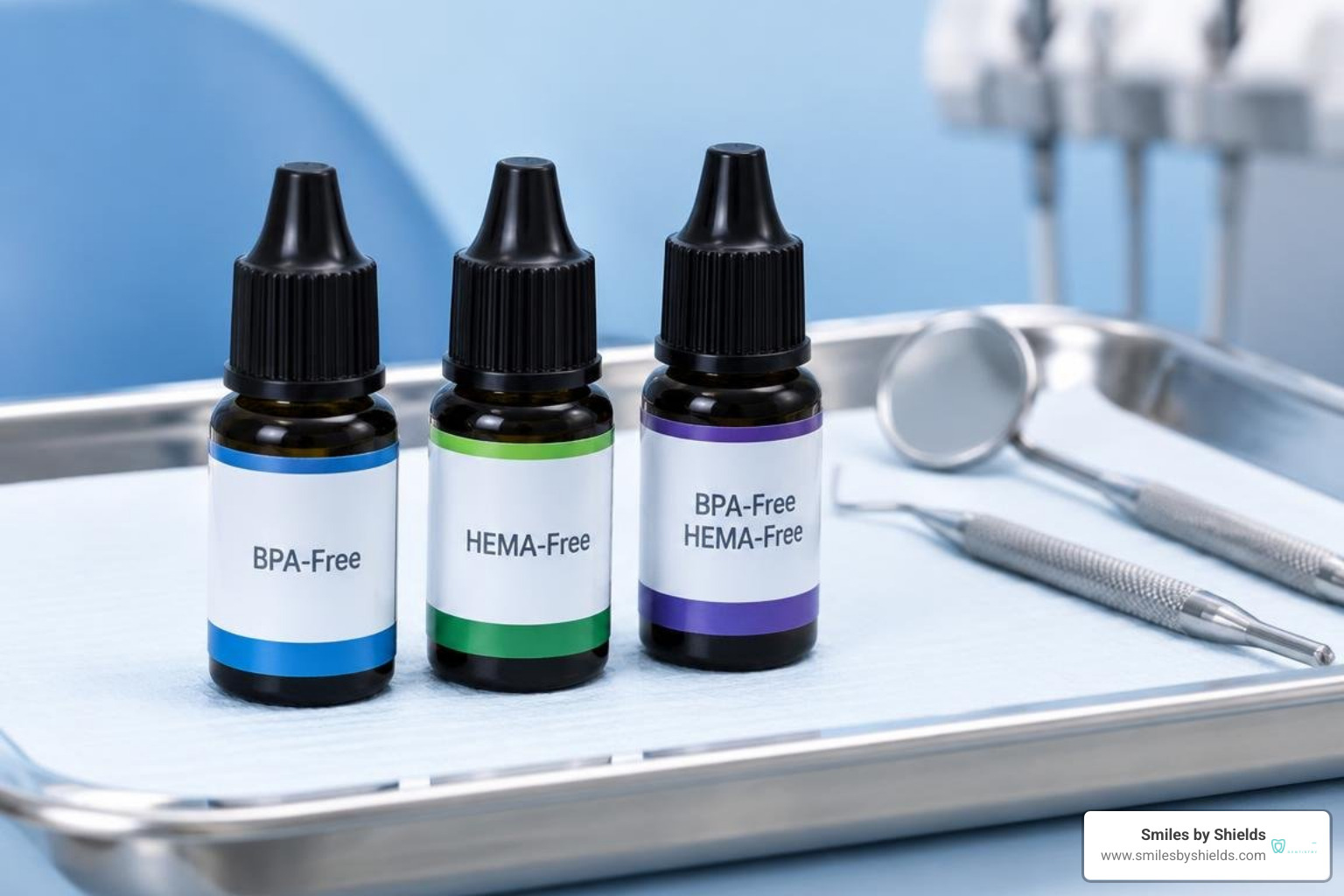
What Defines a Non Toxic Dental Bonding Material in Modern Dentistry?
In restorative dentistry, the term “non-toxic” refers to biocompatibility—the ability of a dental substance to perform its intended function without eliciting local inflammatory responses, allergic sensitization, or systemic toxic effects. A non toxic dental bonding material is one that supports the tooth’s natural biology rather than working against it.
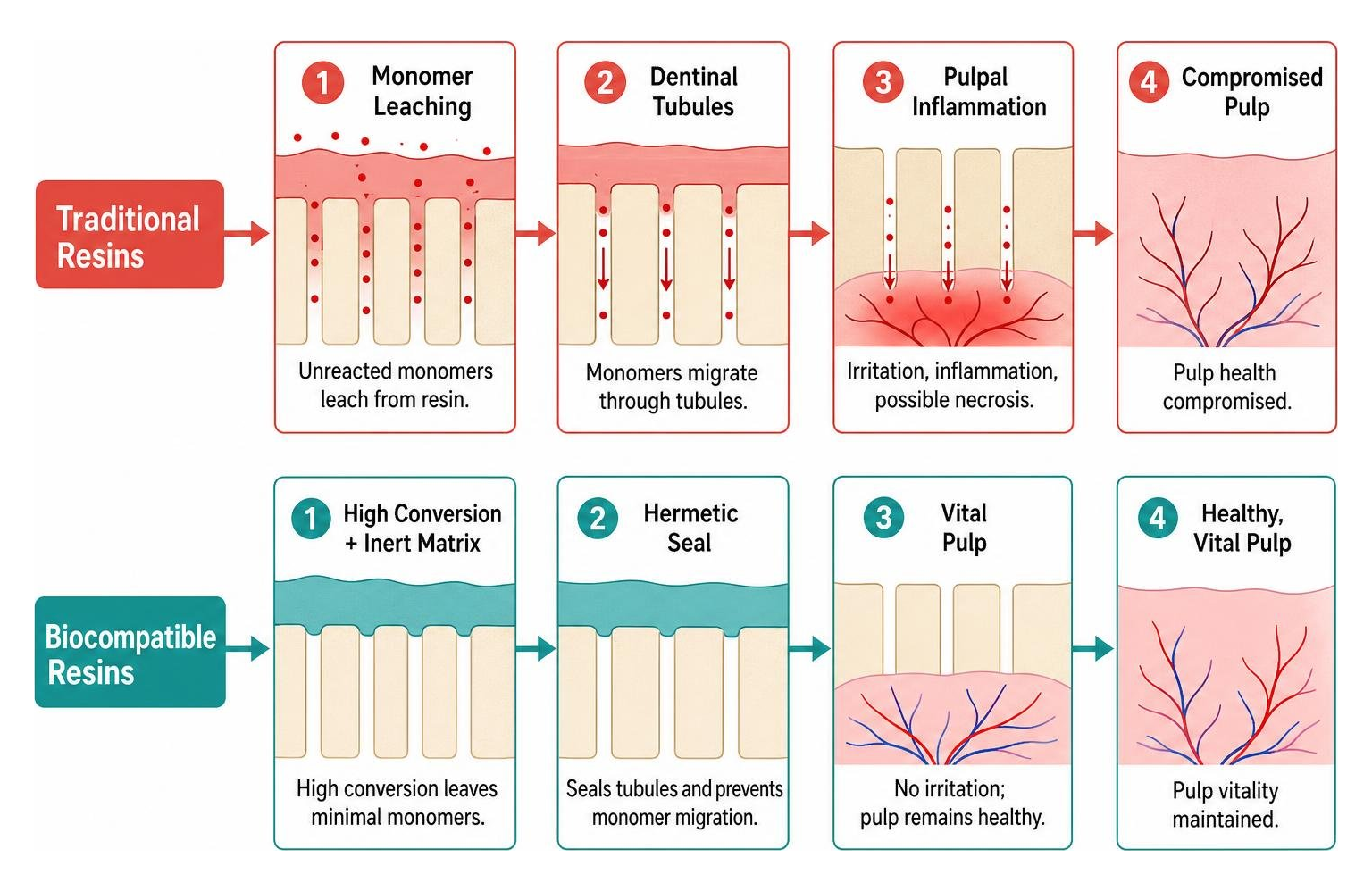
Traditional dentistry has long relied on adhesives and resin composites that perform well mechanically. However, when we place these substances against living dentin, the chemistry matters. Dentin is not an inert barrier; it is porous, permeated by thousands of microscopic dentinal tubules that lead directly to the living dental pulp (the nerve and blood supply of the tooth).
When restorative materials break down or fail to polymerize completely, monomer leaching occurs. Residual chemical agents can migrate through these tubules, resulting in pulp irritation, chronic inflammation, and in severe cases, pulpal necrosis. Choosing biocompatible alternatives is an integral part of modern tooth-colored dental fillings, ensuring that preserving the structural integrity of your enamel does not compromise the vitality of the underlying nerve.
The Chemistry of Dental Adhesives and Potentially Toxic Monomers
To understand why holistic clinicians seek out cleaner formulations, we must examine the specific chemical building blocks found in conventional bonding systems. Most commercial dental adhesives rely on a cocktail of dimethacrylate and monomethacrylate monomers designed to infiltrate etched dentin and create a micromechanical interlock (the hybrid layer).
Several of these traditional monomers present documented biological challenges:
- BisGMA (Bisphenol A-glycidyl methacrylate): Often considered the backbone of composite chemistry, BisGMA provides excellent mechanical strength. However, it is derived from bisphenol A (BPA). While pure BisGMA does not contain free BPA, biological degradation, salivary enzymes, and incomplete curing can release trace BPA derivatives, which are recognized endocrine disruptors with estrogenic activity.
- TEGDMA (Triethylene glycol dimethacrylate): Added as a low-viscosity diluent monomer to reduce the thickness of BisGMA, TEGDMA is a small, highly mobile molecule. It rapidly penetrates cell membranes, depleting intracellular glutathione reserves, inducing oxidative stress, and causing cytotoxicity in dental pulp fibroblasts.
- HEMA (2-Hydroxyethyl methacrylate): Used for its hydrophilic nature to facilitate penetration into moist dentin, HEMA is among the most common culprits behind contact dermatitis and delayed hypersensitivity reactions in both patients and dental staff. Because it inhibits cellular proliferation and suppresses local immune responses, unpolymerized HEMA can provoke persistent pulpal inflammation.
- BisEMA and UDMA: While offering lower toxicity profiles than TEGDMA, these secondary methacrylates can still contribute to cumulative biological burden when conversion rates are sub-optimal.
Finding products formulated without these reactive monomers is essential for patients following a non-toxic composite fillings guide to minimize biological exposure.
How Modern Formulations Eliminate BPA, BisGMA, TEGDMA, and HEMA
The dental manufacturing sector has made substantial progress in producing high-performance, bio-inert adhesives. Rather than relying on traditional petroleum-derived methacrylates, innovative systems employ alternative chemical matrices.
One major development is Pure Silicate Technology, utilized in nano-ORMOCER (Organically Modified Ceramic) matrices like Admira Fusion. In these materials, the traditional organic polymer matrix is replaced entirely by an inorganic silicon oxide network. Because there are no classic monomers like BisGMA, TEGDMA, or HEMA within the chemistry, no unreacted organic methacrylates remain to leach out post-polymerization. Furthermore, this structural design reduces polymerization shrinkage down to 1.25% by volume—up to 50% less than conventional composites—which drastically lowers the contraction stress pulling on delicate tooth margins.
Similarly, advanced 8th-generation universal adhesives, such as HEALBOND Universal BIO+, are engineered completely free of BPA, BisGMA, BisEMA, TEGDMA, and added HEMA. These formulations substitute volatile methacrylates with biocompatible functional polymers that polymerize efficiently without releasing cytotoxic byproducts, demonstrating why tooth-colored fillings are preferred when safety and performance are paired together.
Cytotoxicity and Biocompatibility: Comparing Traditional vs. Bio-Friendly Adhesives
Biocompatibility is assessed in laboratory settings by measuring how dental adhesives affect living cells. Researchers use cell viability assays—such as the sulforhodamine-B (SRB) or MTT assays—to determine fibroblast vitality when exposed to cured or uncured bonding agents.
The table below summarizes published in vitro cytotoxicity data across various dental bonding systems, highlighting the cell survival ranges of fibroblastic cell cultures exposed to these materials.
| Dental Adhesive System | Generation / Class | Key Monomer Chemistry | Reported Cell Survival (%) | Cytotoxicity Level | Primary Clinical Advantage |
|---|---|---|---|---|---|
| Clearfil Protect Bond | Self-Etch (2-Step) | 10-MDP, MDPB Monomer | 66% – 97% | Low | Antibacterial, high pulp biocompatibility |
| HEALBOND Universal BIO+ | Universal (8th Gen) | 10-MDP, BPA/HEMA-Free | > 85% | Very Low | Zero classic toxic monomers, universal |
| Admira Fusion / Ormocer | Nano-ORMOCER | Pure Silicate Network | > 90% | Very Low | 1.25% shrinkage, zero free methacrylates |
| BeautiBond Xtreme | Universal Self-Etch | ARS Silane, HEMA-Free | 70% – 85% | Low | 5 μm ultra-thin film, filler-free |
| One Step Plus | Total-Etch (5th Gen) | BPDM, BisGMA, HEMA | 28% – 58% | Moderate | Established bond strength |
| Tyrian SPE | Self-Etch Primer | Phosphorylated Monomers | 15% – 82% | Moderate to High | Strong demineralization capacity |
| Excite | Total-Etch (5th Gen) | Phosphonic Acid, HEMA | 2% – 28% | High | High initial enamel bond |
| Adper Scotchbond 1 | Total-Etch (5th Gen) | BisGMA, HEMA, Polyalkenoate | 1% – 6% | Very High | Historical clinical benchmark |
Cell Survival Rates and Evaluating Non Toxic Dental Bonding Material Safety
The cell survival data reveals significant biological differences among formulations. In established in vitro studies utilizing sensitive fibroblastic cell lines—such as RPC-C2A (rat pulp cells), BHK21/C13 (baby hamster kidney fibroblasts), and MRC5 (human lung fibroblasts)—traditional total-etch adhesives demonstrated pronounced antiproliferative effects.
For instance, Adper Scotchbond 1 exhibited extreme cytotoxicity, resulting in a cell survival rate of only 1% to 6%. Excite adhesive similarly depressed cell viability, yielding survival rates between 2% and 28%. RPC-C2A pulpal lines proved consistently to be the most sensitive to these chemical insults, reflecting the acute vulnerability of native pulp tissues when exposed to monomer leachates.
In sharp contrast, biocompatible antibacterial systems such as Clearfil Protect Bond yielded cell survival percentages between 66% and 97%. The incorporation of the immobilized antibacterial monomer MDPB allowed the material to neutralize residual bacteria without leaching toxic components into surrounding tissues once polymerized. Understanding these metrics helps patients make informed decisions regarding what to expect during dental filling procedures.
The Role of Curing Status, Film Thickness, and Hydrolytic Degradation

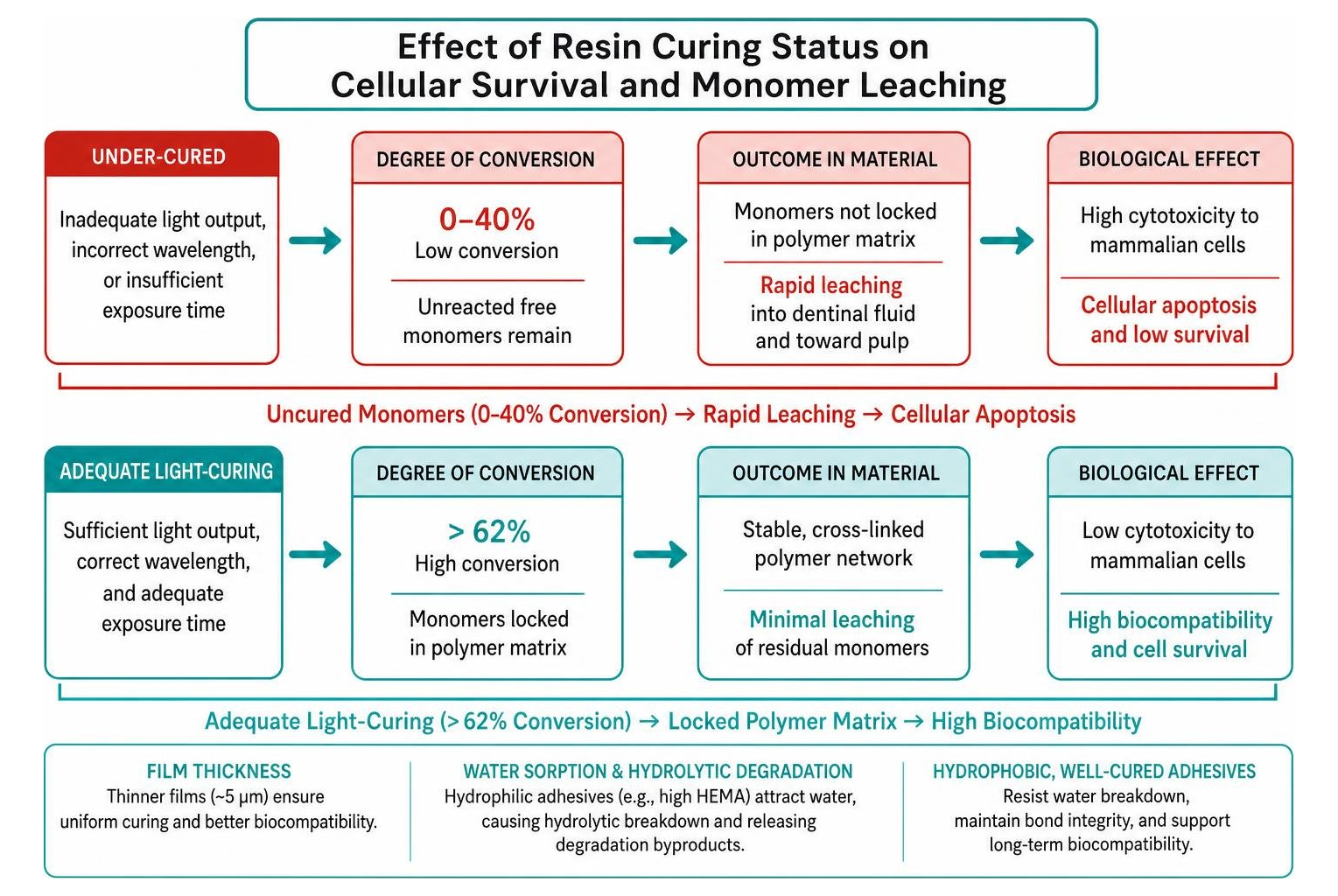
A critical finding in dental toxicology is that extraction media from uncured bonding materials are, without exception, highly cytotoxic to all mammalian cell lines.
The biological safety of any resin adhesive depends heavily on its degree of conversion—the percentage of carbon-carbon double bonds converted into single bonds during polymerization. When an adhesive is under-cured due to inadequate light output, incorrect wavelength, or insufficient exposure time, unreacted free monomers remain within the hybrid layer. These uncured molecules quickly wash out into dentinal fluid and migrate toward the pulp chamber.
Physical variables also determine long-term biocompatibility:
- Film Thickness: Adhesives with excessive film thickness create a bulky, unstable layer prone to incomplete curing. Formulations like BeautiBond Xtreme achieve a film thickness of approximately 5 μm, avoiding thick pooling while preserving a uniform, completely polymerized interface.
- Water Sorption and Hydrolytic Degradation: Hydrophilic adhesives containing high levels of HEMA attract water over time. This internal moisture causes hydrolytic breakdown of polymer chains, creating microscopic channels (water trees) that degrade the bond and steadily release degradation byproducts into the surrounding dentin. Formulations that convert into a hydrophobic state after curing resist water breakdown, ensuring long-term restorative stability.
Etching Techniques and Functional Additives in Holistic Restorations
Achieving a durable restoration while preserving pulp vitality requires balancing physical adhesion with biological harmony, which lies at the heart of the principles of holistic dentistry.
Self-Etch vs. Total-Etch: Minimizing Pulpal Cytotoxicity
The clinical approach used to prepare the tooth substrate plays a direct role in protecting pulpal tissues from chemical trauma:
- Total-Etch (Etch-and-Rinse): Involves applying 30% to 40% phosphoric acid to both enamel and dentin. While this yields high bond strength on enamel, it completely strips the natural smear plugs from dentinal tubules and demineralizes dentin up to 5 μm deep. If the subsequent bonding resin fails to fully infiltrate this deep collagen network, unprotected dentin tubules remain open, leading to micro-leakage, pulpal inflammation, and post-operative sensitivity.
- Self-Etch: Utilizes non-rinsing acidic functional monomers that condition and prime the dentin simultaneously. By incorporating the modified smear layer directly into the hybrid layer rather than washing it away, self-etch systems avoid opening deep dentinal tubules. This results in significantly less hydrodynamic movement of dentinal fluids, reducing pulpal stress and virtually eliminating post-operative sensitivity.
For deep restorations or when replacing old amalgam fillings, mild self-etch approaches (pH > 2.0 to 3.2) provide an ideal biological environment for pulp recovery.
The Impact of 10-MDP Monomers and Antibacterial Agents on Tissue Health
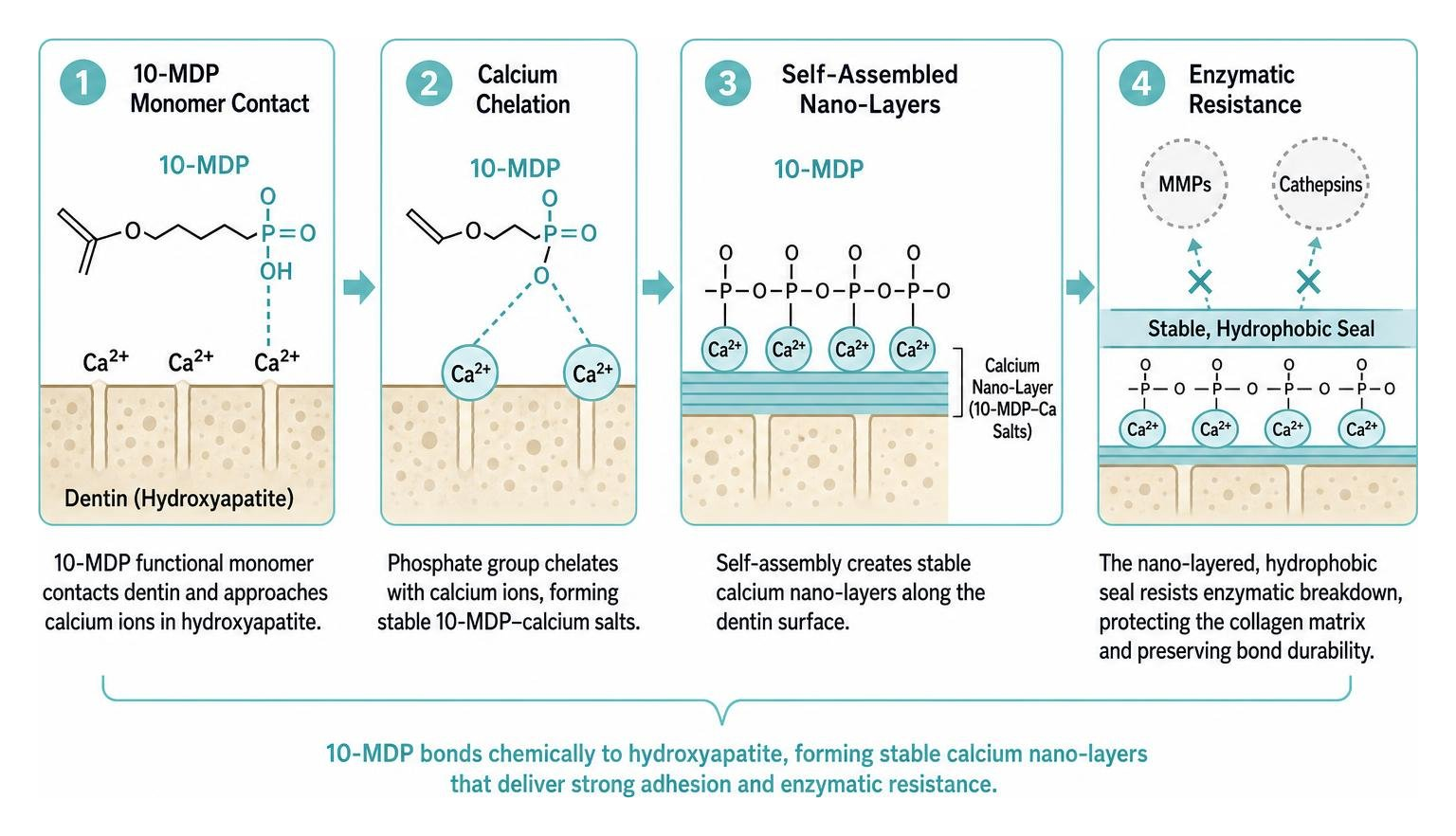
Modern adhesive chemistry relies heavily on 10-MDP (10-Methacryloyloxydecyl dihydrogen phosphate). This functional monomer bonds chemically to hydroxyapatite, creating two stable calcium salts (nano-layering) along the enamel and dentin surface. Unlike older volatile acids, 10-MDP provides exceptional bond strength while creating an insoluble, hydrophobic seal that resists enzymatic breakdown.
To enhance restoration longevity, certain modern adhesives incorporate functional protective agents:
- Chlorhexidine (CHX): Present in systems like Peak Universal Bond at a 0.2% concentration, chlorhexidine inhibits native matrix metalloproteinases (MMPs) and cysteine cathepsins—enzymes within dentin that slowly digest exposed collagen fibers over time. Clinical studies show that non-CHX-treated restorations can experience up to a 35% reduction in bond strength over time, whereas CHX-stabilized interfaces demonstrate zero degradation, supporting long-term restorative health and preventing tooth decay without harsh chemicals.
- Immobilized Antibacterials (MDPB): Rather than releasing soluble antibacterial chemicals into adjacent tissue, MDPB polymerizes directly into the adhesive matrix, maintaining antibacterial efficacy against residual bacteria without inducing systemic cytotoxicity.
Clinical Standards, Biocompatibility Testing, and Material Selection
Evaluating dental products requires rigorous testing standards to ensure materials are safe for long-term oral placement.
| Adhesive System / Technology | Chemical Profile | Etching Modality | Dentin Shear Strength | Micro-Tensile Strength | Biocompatibility Standard Compliance |
|---|---|---|---|---|---|
| HEALBOND Universal BIO+ | 10-MDP, BPA/HEMA-Free | Universal (Self / Total) | 25 – 29 MPa | > 48 – 50 MPa | ISO 10993, ISO 7405, EU 2017/745 |
| All-Bond Universal | 10-MDP, Mild Acidity (pH > 3) | Universal (Self / Total) | 27 – 50 MPa | > 45 MPa | ISO 10993, ISO 7405 |
| Peak Universal Bond | Dymetech, 0.2% CHX | Universal (Self / Total) | Up to 71.3 MPa | > 55 MPa | ISO 10993, ISO 7405 |
| Futurabond M / M+ | Nano-SiO2, Self-Etch Resin | Self-Etch (1-Step) | ~ 20 MPa | > 35 MPa | ISO 10993, ISO 7405 |
| BeautiBond Xtreme | ARS Silane, HEMA-Free | Universal (Self / Total) | 22 – 28 MPa | > 40 MPa | ISO 10993, ISO 7405 |
Regulatory Benchmarks: Understanding ISO 10993 and ISO 7405
When assessing dental adhesives, holistic practitioners look for compliance with established international safety standards:
- ISO 10993 (Biological Evaluation of Medical Devices): A multi-part standard governing biological safety. It outlines specific testing protocols for cytotoxicity, systemic toxicity, genotoxicity, subchronic reactivity, and mucosal irritation.
- ISO 7405 (Preclinical Evaluation of Biocompatibility in Dentistry): A specialized standard focusing directly on dental materials. It dictates pulp-dentin usage tests, assessing how bonding formulations interact with living pulp tissue across standardized time intervals.
Adhesives that meet these benchmarks provide documented proof that their extraction products do not cause mutagenic transformation or chronic tissue necrosis. Clinicians can review this data alongside clinical dental biocompatibility testing to select the most appropriate materials for each patient.
Selecting the Best Non Toxic Dental Bonding Material for Restorative Work
In our Jacksonville practice, selecting restorative materials is an individualized process based on clinical requirements and biological tolerance. For individuals with severe environmental sensitivities, chemical intolerances, or autoimmune diagnoses, we utilize systemic dental bio-testing (serum antibody testing) to cross-reference their systemic profile against thousands of dental brand chemicals.
When treating deeper decay or structurally compromised teeth, we frequently recommend replacing silver fillings with porcelain inlays and onlays. Porcelain is exceptionally bio-inert and chemically stable. Pairing custom-milled ceramic with a HEMA-free, 10-MDP-based universal adhesive ensures a long-lasting, esthetic restoration that minimizes patient exposure to unstable resin components.
Frequently Asked Questions About Biocompatible Dental Bonding
What makes a dental bonding adhesive non-toxic?
A non-toxic bonding adhesive is formulated without cytotoxic or sensitizing compounds such as free BPA, BisGMA, TEGDMA, or added HEMA. Instead, it utilizes biocompatible functional monomers (such as high-purity 10-MDP) or pure silicate inorganic networks that achieve high conversion rates when light-cured, preventing unreacted chemicals from leaching into the dentin tubules.
Does non-toxic dental bonding provide the same bond strength as traditional adhesives?
Yes. Modern biocompatible bonding formulations deliver equal or superior mechanical performance compared to older resins. High-purity 10-MDP adhesives produce dentin shear bond strengths between 25 and 29 MPa and micro-tensile strengths exceeding 48 to 50 MPa. Their ability to chemically bond to the calcium in natural hydroxyapatite forms an enduring, water-resistant interface.
Can biocompatible bonding agents prevent tooth sensitivity after a filling?
Yes. Biocompatible universal adhesives applied with a self-etch protocol minimize post-operative sensitivity. By gently conditioning the dentin without stripping natural protective smear plugs, sealing the tubules with an ultra-mild formulation (pH > 3.0), and curing into an insoluble hybrid layer, they prevent fluid shifts inside the tooth that trigger nerve pain.
Conclusion
Modern restorative dentistry no longer requires choosing between mechanical durability and biological safety. By understanding the chemistry behind traditional resin monomers and selecting modern, bio-compatible alternatives—such as HEMA-free systems, pure silicate Ormocers, and 10-MDP formulations—we can deliver long-lasting dental restorations that respect the systemic health of the entire body.
At Smiles by Shields, our holistic approach to dental care in Jacksonville, FL, prioritizes biocompatible materials, advanced curing protocols, and individualized wellness. Whether you are replacing failing restorations or treating new areas of decay, choosing a biocompatible approach protects your teeth, your smile, and your overall health. To learn more about supportive oral care routines, explore our guide on natural healing and recovery protocols.