A Gentler Way to Treat and Prevent Tooth Decay
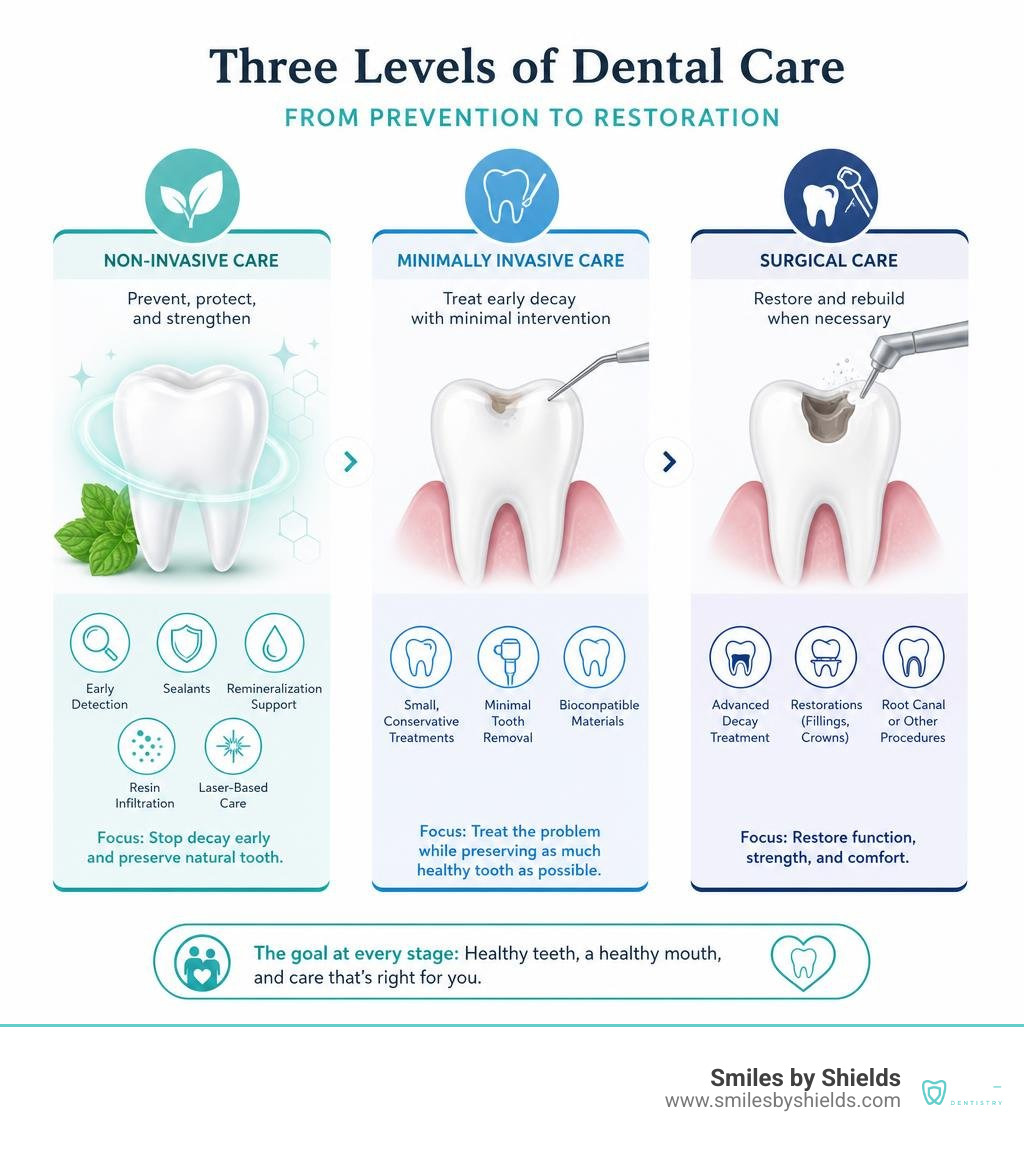
Non invasive dental treatments can help prevent, slow, or stop early tooth decay without the usual drill, needle, or removal of healthy tooth structure. Depending on the condition of your teeth, options may include careful early detection, sealants, remineralization support, resin infiltration for early enamel lesions, and laser-based care. The key is to find decay before the tooth develops a hole or loses strength.
These approaches are not right for every cavity. A tooth with major structural damage, deep decay, infection, or pain may still need restorative treatment. But when decay is caught early, conservative care may help preserve more of the natural tooth and reduce the cycle of replacing larger fillings over time.
Minimally invasive dentistry focuses on treating the disease process behind decay, not simply drilling out its visible result. This can be especially helpful for children, people with dental anxiety, older adults with root decay, and anyone who wants a calmer, more prevention-focused approach to oral health.
I am Dr. Tiffany K. Shields, a Jacksonville biological dentist with a background in microbiology and an integrative approach to oral wellness, biocompatible materials, and personalized treatment planning. At Smiles by Shields, we help patients explore non invasive dental treatments when they are clinically appropriate, with a focus on comfort, tooth preservation, and informed choices.
The Evolution of Minimally Invasive Dentistry and Tooth Preservation
For decades, the standard response to discovering a dental cavity was simple: cut away the damaged portion of the tooth and replace it with a synthetic material. While this surgical method remains necessary for advanced breakdown, modern biological cariology reveals that tooth decay is actually a dynamic, reversible bacterial imbalance rather than an immediate structural emergency.
Dental caries impacts roughly 97% of the global population throughout their lifetimes. When pathogenic bacteria produce acidic byproducts, they leach essential minerals from healthy enamel. If caught before physical cavitation occurs, these early demineralized areas can often be restored naturally by cultivating oral microbial balance (eubiosis) and applying mineral therapies.
By prioritizing biomimetic principles, we focus on replicating the biomechanical integrity and natural chemistry of human teeth. Discovering techniques for preventing tooth decay without harsh chemicals allows our practice to protect the pristine crystalline architecture of healthy enamel while eliminating destructive oral bacteria.
| Clinical Feature | Traditional “Drill & Fill” Restorations | Minimally Invasive Interventions |
|---|---|---|
| Enamel Removal | Removes extensive healthy and infected structure | Zero to microscopic surface etching only |
| Local Anesthesia | Usually required via needles and injections | Rarely necessary; painless application |
| Pulp Vitality | Higher risk of mechanical trauma and pulp irritation | Preserves nerve vascularity and natural dentin |
| Aerosol Production | High aerosol output from high-speed handpieces | Low to zero aerosol generation |
| Primary Goal | Mechanical repair of a physical hole | Biological arrest and deep remineralization |
Halting the Restorative Death Spiral
One of the greatest dangers of premature dental drilling is initiating what clinicians call the “death spiral of a tooth.” Standard resin composite restorations last an average of only 5 to 7 years. When a filling eventually experiences micro-leakage or recurrent decay, replacing it requires drilling away even more natural tooth structure.
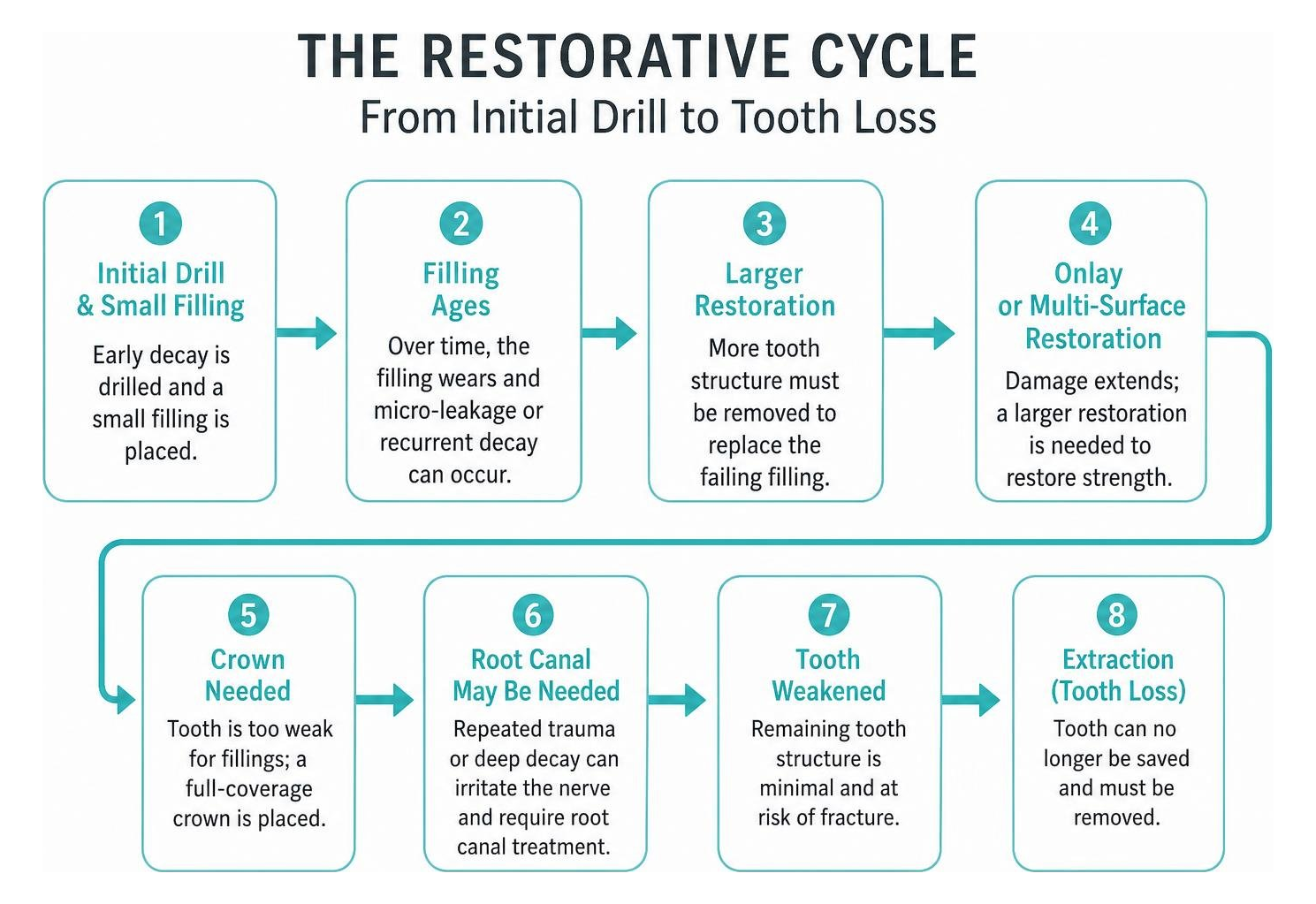
Over decades, even a well-done small restoration may need maintenance, replacement, or a more protective restoration as the tooth changes. Prevention and early detection help us catch the few lesions that can be remineralized, while treating more advanced decay promptly and conservatively helps protect tooth structure, comfort, and long-term oral health.
Evidence-Based Non Invasive Dental Treatments
Modern microdentistry offers several clinically validated methods to halt decay, stabilize vulnerable enamel, and eliminate bacterial pathogens without surgical trauma.

Breakthrough Non Invasive Dental Treatments for Tooth Decay
Micro-invasive therapies provide a gentle bridge between preventive topicals and surgical fillings:
- Resin Infiltration (Icon): Designed for non-cavitated interproximal (between teeth) and smooth-surface white spot lesions. After the surface is cleaned and conditioned, a low-viscosity, light-curable resin is applied. Through capillary action, the resin flows into the porous enamel. Once cured, it seals the lesion, helps stop decay from progressing, and can improve the tooth’s natural translucency without drilling or numbing.
- Remineralization Support: For early enamel changes, non-invasive care may include targeted pastes, gels, varnishes, or supplementation to support calcium and phosphate availability, encourage enamel repair, and strengthen areas weakened by acid exposure. These options are selected based on the patient’s cavity risk, diet, saliva quality, and overall oral health goals.
- Atraumatic Restorations & Environmental Care: By reducing unnecessary drilling, limiting tooth removal, and minimizing waste where possible, microdentistry also supports our commitment to eco-friendly dentistry.
Precision Hard and Soft Tissue Dental Lasers
Laser dentistry uses focused light energy to treat hard enamel and soft gingival tissues with exceptional precision. Because laser light targets specific cellular chromophores (water, hemoglobin, and hydroxyapatite), it vaporizes diseased tissue while leaving surrounding healthy structures completely unharmed.
Key clinical laser applications include:
- Painless Cavity Preparation: Hard-tissue lasers gently ablate decayed enamel and sterilize the preparation site without the heat, vibration, or high-pitched whine of traditional drills.
- Photobiomodulation (PBM): Low-level laser therapy delivers therapeutic light that stimulates cellular ATP production, reduces local inflammation, accelerates post-procedure healing, and eases TMJ myofascial discomfort.
- Periodontal Disinfection: Specialized lasers eliminate deep subgingival pathogens while sealing micro-capillaries to reduce bleeding and promote gum reattachment.
To discover more about our advanced clinical laser systems, explore the benefits of the Fotona laser for conservative care.
Biological Disinfection and Ozone Applications
Medical ozone (O3) therapy is a pillar of non-invasive biological dentistry. Ozone is a transient, highly reactive molecule that oxidizes bacterial cell walls, viral envelopes, and fungal membranes on contact while leaving healthy human tissue unaffected.
By delivering controlled gaseous ozone or ozonated water directly to deep fissures, root surfaces, and surgical areas, we neutralize acidic pathogens and stimulate local tissue oxygenation. You can gain deeper insight by understanding ozone therapy and how it supports cellular regeneration.
For patients seeking conservative options to save compromised teeth without aggressive nerve removal, biological disinfection methods also provide valuable root canal alternatives that keep your smile whole.

Clinical Advantages and Patient Eligibility
Choosing non-invasive and minimally invasive oral care delivers substantial benefits:
- Maximized Structural Preservation: Retains pristine enamel and dentin to keep teeth strong.
- Minimal Discomfort: Eliminates the vast majority of needles, numbness, and mechanical vibrations.
- Reduced Dental Anxiety: Creates a relaxing, fear-free clinical environment.
- Enhanced Biocompatibility: Avoids heavy metals and extensive synthetic resin placements.
Key Patient Groups for Non Invasive Dental Treatments
While anyone looking to preserve their natural teeth can benefit, several patient demographics find non-invasive therapies especially transformative:
- Young Children: Pediatric dental caries remains the most common chronic childhood disease. Children with untreated caries are 3 times more likely to miss school and struggle academically. Non-invasive treatments like brush-on remineralization and resin infiltration prevent dental trauma and avoid premature general anesthesia.
- Patients with High Dental Anxiety or Needle Phobia: Drill-free therapies allow fearful individuals to address dental needs comfortably. When anxiety is particularly acute, pairing gentle therapies with sedation dentistry ensures complete peace of mind.
- Older Adults with Exposed Root Surfaces: Root caries impacts approximately 50% of adults over age 75. Non-invasive applications halt root decay without uncomfortable subgingival drilling.
- Individuals with Special Healthcare Needs: Eliminating complex restorative procedures reduces physical and sensory stress for patients with developmental or medical challenges.
Holistic and Fluoride-Free Remineralization Strategies
For patients seeking whole-body biocompatibility, non-invasive remineralization can be accomplished using fluoride-free alternatives:
- Hydroxyapatite: A biomimetic mineral that closely matches the natural mineral structure of human teeth. It can help support enamel repair, seal open dentin tubules, and reduce sensitivity in early-stage mineral loss. Learn more about why we choose not to use fluoride in our biological protocols.
- Xylitol: A naturally occurring plant polyol that cariogenic bacteria cannot metabolize. Regular use reduces bacterial plaque adhesion; learn more regarding xylitol and your dental health to optimize daily protection.
- Oral Probiotics: Introducing beneficial strains such as Streptococcus salivarius (K12/M18) helps balance oral flora, suppress volatile sulfur compounds, and prevent decay. Discover the power of probiotics to prevent cavities through healthy microbiome colonization.
Frequently Asked Questions About Non-Invasive Dental Care
How long do non-invasive dental treatments last compared to standard fillings?
While traditional composite resin fillings last an average of 5 to 7 years before requiring replacement, non-invasive therapies like resin infiltration and peptide-guided enamel regeneration permanently integrate into the tooth’s crystalline structure. Once demineralized enamel is remineralized or sealed, the treated area is as structurally resilient as natural healthy enamel. As long as effective daily oral hygiene and nutritional balance are maintained, these treatments do not degrade or need routine replacement.
At Smiles by Shields, we do not use fluoride-based cavity-arresting treatments. For early, non-cavitated areas, care focuses on tooth preservation through careful monitoring, resin infiltration when appropriate, guided remineralization support, ozone applications, diet and pH guidance, and tooth-colored restorative options if the enamel surface has already broken down.
When is a cavity too advanced for non-invasive treatment?
Non-invasive treatments are ideal for non-cavitated lesions—areas where enamel is demineralized but has not yet physically collapsed into an open hole. Once decay breaks through the outer enamel and creates a structural cavity into the dentin, or causes chronic pulp inflammation, a physical restoration (such as a conservative composite filling, inlay, onlay, or biological crown) is required to rebuild the tooth’s shape and seal the inner nerve against infection.
Conclusion
Dentistry does not have to be intimidating, noisy, or uncomfortable. Modern non-invasive dental treatments give us the power to protect healthy enamel, stop decay early, and break the cycle of repeated fillings. By uniting cutting-edge microdentistry with biocompatible, whole-body wellness philosophies, our practice helps you achieve a vibrant, resilient smile.
To explore how holistic, conservative therapies can support your oral and systemic vitality, discover what is holistic dentistry and schedule your personalized consultation with Smiles by Shields today.