
Natural Dental Pain Relief: What to Do First
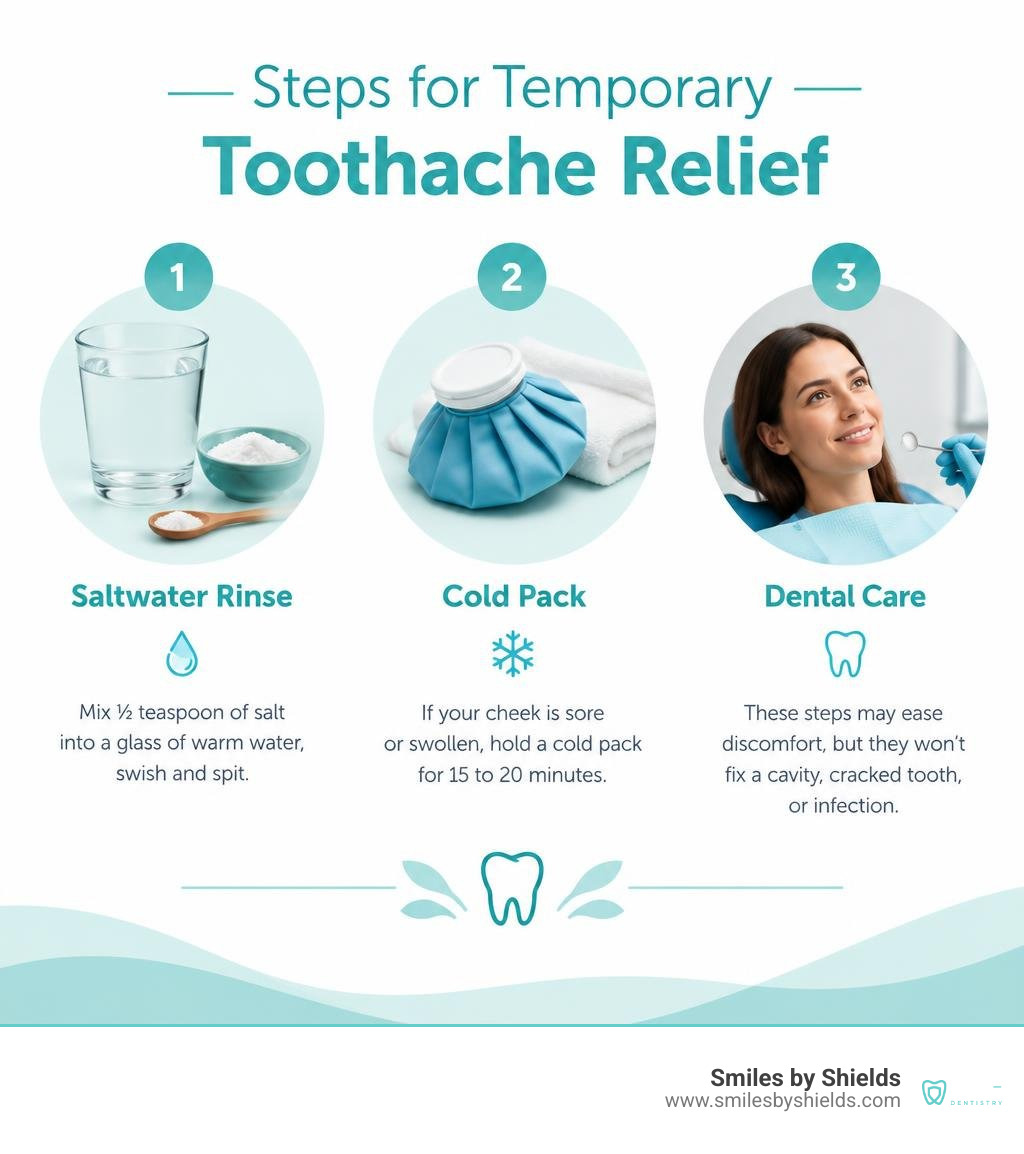
For natural dental pain relief, start with a gentle saltwater rinse: mix half a teaspoon of salt into a glass of warm water, swish, and spit. If your cheek is sore or swollen, hold a cold pack against it for 15 to 20 minutes. These steps may ease discomfort, but they will not fix a cavity, cracked tooth, or infection.
Call a dentist if pain persists or gets worse. Seek urgent care for facial swelling with fever or any trouble breathing or swallowing.
I’m Dr. Tiffany K. Shields, owner and lead dentist of Smiles By Shields Dentistry in Jacksonville. My integrative approach pairs natural dental pain relief for short-term comfort with a careful look at what is causing the pain.
Key natural dental pain relief vocabulary:
Identifying the Source and Mechanism of Tooth Discomfort
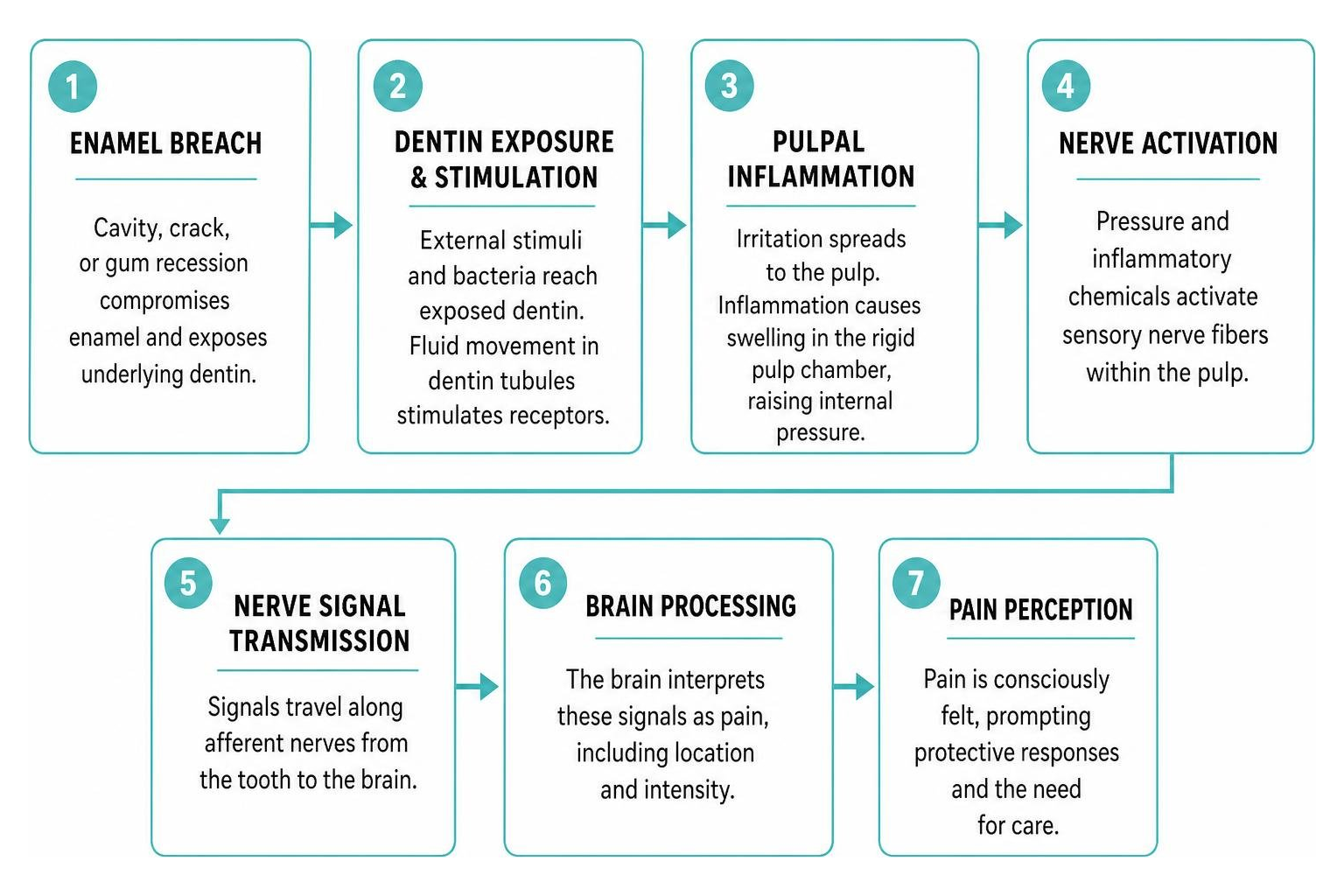
When dental pain strikes, it is your body’s alarm system signaling that something within the oral environment requires attention. Tooth pain rarely occurs without a clear physiological driver. The hard outer layer of enamel contains no living nerve tissue, but the inner dentin and central pulp chamber house dense networks of sensory nerve fibers, blood vessels, and connective tissue.
When tooth structure degrades or gum margins recede, external stimuli trigger discomfort through distinct biological pathways. Understanding the underlying causes of toothaches helps determine which home remedies offer safe comfort while you prepare to visit our office.
Dental pain generally stems from one of several root mechanisms:
- Reversible and Irreversible Pulpitis: Bacterial infiltration from deep decay reaches the inner pulp, triggering localized swelling inside a rigid mineral chamber. Because the pulp cannot expand, internal pressure rises rapidly, causing intense, throbbing sensations.
- Dentin Hypersensitivity: When enamel thins or gum tissue recedes, microscopic tubules within the dentin become exposed to thermal and chemical changes. Fluid movement within these tubules directly excites mechanoreceptors, manifesting as sharp tooth sensitivity to cold drinks, hot foods, or sweet treats.
- Periodontal and Periapical Abscesses: Inflammatory processes in the periodontal ligament or at the root apex produce localized pressure and throbbing that worsens when biting down.
- Referred and Structural Pain: Chronic clenching, structural cracks, or muscular tension can refer pain across the jaw arch, mirroring acute dental infections.
Listening closely to your symptoms helps decode what your tooth pain is really saying about the vitality of your teeth. In a whole-body biological approach, we also recognize that oral inflammation does not remain isolated; chronic tooth pain reveals larger health problems linked to systemic inflammatory pathways, immune burden, and microbiome imbalances.
7 Proven Methods for Natural Dental Pain Relief
Natural remedies can provide meaningful comfort by lowering bacterial loads, modulating nerve firing, and calming localized swelling. Botanical preparations and simple mineral solutions work alongside your body’s innate defenses.

| Remedy | Primary Active Mechanism | Best Application | Key Safety Precautions |
|---|---|---|---|
| Clove Oil (Eugenol) | Blocks voltage-gated sodium channels; topical anesthesia | Throbbing pulpal discomfort, deep cavities | Dilute with carrier oil; avoid direct contact with gums |
| Hypertonic Saltwater | Creates osmotic gradient; reduces edema and cleanses tissue | Generalized soreness, inflamed gums | Swish and spit only; do not swallow warm saline |
| Crushed Garlic Paste | Allicin releases antimicrobial sulfur compounds | Localized bacterial irritation | Limit skin contact to 5–10 minutes to avoid chemical burns |
| Peppermint Compress | Menthol stimulates TRPM8 cold receptors to numb pain | Mild aching, teething, post-brushing sensitivity | Ensure tea bag cools to warm/room temp before applying |
| Toothache Plant (Spilanthes) | Spilanthol activates TRPA1/TRPV1 and numbs nerve endings | Rapid topical numbing, oral ulcerations | Check for Asteraceae family allergies; use sparingly |
| Stinging Nettle Extract | Flavonoids suppress systemic inflammatory cascades | Post-treatment soreness, general oral ache | Confirm no botanical allergies; consult for medication interactions |
| Dilute Hydrogen Peroxide | Cleanses debris and suppresses anaerobic bacteria | Foul-tasting drainage, surface gum irritation | Must dilute 1:1 with water (1.5% max); never swallow |
1. Eugenol and Clove Oil Application
Clove oil, derived from Syzygium aromaticum, is one of the most clinically supported natural pain remedies in oral healthcare. Its primary constituent, eugenol (making up 80% to 90% of quality clove essential oil), acts as a potent natural anesthetic and antiseptic. In fact, eugenol 85% is recognized by standard pharmacopeias and used in professional temporary restorative materials due to its reliable sedative effect on the dental pulp.
How It Works biologically
Eugenol inhibits voltage-gated sodium channels along peripheral nerve fibers. By preventing sodium influx across the nerve cell membrane, it halts the transmission of action potentials, effectively blunting pain signals before they reach the central nervous system. Eugenol also downregulates cyclooxygenase-2 (COX-2) enzymes, curtailing the production of inflammatory prostaglandins within irritated pulpal tissue.
How to Apply It Safely
- Mix 1 to 2 drops of pure, high-grade clove oil with half a teaspoon of a food-grade carrier oil, such as organic unrefined coconut oil or olive oil.
- Dip the tip of a clean cotton pellet or cotton swab into the diluted mixture, ensuring it is damp but not dripping.
- Gently place the pellet directly against the aching tooth or into the visible cavity margin, avoiding broad contact with adjacent tongue and cheek tissue.
- Leave it in place for 10 to 15 minutes, then remove and discard the cotton.
- Rinse your mouth with warm water. Repeat up to three times daily as needed.
Safety note: Never apply neat, undiluted clove oil directly onto delicate oral mucosa for prolonged periods, as concentrated eugenol can cause local tissue sloughing or superficial chemical burns.
2. Warm Hypertonic Saltwater Rinses
The warm saltwater rinse is an ancient, universally accessible therapy that remains a primary recommendation in modern biological dental care. It is gentle, non-toxic, and works directly with oral tissue dynamics to reduce discomfort.
The Science of Osmotic Debridement
Hypertonic saline creates an osmotic pressure gradient across exposed cell membranes. When warm saltwater encounters swollen, edematous gingival tissue, it gently draws excess interstitial fluid out of the inflamed tissues and into the oral cavity. This fluid reduction relieves hydrostatic pressure on local nerve endings. Furthermore, the warm liquid physically washes away food debris, loose plaque biofilm, and cellular exudate, creating an optimal environment for tissue recovery.
Step-by-Step Rinsing Protocol
- Dissolve ½ teaspoon of fine sea salt or pure rock salt into 8 ounces of comfortably warm (not hot) purified water.
- Take a moderate mouthful and gently swish the solution across the painful area for 30 to 45 seconds.
- Spit the fluid completely into the sink—never swallow the rinse.
- Repeat until the glass is empty. Perform this rinse 3 to 4 times per day, especially after eating.
3. Fresh Crushed Garlic Paste
Garlic (Allium sativum) has served as a foundational antimicrobial and therapeutic food across cultures for millennia. While it may not win points for fresh breath, fresh raw garlic provides profound antimicrobial defense against pathogens responsible for acute dental infections.
The Power of Bioactive Allicin
Garlic does not contain free allicin in its intact state. When fresh garlic cloves are crushed, chopped, or mechanically broken, the vacuolar enzyme alliinase combines with the amino acid substrate alliin, rapidly synthesizing allicin. Allicin readily penetrates bacterial cell membranes, reacting with essential thiol groups in bacterial enzymes to suppress pathogens such as Streptococcus mutans and Porphyromonas gingivalis.
Application Instructions
- Peel a fresh, organic clove of garlic.
- Crush it finely using a garlic press or the side of a wide knife blade, forming a smooth paste.
- Allow the paste to rest at room temperature for 5 to 10 minutes to maximize allicin synthesis.
- Blend in a tiny pinch of fine salt to balance the texture.
- Using a cotton swab, apply a small dab of the paste directly onto the affected tooth surface.
- Keep the paste in place for 5 to 10 minutes. If you experience intense burning on your gums or inner cheek, rinse immediately with warm water.
- Spit out the paste and thoroughly rinse your mouth.
4. Menthol and Peppermint Compresses
Peppermint (Mentha piperita) provides both a refreshing flavor and real functional comfort for inflamed oral tissues. Its therapeutic properties derive primarily from natural menthol and volatile phenolic flavonoids.
Sensory Cooling and TRPM8 Modulation
Menthol acts selectively on TRPM8 (transient receptor potential melastatin 8) channels located within sensory nerve endings. When menthol binds to these receptors, it mimics the physiological sensation of cooling, triggering a cascade that desensitizes nearby nociceptors (pain-sensing nerves). Peppermint also exhibits mild natural antibacterial qualities and promotes smooth-muscle relaxation in surrounding jaw tissues.
How to Use a Peppermint Tea Compress
- Steep an organic peppermint tea bag in boiling purified water for 3 to 5 minutes.
- Remove the tea bag and allow it to cool until it is comfortably warm, or place it in the refrigerator for 10 minutes to deliver a chilled compress.
- Gently press the damp tea bag directly against the aching tooth and surrounding gum tissue.
- Hold it gently in place for 15 to 20 minutes, allowing the cool herbal compounds to soothe the area.
5. Exploring Spilanthes Acmella for Natural Dental Pain Relief
Known colloquially across tropical regions as the “toothache plant” or “electric daisy,” Spilanthes acmella (also classified as Acmella oleracea) has a long-standing history in Ayurvedic, Amazonian, and traditional Asian medicine for oral care.

The Chemistry of Spilanthol
The principal bioactive compound responsible for the plant’s remarkable numbing action is spilanthol, an N-alkylamide. Scientific investigations show that spilanthol penetrates mucosal membranes and interacts with transient receptor potential channels (specifically TRPA1 and TRPV1) while temporarily inhibiting local nerve conduction via sodium channels. Chewing a fresh flower bud or applying a spilanthol-based extract produces an immediate tingling, effervescent sensation followed quickly by tangible local anesthesia.
In vitro research highlights that spilanthol can inhibit the key periodontal pathogen Porphyromonas gingivalis by up to 68% at a concentration of 25 µM. Clinical observations note significant drops in visual analog scale (VAS) pain scores within minutes of topical mucosal application.
Standardized botanical gels containing Spilanthes extract provide a non-toxic topical alternative to synthetic benzocaine pastes for minor oral ulcerations, deep gum sensitivity, and teething discomfort.
6. Urtica Dioica (Stinging Nettle) for Post-Procedure Support
While topical remedies address surface tissue, systemic herbal solutions support recovery from deep dental procedures or persistent postoperative discomfort. Urtica dioica, commonly known as stinging nettle, offers well-documented anti-inflammatory benefits.
Post-endodontic pain remains a notable challenge in dental medicine, with clinical prevalence rates reported as high as 70%. In a landmark double-blind, randomized, placebo-controlled clinical trial evaluating post-procedure discomfort:
- Premedication with 400 mg of Urtica dioica leaf extract administered prior to treatment significantly reduced post-endodontic pain at 8, 12, and 24 hours.
- At the 24-hour mark, the mean visual analog scale (VAS) pain score was 0.6 (SD 0.2) for patients receiving 400 mg ibuprofen, 1.3 (SD 0.5) for those receiving Urtica dioica, and 5.6 (SD 0.8) for the placebo group.
The rich concentration of caffeic acid derivatives, phenolic compounds, and flavonoids within stinging nettle suppresses inflammatory pathways without the common gastrointestinal side effects associated with synthetic nonsteroidal anti-inflammatory drugs (NSAIDs).
7. Dilute Hydrogen Peroxide Mouthwash
A 3% USP food-grade hydrogen peroxide solution, properly diluted, serves as an effective oxygenating oral debriding agent when bacterial infection or food impaction causes acute discomfort around gums and partially erupted wisdom teeth.
Mechanism of Action
Anaerobic oral bacteria thrive in low-oxygen microenvironments, such as deep periodontal pockets and subgingival crevices. Hydrogen peroxide rapidly releases effervescent oxygen radicals upon contact with tissue catalase. This foaming mechanical action lifts trapped food particles, disrupts stubborn anaerobic biofilms, and temporarily eases gingival inflammation.
Safe Mixing and Swishing Protocol
- Combine equal parts 3% hydrogen peroxide and purified warm water to yield a safe 1.5% solution.
- Swish 1 tablespoon of this diluted mixture around the mouth for 30 to 45 seconds, focusing on the troubled area.
- Spit the solution out completely into the sink.
- Immediately rinse your mouth with plain warm water.
- Safety warning: Never swallow hydrogen peroxide solutions, and do not use this rinse continuously for more than three consecutive days to avoid disrupting healthy oral microbiome flora or irritating delicate papillae.
Nighttime Strategies and At-Home Emergency Management
Toothaches frequently seem to intensify after you climb into bed. This is not just in your head—it is driven by basic physics and physiology.
When you lie flat on your back, hydrostatic pressure changes redistribute venous blood flow toward your upper body and head. This increases blood pressure within the microvasculature of inflamed dental pulp. Because the tooth cannot expand, this elevated vascular pressure causes the hallmark nighttime throbbing pain.
Managing Nighttime Symptoms with Natural Dental Pain Relief
To break the cycle of nighttime discomfort and get restorative rest:
- Elevate Your Head: Prop your head up with two or three pillows, or sleep in an upright recliner. Maintaining your head above heart level reduces microvascular pressure within the dental pulp chamber, minimizing throbbing.
- Intermittent Cold Compression: Apply an ice pack wrapped in a soft cloth to the outside of your cheek for 15 to 20 minutes before closing your eyes. Cold constricts local blood vessels, reducing swelling and numbing peripheral pain signals.
- Night Guarding and Occlusal Rest: If muscular clenching or jaw strain contributes to your tooth pain, explore non-invasive jaw pain and headache solutions. In cases of chronic nerve-related facial pain or trigger-point tension, integrative therapies like neural therapy and jaw pain relief offer lasting comfort by resetting disrupted autonomic nerve patterns.
Safety Precautions, Risk Management, and Red Flags
Natural remedies provide comfort, but they must be used carefully. Improper application can cause unintended tissue injury.
Avoiding Mucosal Injury
- Never place aspirin tablets directly against your gums or tooth; the acetylsalicylic acid causes severe chemical burns on the oral mucosa.
- Do not leave undiluted essential oils or raw crushed garlic pressed against delicate gum tissue overnight.
- Ensure ice compresses are wrapped in a towel; do not place bare ice cubes directly onto sensitive enamel, which can trigger severe pulpal shock.
Special Populations: Pediatric and Pregnancy Considerations
- Children: Young children swallow rinses easily. Avoid essential oil applications, alcohol-based extracts, or hydrogen peroxide rinses in children under age 6 unless supervised by a pediatric dental professional. Never give raw honey to infants under 12 months.
- Pregnancy: Expectant mothers must verify all botanical supplements and essential oils before use, avoiding systemic doses of herbs that stimulate uterine contractions.
Critical Warning Signs
Seek urgent professional care immediately if you notice any of these warning signs:
- Facial, cheek, or neck swelling that is rapidly spreading.
- Difficulty swallowing, speaking, or breathing (signs of a compromised airway).
- High fever, chills, nausea, or dizziness accompanying oral pain.
- Continuous drainage of foul-tasting pus from the gum line.
- Sudden cessation of severe pain following a pop, which often indicates pulpal nerve necrosis rather than healing.
Frequently Asked Questions About Natural Dental Care
Can natural remedies permanently cure a dental infection?
No. Natural remedies excel at reducing inflammation, lowering bacterial counts on mucosal surfaces, and temporarily numbing nerve pathways, but they cannot restore lost tooth structure, remove deep internal decay, or drain a periapical root abscess. Once bacteria penetrate the pulp chamber or root canal anatomy, professional mechanical debridement, biocompatible restorative therapy, or targeted ozone disinfection is necessary to eliminate the infection at its source.
How does clove oil compare to conventional painkillers like ibuprofen?
Clove oil and ibuprofen work through different pathways. Clove oil acts topically: its eugenol content penetrates local tissue to numb nerve endings and blunt pain within minutes. Ibuprofen is an oral NSAID that travels through the bloodstream to systematically block COX-1 and COX-2 enzymes, reducing prostaglandin synthesis across the entire body over 4 to 6 hours. While clove oil provides fast, localized topical relief without digestive irritation, systemic anti-inflammatory agents or herbs like Urtica dioica provide broader systemic management for deep bone and ligament inflammation.
What is the fastest natural way to numb a tooth at home?
The fastest at-home method is applying diluted clove oil (eugenol) or a Spilanthes acmella extract on a small cotton pellet directly to the painful tooth, combined with an external cold compress against the cheek. This combination numbs sensory nerve endings via sodium-channel modulation while constricting local blood vessels to reduce internal pulpal pressure within 3 to 5 minutes.
Conclusion
Managing a sudden toothache requires a thoughtful balance between fast symptom relief and addressing the root cause of the issue. Natural remedies like warm saltwater rinses, diluted clove oil, bioactive garlic paste, and botanical anti-inflammatories offer gentle, non-toxic ways to calm irritated tissues and ease discomfort without relying solely on synthetic medications.
However, home remedies are temporary measures. A persistent toothache is an invitation from your body to investigate deeper oral health imbalances.
At Smiles by Shields in Jacksonville, Florida, we believe in a comprehensive, whole-body approach to oral care. We utilize advanced technologies like digital imaging, medical ozone therapy, and biocompatible restorations to treat the underlying source of your dental pain while safeguarding your overall systemic wellness. Discover how our practice approaches root-cause wellness through holistic dentistry and schedule your personalized evaluation today.