Understanding Non-Toxic Composite Fillings and How They Work
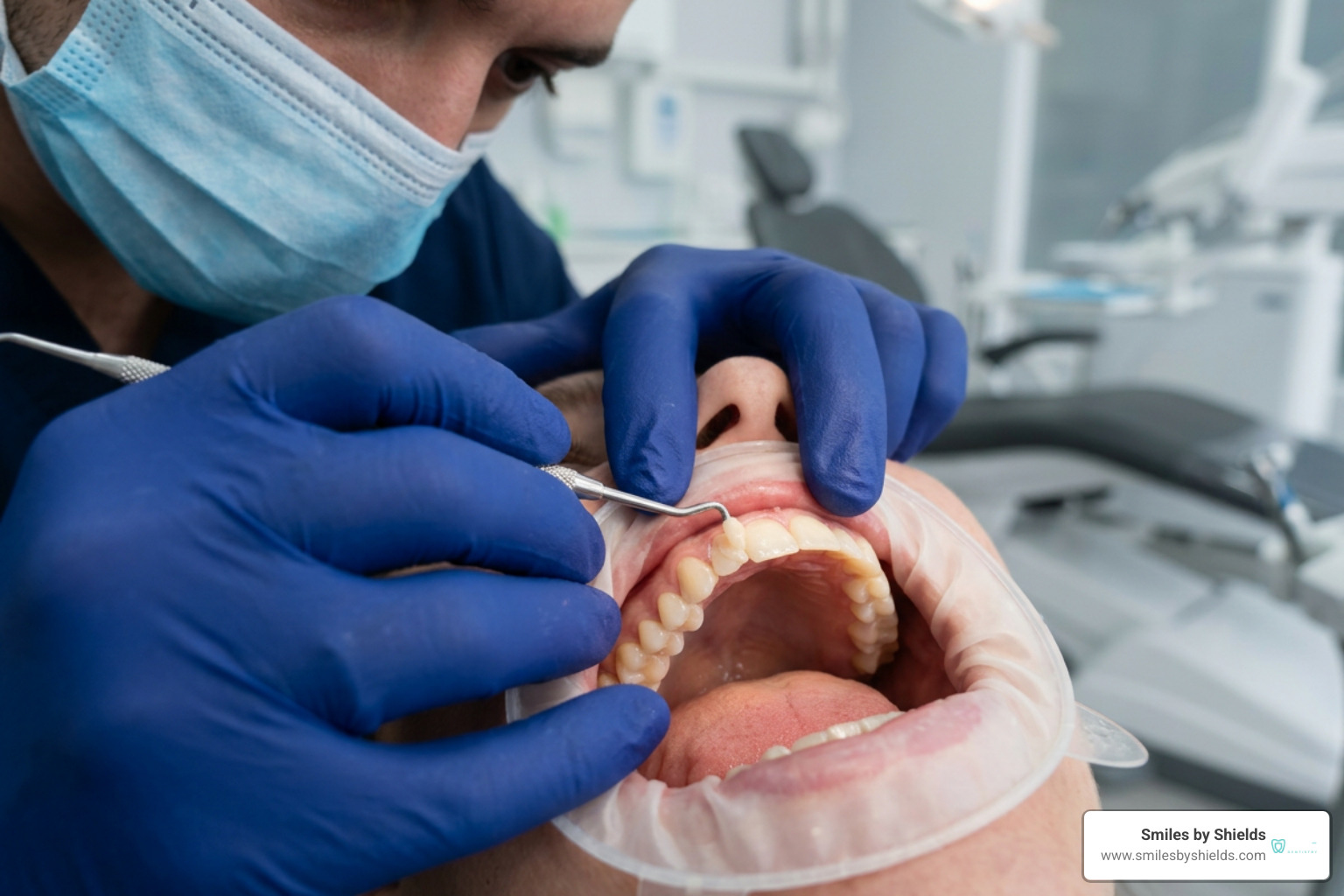
Finding non-toxic composite fillings begins with choosing an IAOMT-certified biological or holistic dentist who prioritizes biocompatible, metal-free materials. To ensure optimal safety, look for a practice that utilizes BPA-free, bio-based resin formulations and offers serum biocompatibility testing to screen for individual sensitivities. In biological dentistry, non toxic composite fillings restore decayed or damaged teeth by bonding seamlessly to natural enamel and dentin, matching the tooth’s biomechanics without exposing your body to harmful toxins.
Unlike older restorations that require cutting away healthy enamel for mechanical retention, composite resin forms a direct micromechanical bond with natural tooth structure. This conservative approach preserves healthy tooth structure while reinforcing the tooth against fractures, supporting your long-term oral biology and whole-body wellness.
Materials and Science Behind Non-Toxic Composite Fillings
Modern non-toxic composites consist of an advanced organic resin matrix blended with ultra-fine ceramic, quartz, or glass-like micro-particles. In biological dentistry, our priority is selecting materials free from endocrine disruptors, such as bisphenol-A (BPA) and its derivatives, prioritizing bio-based monomers derived from stable compounds like isosorbide.
These bio-based monomers demonstrate exceptionally low cytotoxicity and minimal residual monomer release. When we examine Beyond Silver: The Case for Modern Tooth-Colored Dental Fillings, the scientific superiority of resin bonding becomes clear.
The process begins by understanding The Real Cause of Tooth Decay: Acid. Acid-producing bacteria demineralize natural enamel, creating a cavity. Once that damaged area is cleared, the composite resin is placed directly into the prepared site. Advanced adhesive systems condition the tooth, allowing the resin matrix to flow microscopically into the enamel rods and dentinal tubules. Once cured with a specialized light, the ceramic filler particles lock together, forming a durable, highly wear-resistant surface that completely seals the margins against recurrent bacterial invasion.
Health Risks of Traditional Silver Amalgam vs. Non-Toxic Solutions
For over a century, dental amalgam—commonly referred to as “silver fillings”—was the standard treatment for cavities. However, dental amalgam is not pure silver; it is an alloy containing approximately 50% elemental liquid mercury bound with silver, tin, and copper.
| Feature / Metric | Traditional Silver Amalgam | Non-Toxic Composite Resin |
|---|---|---|
| Primary Composition | ~50% Elemental Mercury, Silver, Tin, Copper | Bio-compatible resin matrix, ceramic/quartz microfillers |
| Bonding Mechanism | Mechanical retention (requires cutting away healthy tooth) | Micromechanical adhesion (bonds directly to tooth) |
| Thermal Expansion | Expands/contracts significantly, risking tooth fractures | Expands and contracts at rates similar to natural tooth structure |
| Toxicity Concerns | Continuous release of low-level mercury vapor | Metal-free, BPA-safe, non-cytotoxic formulations |
| Aesthetic Integration | Dark gray/black appearance; stains surrounding enamel | Custom shade-matched to match your natural tooth color |
| Secondary Decay Detection | Opaque on x-rays, often masking deep marginal decay | Optimized radiopacity for accurate diagnostic monitoring |
The Systemic Impact of Dental Mercury
The primary concern with dental amalgam is its continuous release of elemental mercury vapor (Hg). Every time you chew, brush, or drink hot liquids, friction and heat cause trace amounts of microscopic mercury vapor to off-gas from the filling. This vapor is inhaled into the lungs, absorbed into the bloodstream, and distributed throughout bodily tissues.
Because mercury is lipophilic, it crosses the blood-brain barrier and the placenta, accumulating in fatty tissues, the central nervous system, kidneys, and liver over decades. In The Dark Side of Silver Fillings: How Mercury Could Affect Your Health, we highlight the broad array of physiological stresses associated with chronic heavy metal exposure.
The International Academy of Oral Medicine & Toxicology (IAOMT) lists more than 200 health conditions linked to dental mercury exposure. These systemic issues include:
- Neurological & Cognitive Complications: Brain fog, memory lapses, tremors, chronic headaches, and peripheral neuropathy.
- Autoimmune Activation: Increased cellular oxidative stress and cytokine production, aggravating conditions like Hashimoto’s thyroiditis, lupus, and rheumatoid arthritis.
- Cardiovascular Stress: Endothelial inflammation and heavy metal-induced autonomic dysfunction.
- Gastrointestinal & Immune Disruptions: Imbalances in the gut microbiome and chronic low-grade systemic inflammation.
Mercury-Free vs. Mercury-Safe Dental Practices
Understanding the difference between a “mercury-free” dentist and a “mercury-safe” dentist is critical for your health.
A mercury-free dental practice simply chooses not to place new silver amalgam fillings. However, if that practice drills out an old amalgam filling without safety precautions, the friction generated by the high-speed dental drill creates a massive cloud of toxic mercury vapor and particulate dust. This sudden spike in vapor can be inhaled directly by the patient and dental team, often causing acute toxic exposure.
In contrast, an IAOMT-certified mercury-safe practice follows the Safe Mercury Amalgam Removal Technique (SMART). When patients are Ditching Amalgam Fillings: What to Look for in a Mercury-Free Dentist, they should ensure rigorous removal standards are in place. Dr. Shields is Proud to Practice IAOMT Mercury Safe Dentistry, ensuring your body, our team, and the Jacksonville environment remain fully shielded from heavy metal contamination.
How to Choose the Right Biomimetic Restoration for Your Teeth
Every tooth requires an individualized approach depending on the size of the cavity, the location of the damage, and the amount of healthy enamel remaining. Biomimetic dentistry prioritizes conservative methods, preserving as much original tooth structure as possible.
When to Choose Fillings, Onlays, or Crowns
When decay compromises a tooth, selecting the appropriate restorative solution ensures lasting structural integrity:
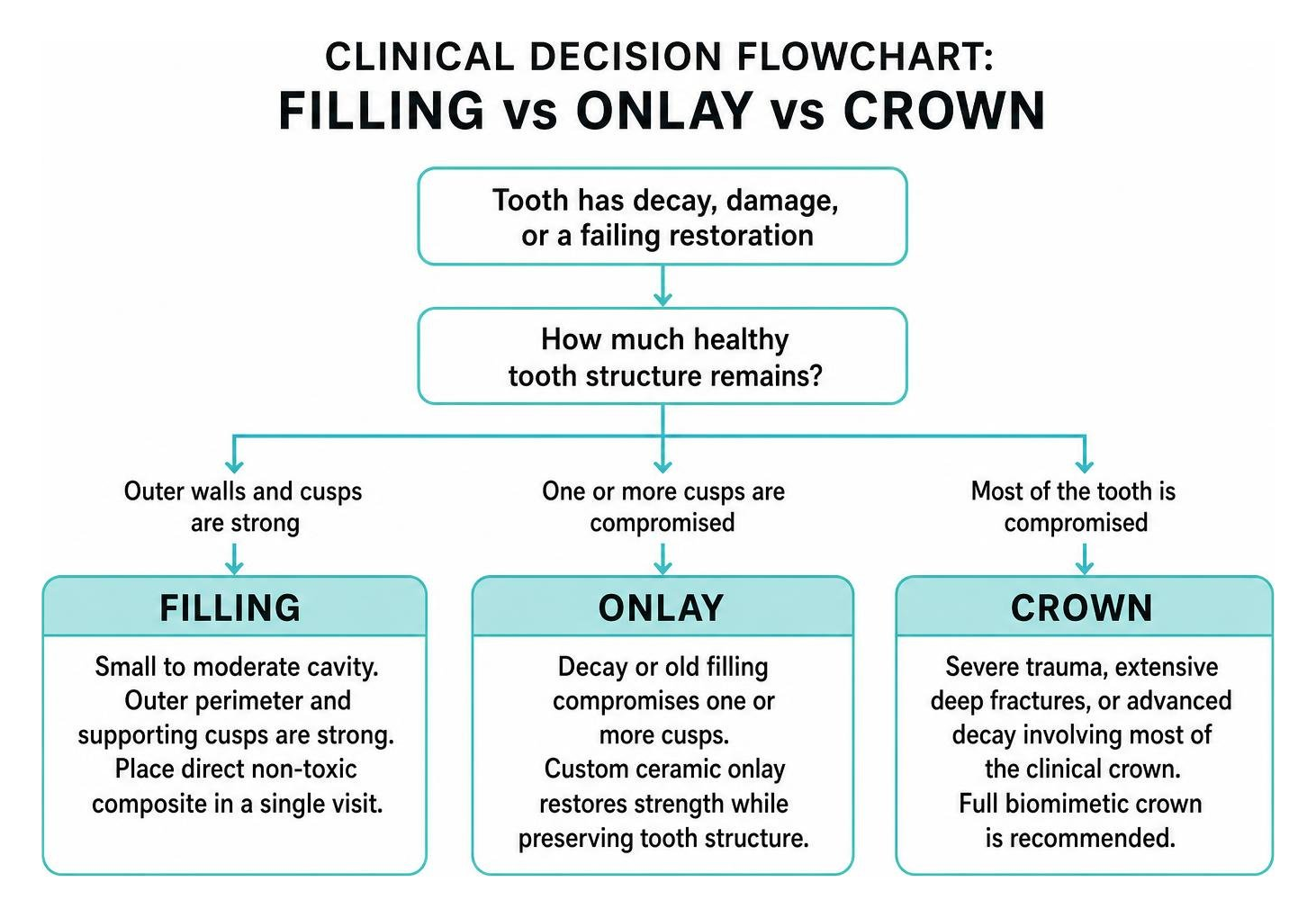
- Direct Non-Toxic Composite Fillings: Ideal for small-to-moderate cavities where the outer perimeter and supporting cusps of the tooth remain strong. The material is applied, sculpted, and bonded directly inside the tooth in a single appointment.
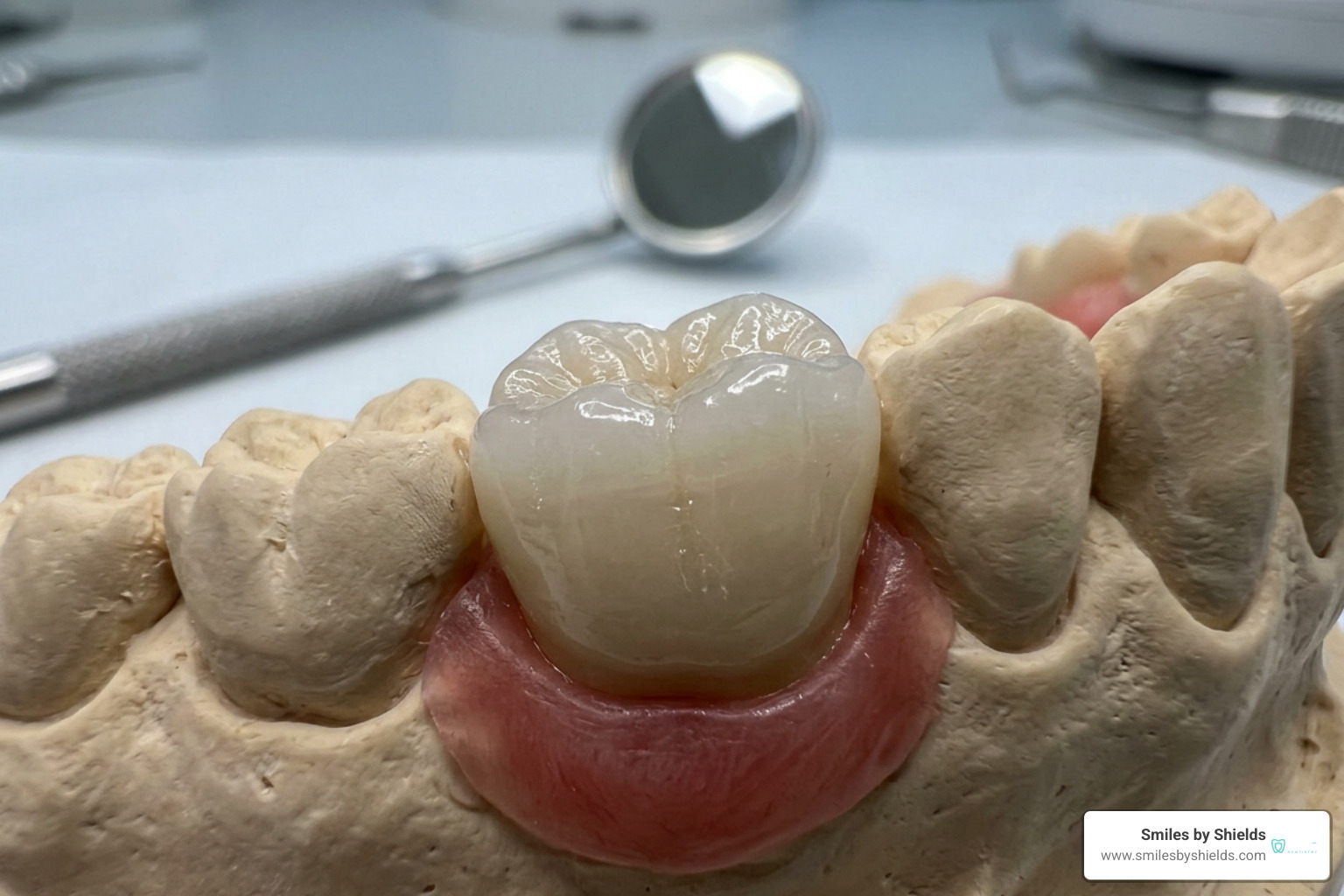
- Ceramic Inlays & Onlays: When decay or an old failing filling compromises one or more cusps (the biting points of the tooth), a simple composite filling may not provide adequate structural support. Instead of grinding the tooth down into a peg for a traditional crown, we preserve the healthy tooth structure and craft a custom ceramic onlay. As detailed in Onlays Could Be Right for You, onlays restore full biting strength while preserving vital tissue.
- Full Biomimetic Crowns: Reserved for teeth that have suffered severe trauma, extensive deep fractures, or advanced decay spanning the majority of the clinical crown. For more insight on how we evaluate these restorations, explore When Do You Need a Filling vs a Crown? Understanding the Difference.
Whole-Body Wellness and Biocompatibility Testing
Biocompatibility is personal. Every individual possesses a distinct biochemistry, immune baseline, and genetic profile. A restorative composite that is completely inert for one person might trigger a low-grade inflammatory or histamine response in an individual with specific sensitivities.
Integrating oral health with systemic wellness is fundamental to understanding What is Holistic Dentistry?. To ensure maximum compatibility:
- Serum Biocompatibility Testing: We can perform comprehensive blood reactivity panels, such as Biocomp testing. These tests screen your blood serum against a wide range of dental material components to help identify which composite resins, bonding agents, and cements are better suited for your body.
- Hypoallergenic Resins: We utilize advanced, non-cytotoxic composite resins formulated without BPA, Bis-GMA, Bis-EMA, TEGDMA, or heavy metal opacifiers.
- Immune System Support: By removing chronic toxic stressors and placing biologically compatible materials, we allow the immune system to allocate its energy toward cellular repair. Learn more about this dynamic in How Holistic Dentistry Supports Your Overall Health.
The Clinical Process: What to Expect During Treatment
Whether receiving a brand-new filling or replacing an aging restoration, knowing what to expect during your appointment ensures a comfortable, stress-free experience.

Safe Removal of Old Metal Restorations
If your treatment involves replacing old silver amalgam fillings, our team implements full IAOMT SMART protocols to ensure complete safety from start to finish. When exploring Understanding Safe Amalgam Removal and planning to Replace Old Fillings, we adhere to the following protective protocol:
- Pre-Rinse with Adsorbents: You will rinse with an activated charcoal or chlorella slurry to bind any loose metal particulates in the mouth.
- Full Patient & Operator Draping: Impermeable protective barriers cover your clothing, skin, and face to prevent microscopic particles from settling on you.
- Complete Isolation: We isolate the tooth undergoing treatment, preventing amalgam debris from contacting oral tissues or being swallowed.
- Continuous External Oxygen: We provide a comfortable nasal cannula delivering clean, external oxygen so you never breathe ambient operatory air.
- High-Volume Vapor Evacuation: Specialized source-capture air scrubbers and high-volume suction tips operate inches from the tooth to vacuum away mercury vapor and slurry.
- Sectioning & Cool Water Copious Irrigation: The old amalgam is cut into large chunks using specialized carbide burs under a heavy stream of water, minimizing heat generation and reducing vapor release.
Step-by-Step Procedure for Placing Non-Toxic Composite Fillings
Once the old restoration or active decay is cleared, placing your biocompatible composite follows a precise, biomimetic protocol. For a comprehensive overview, review All About Dental Fillings: Types, Procedures, and What to Expect.
- Tooth Preparation & Conditioning: The decay is gently removed, often paired with ozone gas therapy to sterilize the dentinal tubules without harsh chemical disinfectants. A mild conditioning agent prepares the enamel surface.
- Adhesive Application: A biocompatible bonding agent is applied across the prepared enamel and dentin. This adhesive flows into microscopic porosities, creating a hybrid layer that seals the tooth pulp against postoperative sensitivity.
- Incremental Placement: Composite resin is applied in thin, anatomical layers (less than 2 millimeters each). Applying the resin in increments prevents polymerization shrinkage stress and ensures the curing light thoroughly polymerizes every layer.
- Shade Integration: We select customized shades that match your natural enamel variations, matching optical translucency, hue, and brightness.
- Sculpting and Curing: Each layer is cured using a calibrated LED curing light. The surface is sculpted to match your natural biting anatomy.
- Occlusal Calibration & High-Gloss Polish: We check your bite to ensure perfect jaw alignment and polish the restoration with ultra-fine polishing discs. The result is a smooth, glassy finish that blends invisibly with your smile.
How long do biocompatible composite fillings typically last?
High-quality non-toxic composite fillings last between 7 and 15 years, and frequently much longer with excellent oral hygiene and routine holistic dental cleanings.
Clinical longevity depends on the size of the restoration, your bite dynamics (such as nighttime grinding or clenching), dietary habits, and home hygiene. Because composite resin bonds directly to enamel and dentin, it provides structural support that helps prevent marginal leakage over time.
Are there any risks or allergic reactions associated with composite resin?
While composite resins are significantly safer and more biocompatible than mercury amalgam, rare localized allergies or sensitivities to specific acrylic monomers (such as HEMA or TEGDMA) can occur.
To eliminate guesswork, our biological dental practice offers serum biocompatibility testing. This simple blood test screens your immune markers against various restorative compounds, ensuring every composite resin, liner, and bonding adhesive we use is completely compatible with your biochemistry.
Restoring Your Smile with Biological Integrity
The materials placed into your teeth shouldn’t simply fill empty space—they should work harmoniously with your immune system, preserve natural tooth structure, and protect your overall well-being. By choosing modern, non-toxic composite restorations and partnering with an IAOMT-certified practice, you protect both your oral biology and your whole-body health.
If you have questions about existing silver amalgam fillings or need a gentle, biocompatible restoration, contact Smiles by Shields today. Our team in Jacksonville, FL is dedicated to providing personalized, non-toxic dental care that keeps your smile bright, vibrant, and healthy for life.