Dental Biocompatibility Testing: A Safer Way to Choose Materials
Dental biocompatibility testing helps a dentist select materials that are less likely to trigger an unwanted reaction in a specific patient. It can be especially useful before crowns, fillings, implants, dentures, or other restorations for people with known metal allergies, multiple chemical sensitivities, autoimmune concerns, or a history of reacting to dental work.
Testing does not guarantee that a material will cause no symptoms. But it adds patient-specific information to the decision alongside a material’s safety record, its ingredients, where it will be placed, and how long it will contact the body.
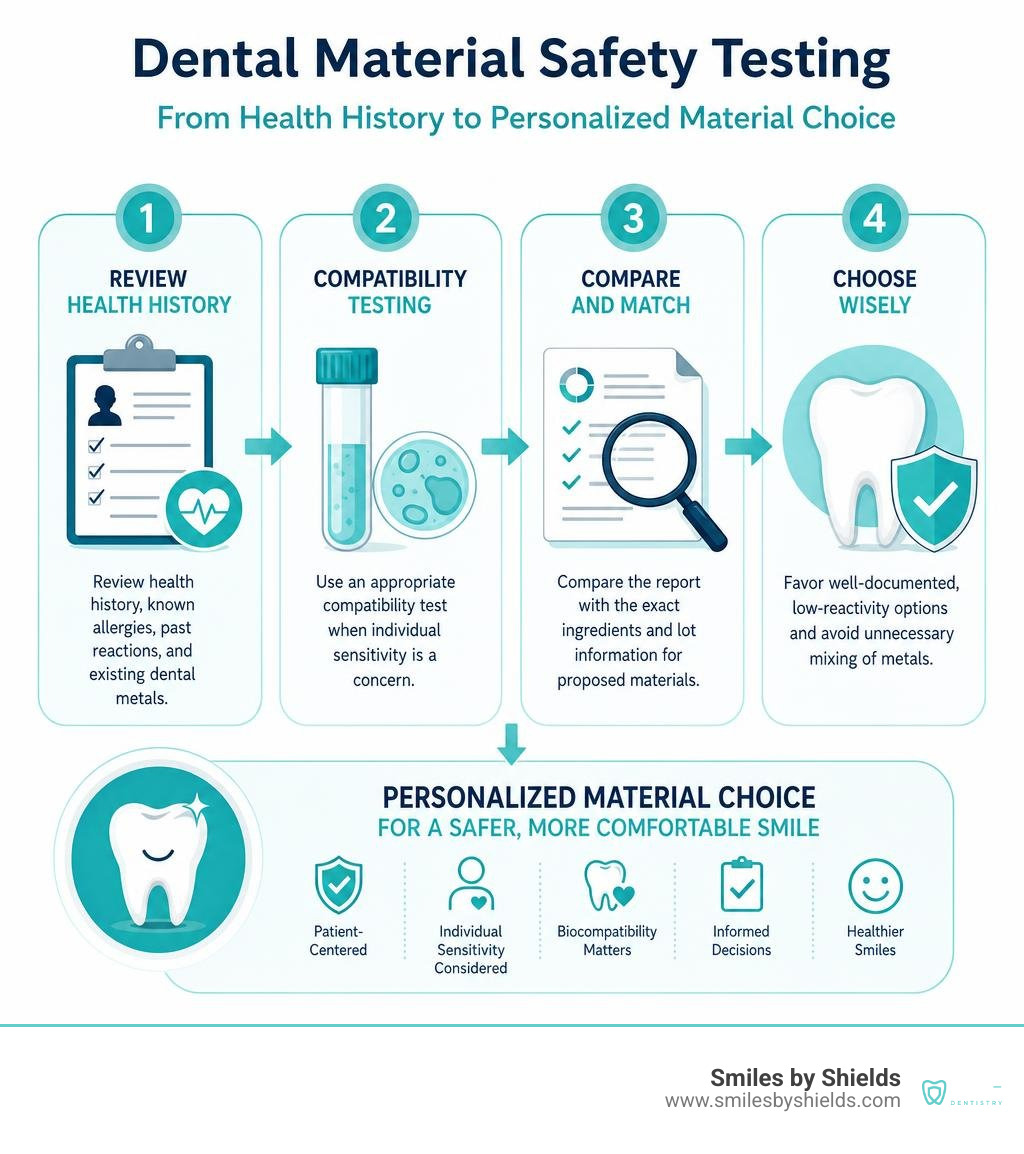
A practical approach is to:
- Review health history, known allergies, past reactions, and existing dental metals.
- Use an appropriate compatibility test when individual sensitivity is a concern.
- Compare the report with the exact ingredients and lot information for proposed materials.
- Favor well-documented, low-reactivity options and avoid unnecessary mixing of metals.
This matters because materials that are safe for most people are not always ideal for every person. International standards such as ISO 7405 help manufacturers evaluate general biological safety, while clinical compatibility tests aim to explore whether a particular patient’s immune system may react to a material.
I am Dr. Tiffany K. Shields, owner and lead dentist at Smiles By Shields Dentistry in Jacksonville, Florida. My background in microbiology and cell science, along with my work in integrative dentistry, informs a careful, individualized approach to dental biocompatibility testing and material selection.
Glossary for dental biocompatibility testing:
Why Dental Biocompatibility Testing Matters for Patient Health
Every substance placed into the oral cavity interacts continuously with living tissue, vascular networks, and the immune system. When a restorative material is placed—whether it is a composite resin filling, a porcelain-fused-to-metal crown, an endodontic sealer, or a dental implant—it does not simply sit inertly in isolation. Saliva acts as a conductive fluid, temperature fluctuations alter physical properties, and chewing forces create microscopic friction.
At Smiles by Shields, understanding the mouth body connection is at the core of everything we do. The oral cavity is the gateway to the entire body. When materials leach sub-micron particles, free monomers, or metallic ions into the surrounding gum tissue and bloodstream, the immune system may mount a defense. For an individual with an already burdened immune system, this persistent exposure can contribute to chronic systemic inflammation, fatigue, neurological irritations, and localized tissue destruction. Recognizing how your dental health is tied to overall health means evaluating how every dental restoration influences your overall vitality over decades.
How Dental Biocompatibility Testing Identifies Material Sensitivities
No two biological terrains are completely identical. While standard dental products are approved based on population-wide safety averages, individual reactivity varies widely. A material that causes zero irritation in one patient may trigger severe localized lichenoid reactions or chronic immune activation in another.
This is especially true for individuals experiencing environmental sensitivities. Multiple chemical sensitivity (MCS) is estimated to affect between 12% and 33% of the general population to varying degrees, with 2% to 6% receiving a formal clinical diagnosis. Patients with MCS, mast cell activation, or diagnosed autoimmune disorders often experience hyper-reactivity to common chemicals, bonding adhesives, and heavy metals.
Furthermore, the role of genes in dental care highlights how genetic variations influence detoxification pathways (such as methylation and glutathione production). When a patient cannot efficiently clear mobilized chemical compounds or metallic ions, dental materials that release trace leachates can tip the balance toward systemic dysfunction. Biocompatibility screening identifies these delayed Type IV hypersensitivities and antibody reactions before materials are permanently bonded to your teeth.
The Danger of Dental Toxicity, Bad Actors, and Oral Galvanism
For decades, traditional dentistry relied heavily on dental amalgams—often colloquially termed “silver fillings.” In reality, dental amalgam consists of roughly 50% elemental liquid mercury bound with silver, tin, and copper. Mercury is a potent neurotoxin that continuously emits odorless, invisible vapors accelerated by chewing, drinking hot liquids, and tooth brushing. Because of the systemic risks associated with chronic heavy metal accumulation, many patients actively seek to understand why you should have amalgam fillings removed under strict safety protocols.
Beyond mercury, other “bad actors” in dental history include base metal alloys containing nickel, beryllium, and cobalt. Nickel is one of the most common contact allergens in the world. Placing a nickel-containing crown margin near vascular gum tissue can lead to chronic marginal gingivitis, systemic allergic dermatitis, and immune stress. Similarly, certain dental sealants and composite resins historically broke down into bisphenol A derivatives, raising concerns regarding BPA exposure and new concerns for oral health due to endocrine-disrupting properties.
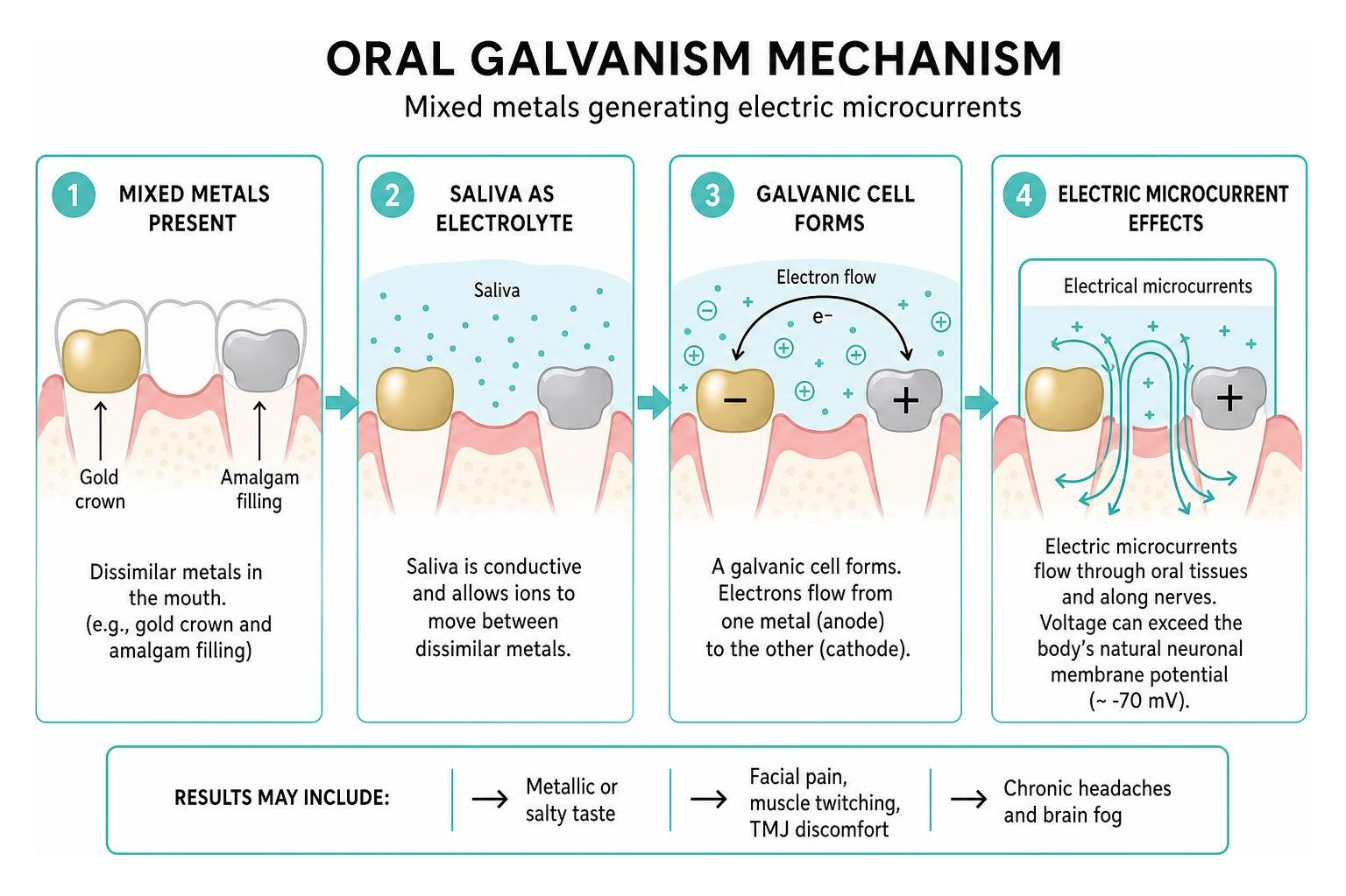
Another overlooked consequence of mixed dental metals is oral galvanism. When dissimilar metals (such as a gold crown opposing an old amalgam filling or a titanium implant beneath a metal-based bridge) sit in an electrolyte solution like saliva, they form a biological battery. This galvanic action creates measurable electrical microcurrents and voltages. In some cases, intra-oral voltage can exceed the body’s natural neuronal membrane potential (around -70 mV), sending erratic electrical signals along the trigeminal nerve. Patients suffering from oral galvanism may report:
- A persistent metallic or salty taste
- Unexplained facial pain, muscle twitching, or TMJ discomfort
- Chronic headaches and brain fog
- Accelerated corrosion of the restorations, releasing more metal ions into the saliva
Primary Methods of Clinical and Serum Compatibility Testing
To ensure total material compatibility, biological dentistry relies on specialized laboratory testing platforms. Rather than guessing which composite, ceramic, or cement is safest, we can evaluate a patient’s systemic reactivity using specialized serum antibody assays and cellular proliferation tests.
Many patients ask, what is bio testing? In short, it is an individualized laboratory evaluation of your blood serum to detect immune system reactivity against thousands of trade-name dental components.
Below is a direct comparison of the two primary laboratory modalities used to screen for dental material compatibility:
| Feature / Metric | Serum Reactivity Testing (BioComp Labs / ELISA) | MELISA Testing (Lymphocyte Activation) |
|---|---|---|
| Primary Sample | Blood serum (antibodies) | Whole blood (isolated white blood cells) |
| Biological Target | Systemic antibody-antigen precipitation (IgG / IgM) | Type IV cell-mediated memory T-lymphocyte response |
| Scope of Materials | Over 11,000 commercial products across 21 categories | Specific elemental metals (Titanium, Nickel, Mercury, etc.) |
| Primary Clinical Use | Broad selection of composite resins, cements, ceramics | Confirming specific metal allergies before implant placement |
| Turnaround Time | Typically 7–14 business days | Typically 10–14 business days |
Serum Reactivity Testing and Comprehensive Material Panels
Serum antibody testing—pioneered by laboratories such as BioComp Labs—offers an exhaustive approach to dental restoration planning. A single blood draw allows laboratory technicians to expose the patient’s blood serum to hundreds of individual chemical compounds, mineral salts, and resin extracts.
BioComp Labs tests reactivity to the components of over 11,000 dental materials, grouping them into 21 distinct clinical categories (such as bonding agents, composites, ceramics, temporary materials, and cements). The assay measures the level of immune protein precipitation, classifying each material into one of three distinct tiers:
- Least Reactive (Green / Suitable): The patient’s immune system demonstrates little to no antibody reactivity. These are the preferred materials for clinical use.
- Moderately Reactive (Yellow / Caution): A mild immune response is detected; materials should be used only if no suitable least-reactive alternative exists.
- Highly Reactive (Red / Avoid): The patient’s serum exhibits pronounced antibody clustering. These materials must be avoided to prevent triggering systemic inflammation.
Advanced ELISA/ACT tests also assess delayed lymphocyte responses to environmental and dental chemicals, offering an even deeper diagnostic window for hyper-sensitive patients.
MELISA Testing for Titanium and Metal Hypersensitivity
While serum testing evaluates general antibody binding to broad material formulas, the MELISA (Memory Lymphocyte Immunostimulation Assay) test specializes in diagnosing cell-mediated (Type IV) delayed hypersensitivity to elemental metals.
The MELISA assay isolates living white blood cells from a patient’s blood sample. These cells are incubated with specific concentrations of metal antigens—including titanium, gold, nickel, palladium, chromium, and mercury. If the patient’s immune system has previously been sensitized to that metal, the memory T-lymphocytes will enlarge, proliferate, and divide, which is quantified scientifically.
This assay is especially valuable when planning tooth replacements. While titanium has long been considered the orthopedic standard, research indicates that of those tested for titanium sensitivity using the MELISA test, approximately 4% test positive. For those 4%, placing a traditional titanium implant could result in bone loss, chronic tissue inflammation, or unexplained implant failure. In our Jacksonville practice, when a patient tests reactive to titanium—or prefers to avoid metal altogether—we utilize high-strength, biocompatible zirconia (ceramic) implants.
International Safety Standards vs. Individual Patient Testing
It is common to wonder: If dental materials are already tested by government regulators and safety organizations, why do I need an individual biocompatibility test? The answer lies in understanding the difference between universal toxicological safety and personalized immunological compatibility.
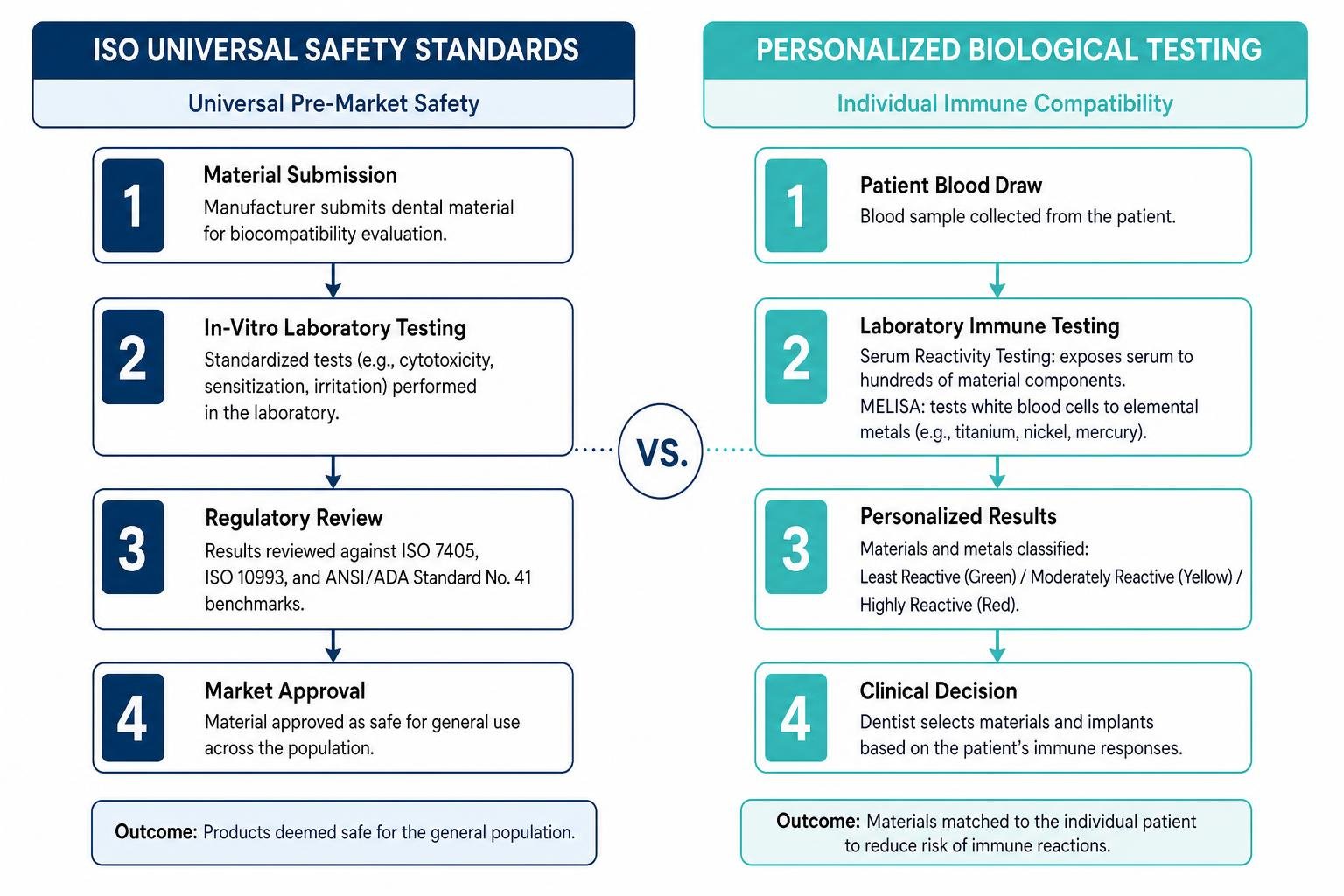
Laboratory In-Vitro Assays and Regulatory Benchmarks
Before any dental product reaches the market, it must meet rigorous international benchmarks. The primary standard governing dental devices is ISO 7405 (Dentistry — Evaluation of biocompatibility of medical devices used in dentistry), which works alongside the broader ISO 10993 series for medical device biological evaluation. In the United States, the American Dental Association collaborates on these frameworks through ANSI/ADA Standard No. 41.
These standards mandate rigorous pre-market evaluations, including:
- Chemical Characterization: Identifying all leachable chemical constituents, raw monomers, catalysts, and heavy metal impurities per ISO 10993-18.
- Agar Diffusion Assays: Placing cured material discs onto cell culture monolayers separated by an agar layer to observe direct cellular death (lysis).
- Dentin Barrier Cytotoxicity Tests: Testing how toxic substances diffuse through real dentin slices to reach underlying pulp cell cultures, simulating deep dental cavities.
- Sensitization & Mutagenicity Assays: Screening for DNA alterations and acute tissue irritation via validated in-vitro and reporter gene tests (such as ARE reporter assays).
These regulatory standards are vital because they establish a universal “Margin of Safety” (MoS), ensuring that dental materials do not cause outright cell necrosis, toxicity, or acute poisoning in the general population.
The Critical Difference Between General Safety and Personalized Reactivity
While ISO 7405 determines whether a material is inherently cytotoxic (cell-killing) to human cells on average, it cannot predict whether a material is immunogenic (allergy-inducing) to your unique immune system.
A dental composite resin might pass every ISO cytotoxicity standard with flying colors because it does not kill healthy pulp cells in a laboratory petri dish. However, if your body possesses specific antibodies or sensitized T-cells against a particular photoinitiator or cross-linking monomer within that resin, placing it in your tooth can trigger an allergic response.
At Smiles by Shields, we believe that your smile is one of a kind. Universal standards establish the baseline for non-toxicity, but individualized testing tailors material selection to your unique biological blueprint.
Practical Steps for Choosing and Verifying Safe Dental Materials
Achieving optimal biological safety requires a coordinated approach between patient, dentist, and specialized testing laboratories. In our holistic practice, we follow a methodical protocol to ensure that every material placed in your mouth promotes long-term health.
If you are planning significant restorative work, seeking to replace silver fillings with porcelain, or navigating complex health challenges, our integrative dentistry framework provides total clarity:
- Comprehensive Health Intake: We review your complete medical history, previous allergic reactions, autoimmune diagnoses, and current metal restorations.
- Targeted Lab Kit Ordering: We provide a specialized blood collection kit from BioComp Labs or a MELISA testing partner.
- Strategic Blood Draw Scheduling: Blood draws are scheduled early in the week (Monday through Wednesday) to ensure the live serum sample reaches the testing facility without weekend shipping delays.
- Detailed Report Cross-Referencing: Once the comprehensive report arrives, we match our in-office restorative materials, cements, liners, and porcelain blocks against your “Least Reactive” list.
- Physical Spot-Testing (When Indicated): For hyper-sensitive patients, a small, fully cured sample of the proposed composite can be placed against oral mucosa or worn as a non-invasive challenge to verify tolerance.
- Execution with Biological Protocols: Restorations are placed using biocompatible bonding agents, fluoride-free materials, and strict isolation techniques (such as dental dams and advanced suction systems).
How to Interpret Reactivity Reports and Material Categories
When your biocompatibility report is returned, it presents a clear, comprehensive breakdown of thousands of brand-name products across all standard dental categories. Rather than leaving you to decipher complex chemical names, the report organizes items by clinical use:
- Direct Restorative Composites: Tooth-colored filling materials, categorized by resin base (e.g., Bis-GMA free, UDMA based).
- Cements & Liners: Products used to anchor crowns, inlays, and onlays, ensuring zero irritation to the underlying dental pulp.
- Crown & Bridge Ceramics: High-purity lithium disilicate, feldspathic porcelain, and solid zirconia options.
- Prosthetic & Denture Resins: Acrylics, flexible nylon polymers, and framework materials evaluated for tissue contact.
By selecting products exclusively from your least-reactive list, we eliminate the guesswork and ensure your body does not expend vital immune energy fighting your dental restorations.
The Future of Dental Biocompatibility Testing and Advanced Diagnostics
The field of dental material testing is advancing rapidly. Researchers are moving beyond traditional 2D cell cultures toward sophisticated organ-on-a-chip microfluidic systems.
Platforms such as the DentCytotool simulate the complex 3D architecture of human teeth, featuring real dentinal tubules, dynamic pulpal fluid microcirculation, and co-cultures of human odontoblasts and vascular endothelial cells. These cutting-edge models allow scientists to observe precisely how sub-micron particles and chemical monomers diffuse through living tooth structures in real time. In the coming years, combining microfluidic diagnostic chips with patient-derived stem cells may allow clinicians to test dental materials on a patient’s exact cell lines before treatment begins.
Frequently Asked Questions About Dental Material Safety
Who should consider getting tested for dental material compatibility?
While anyone desiring clean, non-toxic dental care can benefit from testing, it is strongly recommended for:
- Individuals diagnosed with autoimmune conditions (such as Hashimoto’s, Lupus, Multiple Sclerosis, or Rheumatoid Arthritis).
- Patients with diagnosed Multiple Chemical Sensitivities (MCS) or chronic environmental illness.
- Anyone with a history of skin reactions to costume jewelry, belt buckles, or metal watchbands.
- Patients planning extensive full-mouth rehabilitations, cosmetic makeovers, or implant placement.
- Individuals experiencing unexplained oral burning, chronic fatigue, or joint pain following past dental procedures.
How long does it take to receive results from a serum compatibility test?
Once your blood draw is completed and shipped to the testing facility, processing typically takes between 7 to 14 business days. Because live cellular assays and antibody precipitation tests require controlled laboratory incubation, this timeframe ensures maximum accuracy. We review your completed results together before finalizing your treatment plan.
Are metal-free restorations completely hypoallergenic for everyone?
While high-grade ceramics (such as pure zirconia and porcelain) are among the most inert and biocompatible substances known to dentistry, no single material is 100% hypoallergenic for all humans. Composite resins contain various organic methacrylate polymers, cross-linkers, photoinitiators, and mineral fillers that can occasionally trigger an immune response in sensitive individuals. Biocompatibility testing allows us to verify that even metal-free and BPA-free products are well tolerated by your specific biochemistry.
Conclusion: Partnering with Nature for Long-Term Vitality
Your body is an interconnected biological ecosystem. Every material introduced into your mouth should support your wellness rather than burden your immune system. By combining universal international safety standards with personalized serum compatibility testing, biological dentistry bridges rigorous medical science with compassionate, whole-body care.
At Smiles by Shields in Jacksonville, Florida, we are dedicated to providing biocompatible, mercury-free, and fluoride-free dental care designed around your unique biological needs. If you are ready to experience dental care that honors your total-body health, explore what is holistic dentistry? and schedule a consultation with our team today.