When Your Dentist Says “Root Canal” – What Options May Be Possible
Holistic root canal alternatives may be an option for some patients, and more people are asking about them every year. Here’s a quick look at the main options:
- Vital pulp therapy (pulp capping) — preserves the living nerve when decay has not fully reached it
- Ozone therapy — uses concentrated oxygen (O3) to reduce bacteria deep in the tooth without synthetic chemicals
- Laser disinfection — targets infected tissue with precision, often with little or no anesthesia needed
- Biomimetic dentistry — rebuilds the tooth layer by layer to restore strength and protect the nerve
- Biocompatible restorative care — uses body-friendly materials to seal and support weakened tooth structure
- Tooth extraction with ceramic (zirconia) implant — a metal-free replacement option when the tooth truly cannot be saved
When a tooth has a true nerve infection, the realistic choices are usually root canal therapy or extraction. But when decay is deep without full infection, there may be tooth-preserving alternatives. Conventional root canal treatment removes the nerve and blood supply, seals the canals with gutta-percha, and often restores the tooth with a crown.
For many patients, that’s where the concern begins.
Is a dead, sealed tooth really safe long-term? Could trapped bacteria cause problems elsewhere in the body? These are fair questions — and the research around them is growing.
At Smiles by Shields, we believe you deserve clear, honest information before making any decision about your dental care. Whether you’re hoping to save your tooth naturally, explore regenerative techniques, or simply understand all your options, this guide walks you through what’s available in 2026 — from the most conservative nerve-preserving treatments to full biological tooth replacement.
Understanding the Risks: Why Look Beyond Traditional Endodontics?
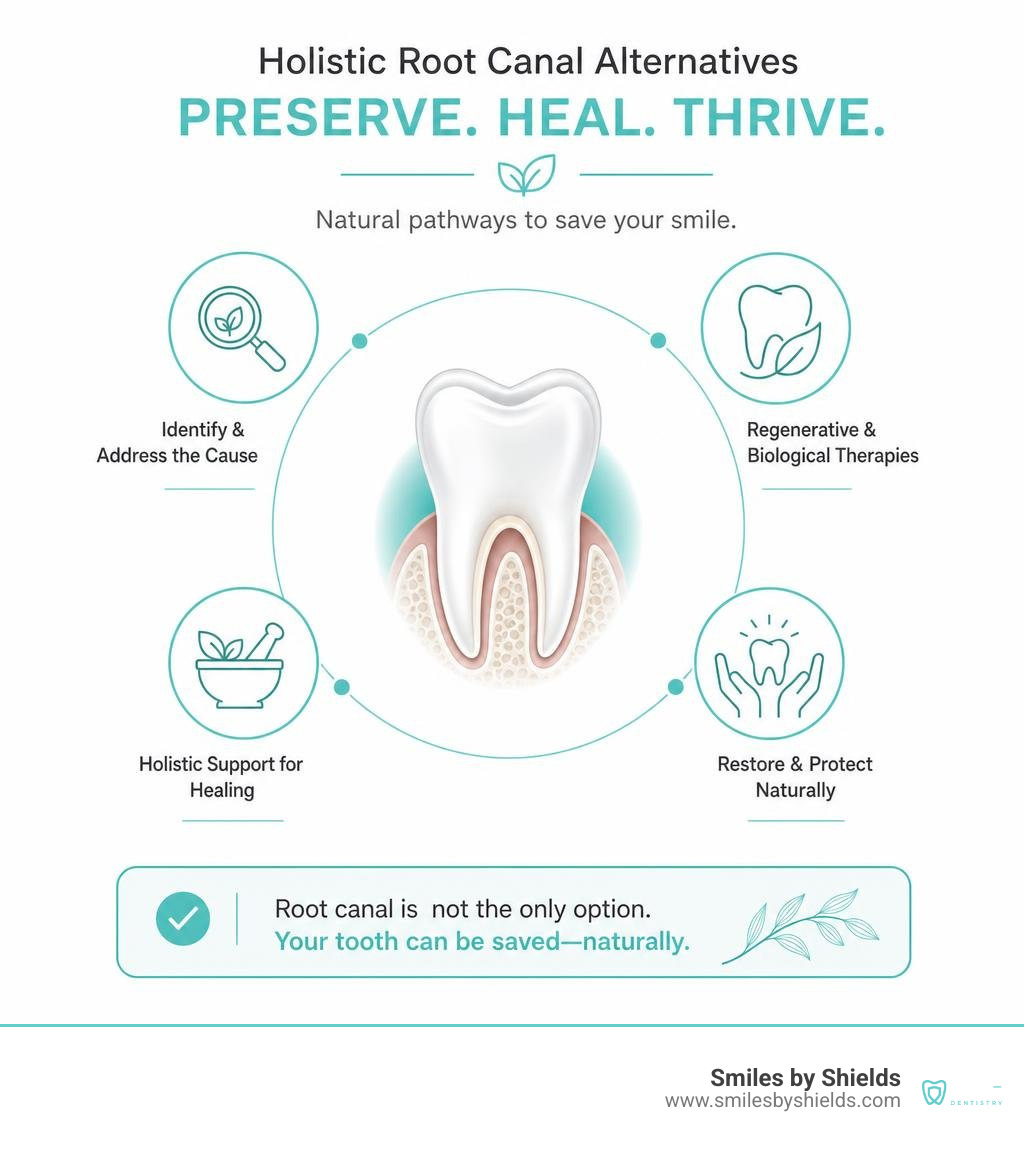
To understand why so many people search for holistic root canal alternatives, it helps to look at what actually happens inside a tooth during traditional root canal therapy.
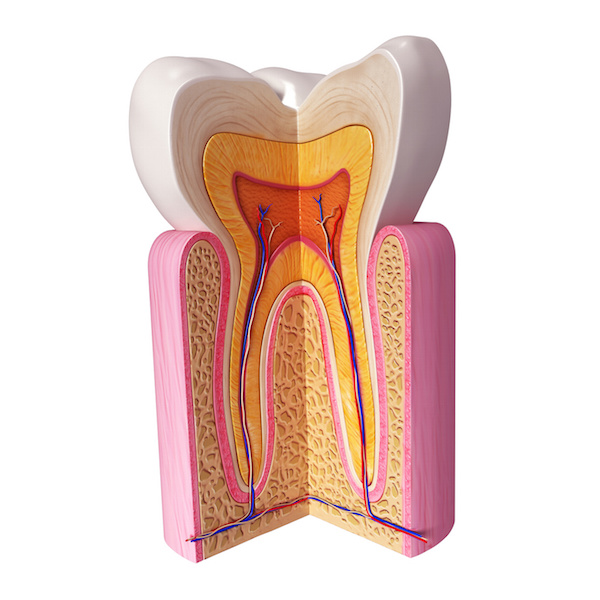
A tooth isn’t a solid block of enamel. Inside every tooth sits a complex living system made up of blood vessels, nerves, soft pulp tissue, and miles of microscopic channels called dentinal tubules. When a conventional root canal is performed, the dentist removes the central nerve and pulp tissue, cleans out the main root canals, and packs them with synthetic materials.
However, even the most skilled endodontist cannot reach every tiny branch of the dentinal tubule network with standard mechanical files alone. A single tooth may contain miles of microscopic tubules, where anaerobic bacteria can hide when pulp tissue dies. This is where integrative root canal therapy can help. Technologies like GentleWave use advanced fluid movement to clean complex canal anatomy more thoroughly, while ozone therapy may help reduce harmful microbes in hard-to-reach spaces. Together, these tools support deeper disinfection and a more biological approach to saving the tooth.
This ongoing, low-grade immune reaction is central to Understanding the Mouth Body Connection. When the immune system is forced to fight a persistent microbial presence in the jawbone, it can trigger localized jawbone cavitations (areas of ischemic bone necrosis) or fuel systemic inflammatory burden across the body.
Hidden Microorganisms and Systemic Impact
Inside an oxygen-deprived root canal environment, surviving bacteria can adapt and thrive as anaerobic strains, releasing toxic endotoxins. Because the tooth no longer has its natural blood supply, immune cells cannot easily reach bacteria hidden in microscopic tubules. Ozone therapy, delivered as a controlled ozone-oxygen mixture, may help reduce this microbial burden as part of ongoing biological dental maintenance.
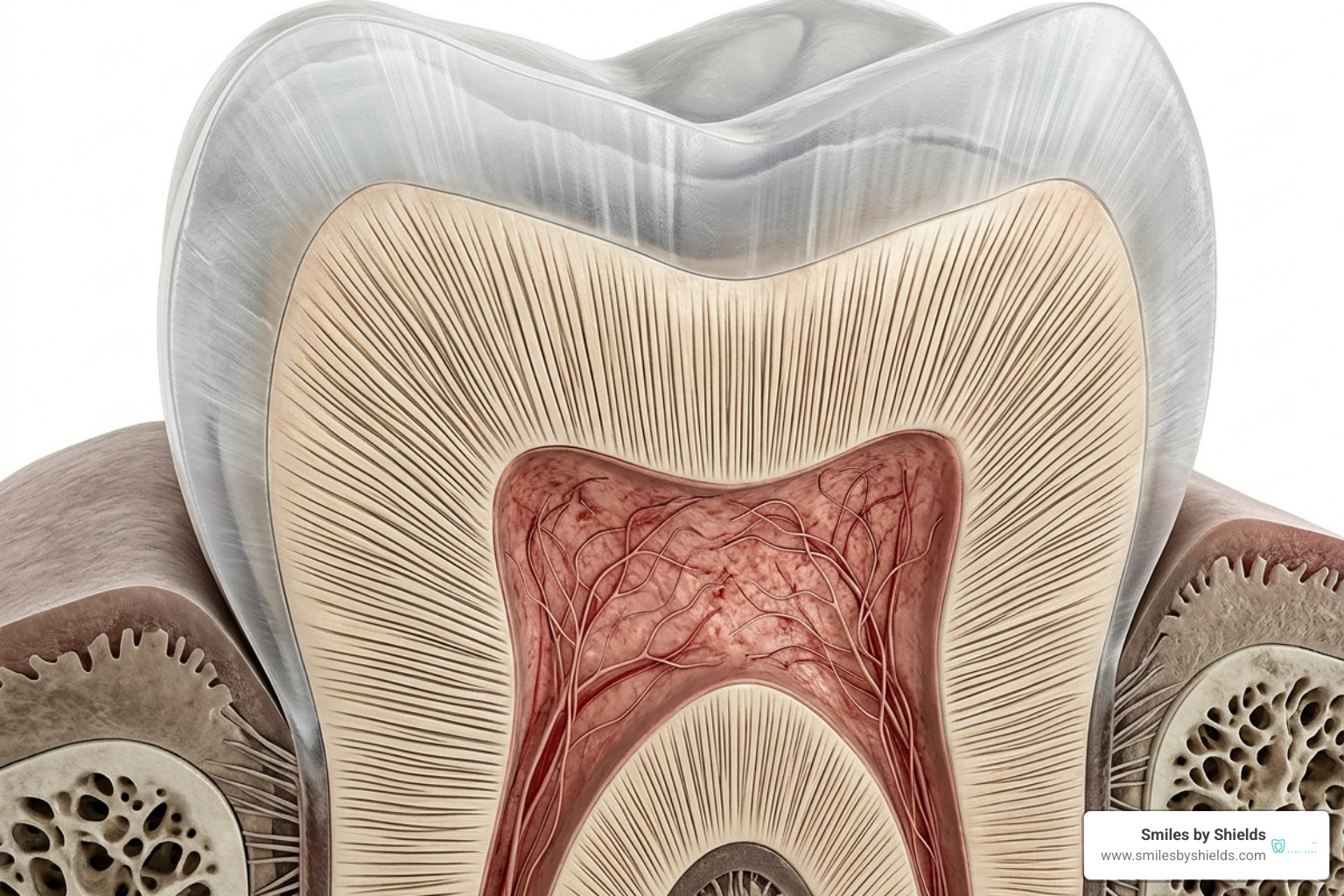
The bigger concern is a hidden infection around the root canal, especially near the root tip or in the surrounding jawbone. The body may wall off that area with chronic inflammatory tissue, which can keep the immune system on low-level alert. For some people, that ongoing burden may contribute to fatigue, joint discomfort, skin flare-ups, or immune stress. Biological dentistry looks closely for these silent infections before deciding whether a tooth can safely stay.
Potential Complications of Conventional Obturation
Conventional root canals rely on obturation—filling the hollowed-out canal space with gutta-percha (a thermoplastic rubber compound) and zinc oxide-eugenol or resin sealers. While this provides a physical barrier, gutta-percha does not form a chemical bond with dentin. Over time, temperature changes and chewing forces can cause micro-gaps to form along the canal walls.
- Gutta-Percha Leaks & Coronal Microleakage: If the top seal (the crown or filling) develops microscopic cracks or gaps, saliva and bacteria can migrate back down the root canal system. Research shows that if the coronal seal is compromised, bacteria or their endotoxins can reach the apex of the tooth in as little as 20 days.
- Brittle Enamel and Tooth Fractures: A tooth that has undergone a traditional root canal loses its blood flow, hydration, and internal nerve feedback. Over the years, the remaining tooth structure becomes increasingly brittle—like a dry branch compared to a green one. This significantly increases the risk of vertical root fractures, which frequently end in irreversible tooth loss.
Exploring Holistic Root Canal Alternatives for Total-Body Wellness
The main goal of biological dentistry is to intervene before a tooth nerve becomes irreversibly damaged. By catching deep decay early and preserving living tissue, we can often bypass the need for root canals altogether.
So, What is Holistic Dentistry? It is an approach that treats teeth as integral parts of your entire biological system. Rather than viewing a deep cavity as an isolated structural flaw, biological dentists use non-toxic materials, natural antimicrobial therapies, and biomimetic restoration techniques to protect the living nerve, encourage natural dentin remineralization, and maintain long-term systemic wellness.
Non-Invasive Holistic Root Canal Alternatives That Preserve the Nerve
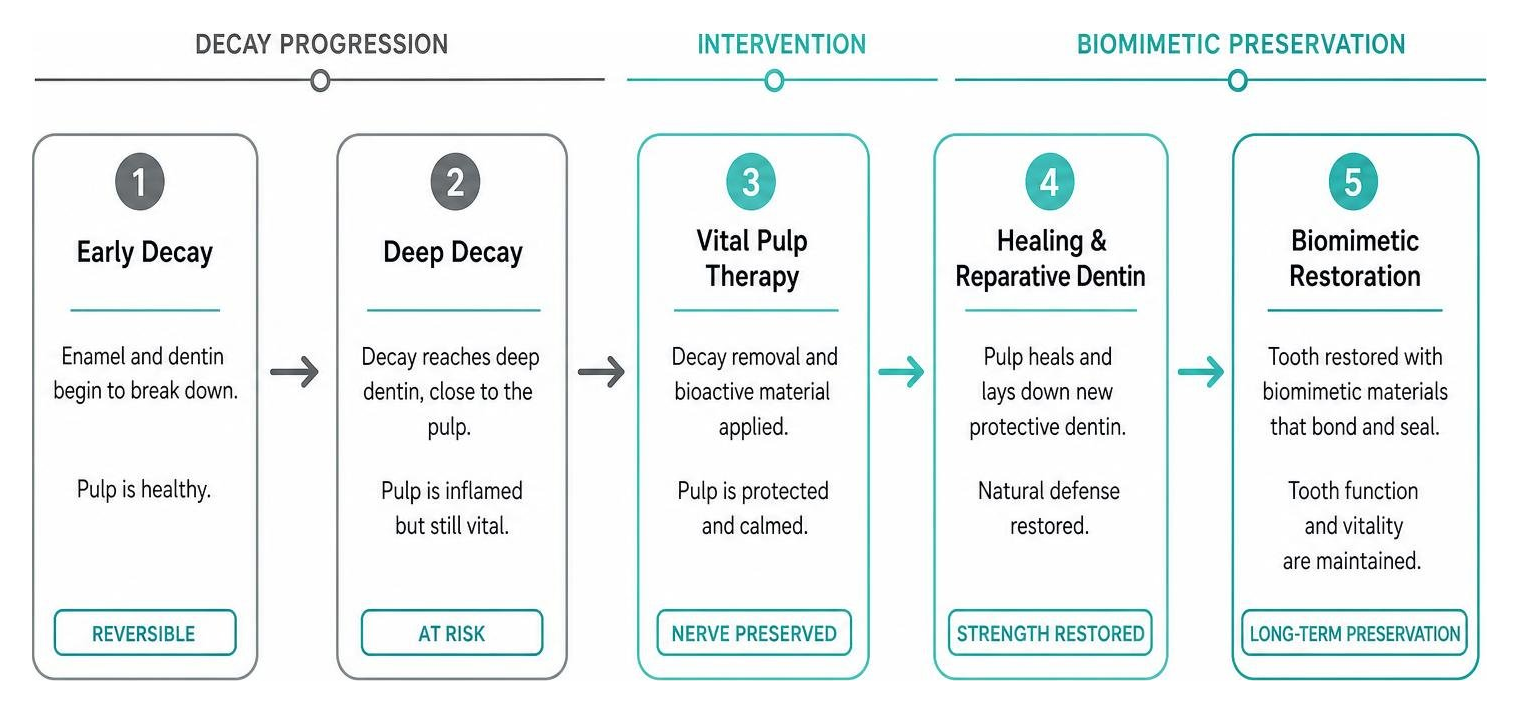
When decay extends deep toward the tooth nerve, traditional dentistry often defaults to removing the entire nerve. Biological dentistry, however, utilizes vital pulp therapy and biomimetic restoration techniques to give the nerve every chance to heal itself.
- Indirect Pulp Capping: If deep decay approaches the pulp but hasn’t exposed the nerve chamber, the decayed structure is carefully removed using conservative hand instruments or gentle air abrasion. A bio-inductive material (such as calcium silicate, mineral trioxide aggregate, or natural herbal/sedative liners) is applied directly over the thin layer of healthy dentin. This material stimulates the pulp cells to lay down new protective dentin (remineralization) while soothing nerve inflammation.
- Direct Pulp Capping & Partial Pulpotomy: If a microscopic point of healthy pulp is exposed during decay removal, a partial pulpotomy removes only the inflamed tip of the tissue. The remaining healthy pulp is treated with biocompatible medicaments and sealed.
- Biomimetic Bonding and Adhesive Layering: Biomimetic dentistry translates to “copying life.” Instead of grinding down a tooth to fit a heavy traditional crown, biomimetic practitioners reconstruct the tooth layer by layer using flexible, metal-free, and BPA-free composite resins that simulate the natural flexibility and expansion coefficient of real dentin and enamel. This stress-reducing adhesive layering protects the internal nerve from thermal shock and micro-cracking, helping in Preventing Tooth Decay Without Harsh Chemicals.
Advanced Biological Disinfection: Ozone and Laser Therapies
When bacteria threaten the pulp, biological dentistry turns to advanced, non-toxic disinfection tools to eliminate pathogens without harming healthy human cells.

- Ozone Therapy: Dental ozone is a powerful natural disinfectant composed of three oxygen atoms (O3). When medical-grade ozone gas or ozonated water is applied to a deep cavity prep or exposed dentin, it rapidly oxidizes bacterial cell walls, viruses, and fungi on contact. Because healthy human cells contain antioxidant enzymes, ozone targets pathogens selectively while flooding the surrounding tissue with singlet oxygen, which stimulates local blood flow, accelerates healing, and calms nerve tissue. To learn more about how oxygen molecules target oral pathogens, explore Understanding Ozone Therapy.
- Laser Decontamination: Specialized dental lasers emit concentrated light energy that penetrates deep into dentinal tubules–far beyond the reach of traditional liquid irrigants. Laser light vaporizes infected cellular debris and destroys bacterial colonies inside microscopic crevices. Additionally, low-level laser light promotes photobiomodulation, a process that boosts cellular energy (ATP) production in the dental pulp, encouraging nerve repair and dampening pain signals.
Regenerative Endodontic Innovations and Biological Healing Options
What happens if the tooth nerve is genuinely non-vital, but you still want the most biocompatible path forward? In these cases, a biological dentist may discuss options like advanced disinfection, careful retreatment, or extraction with tissue-supportive healing protocols, depending on the tooth’s condition and your whole-body health.
Tooth Extraction vs. Saving the Tooth: Biological Considerations
Despite every advance in biological pulp capping, ozone therapy, and regenerative endodontics, there are times when a tooth is too severely fractured, decayed, or biologically compromised to be safely saved. In these situations, leaving a chronically infected tooth in the mouth poses a greater health burden than removing it.
When a biological extraction becomes necessary, the focus shifts toward surgical precision and bone preservation:
- Atraumatic Surgical Extraction: The tooth is gently sectioned and elevated without tearing surrounding gum tissue or damaging adjacent bone walls.
- Periapical Curettage: All infected tissues, cyst linings, and compromised periodontal ligament fibers are thoroughly cleared from the socket to eliminate residual microbial reservoirs.
- Biocompatibility Testing: Before placing replacement materials, reactivity testing (such as Biocomp or Clifford testing) ensures that your immune system won’t react negatively to proposed restorative substances.
Platelet-Rich Fibrin (PRF) and Ceramic Zirconia Implants
To accelerate bone regeneration after an extraction and avoid leaving empty spaces that compromise your bite, biological dentists utilize autologous blood concentrates and metal-free implants.
Platelet-Rich Fibrin (PRF) Therapy: Before extraction, a small sample of your blood is drawn and spun in a centrifuge. This creates a fibrin membrane rich in your own platelets, white blood cells, and growth factors, including PDGF and TGF-beta. When placed into the fresh extraction site, PRF can support natural healing, encourage bone regeneration, reduce inflammation, and help lower the risk of dry socket or cavitation-like jawbone healing issues.
Ceramic Zirconia Dental Implants: Conventional dental implants are often made from titanium or titanium alloy. While many people do well with them, metal implants may corrode in the warm, moist, salty environment of the mouth, potentially releasing metal ions or contributing to galvanic reactions when other metals are present. Zirconia implants are made from strong ceramic zirconium oxide. They are metal-free, tooth-colored, highly biocompatible, and tend to attract less plaque around the gumline.
Financial and Health Considerations for Holistic Root Canal Alternatives
Choosing between preserving a natural tooth, undergoing regenerative therapy, or opting for extraction and biological implant replacement involves balancing financial investments with long-term health benefits.
| Treatment Approach | Cost Consideration | Preservation of Natural Tissue | Systemic Toxicity Risk | Long-Term Durability & Maintenance |
|---|---|---|---|---|
| Simple Tooth Extraction | Usually lower upfront cost | Low (tooth is removed) | Very low (infection cleared) | Requires replacement or space maintenance to prevent bite shifting |
| Full Zirconia Implant (Post + Abutment + Crown) | Usually higher investment | Replaces natural tooth completely | Minimal (biocompatible ceramic) | Excellent with proper oral hygiene and routine care |
| Biomimetic Preservation / Vital Pulp Therapy | Often moderate, depending on complexity | High (preserves living nerve) | Non-existent | High (preserves original tooth flexibility and strength) |
| SealBio Regenerative Endodontics | Varies by specialist and case needs | Moderate (preserves tooth shell, seals apex biologically) | Low (no synthetic fillers) | High (easily retreatable if coronal seal is maintained) |
While a simple extraction may seem like the lowest-effort option at first, leaving an empty space can lead to bone loss, shifting neighboring teeth, and changes in bite or jaw mechanics over time. Rebuilding that space with a full metal-free implant is usually a larger upfront commitment, but it can offer a durable, long-term solution when a natural tooth cannot be saved biologically.
What to Do When Root Canals Are Unavoidable
There are instances where a root canal is the only practical option to avoid tooth loss, and biological tooth replacement is not feasible. If you must undergo endodontic therapy, a biological approach focuses on minimizing synthetic toxicity and using gentle cleansing protocols.
Advanced technologies like GentleWave® use multisonic ultracleaning and fluid dynamics to help dissolve organic tissue and bacteria throughout complex canal spaces with minimal mechanical drilling. Ozone therapy may also be used to oxygenate and disinfect hard-to-reach areas. Paired with biocompatible ceramic or calcium-silicate sealers, this approach may reduce irritation compared with traditional resin-based materials.
Integrative Support: IV Therapy and Neural Therapy
To help your body process inflammation and recover quickly during complex dental procedures, biological dentistry integrates whole-body supportive therapies.
- IV Nutritional Therapy: Supplying high-dose intravenous Vitamin C, zinc, glutathione, and essential minerals before and after dental surgery boosts immune function, neutralizes free radicals, and supports rapid tissue collagen synthesis. You can learn more about systemic nutrient delivery in our guide All About IV Nutritional Therapy.
- Neural Therapy: Dental infections, surgical scars, and root-canaled teeth can sometimes act as interference fields that disrupt the autonomic nervous system. What is Neural Therapy? It is an integrative treatment involving micro-injections of local anesthetics (like procaine) into scar tissue or acupuncture points around affected teeth. This helps unblock autonomic nerve signals, improve microcirculation, and promote systemic self-healing.
How to Choose a Biological Practice and Natural At-Home Care
If you are exploring holistic root canal alternatives, partnering with the right biological dental team makes all the difference. When researching practices or preparing for a consultation, consider asking these key questions:
- Have you completed additional biological or naturopathic training, earned certifications through respected dental organizations, and do you continue advanced education regularly?
- Do you use 3D CBCT (Cone Beam Computed Tomography) imaging to evaluate root canals and jawbone health in high resolution with low radiation?
- What steps do you take to preserve living nerve tissue in deeply decayed teeth before recommending nerve removal?
- Do you offer dental ozone therapy, laser disinfection, and biocompatibility testing before permanent restorations?
- If extraction is necessary, do you offer Platelet-Rich Fibrin (PRF) and metal-free ceramic zirconia implants?
At-Home Care and Natural Symptom Relief
While home remedies cannot cure an advanced bacterial infection inside a completely dead nerve, natural supportive measures can soothe inflamed tissues, reduce bacterial activity, and buy time while you schedule a professional biological evaluation:
- Clove Oil (Eugenol): Clove oil contains natural eugenol, a potent antimicrobial and local anesthetic compound. Apply 1–2 drops of organic clove oil diluted in a carrier oil (like coconut oil) to a sterile cotton swab and place it gently against the aching tooth for temporary pain relief.
- Warm Salt Water Rinses: Dissolve 1/2 teaspoon of pure unrefined sea salt or Himalayan salt in warm water. Swish gently for 30–60 seconds several times a day to reduce tissue swelling, balance oral pH, and draw out fluid accumulations.
- Turmeric Paste: Mix organic turmeric powder with a small amount of warm water or cold-pressed coconut oil to form a paste. Apply directly to irritated gum tissue around the tooth to deliver natural anti-inflammatory curcumin.
- Low-Acid, Low-Sugar Diet: Stick to soft, nutrient-dense, non-acidic foods. Eliminating refined sugars and acidic beverages deprives harmful oral bacteria of fuel and decreases tissue sensitivity. For comprehensive oral hygiene techniques, read our complete breakdown on How to Detox Your Mouth Naturally.
Frequently Asked Questions About Root Canal Alternatives
Can an infected tooth nerve heal without a standard root canal?
Yes, provided the pulp tissue is in an early stage of inflammation (reversible pulpitis) and has not become fully necrotic (dead). By using ozone therapy, bio-inductive materials (like calcium silicate liners), and biomimetic bonding, a biological dentist can calm inflammation, eliminate bacteria, and stimulate the nerve to lay down new protective dentin without removing the root pulp.
Is tooth extraction safer than getting a traditional root canal?
From a biological perspective, an atraumatic tooth extraction accompanied by socket curettage and PRF therapy eliminates the source of chronic anaerobic infection completely. However, an extraction must be followed by a biocompatible replacement strategy (such as a zirconia implant or bridge) to prevent bite collapse and bone loss. The decision depends on your overall immune health, systemic burden, and personal preferences.
How does ozone therapy eliminate bacteria deep inside a tooth?
Ozone gas, or O3, is an unstable molecule that quickly breaks down into pure oxygen, or O2, and a reactive singlet oxygen atom. This singlet oxygen oxidizes the lipopolysaccharide cell walls of bacteria, viruses, and fungi on contact, helping rupture them without harming healthy human cells when properly applied. Because ozone is a light gas, it can move into micro-cracks and dentinal tubules that liquid chemical rinses may not reach.
Conclusion
Your teeth are not isolated components—they are living organs deeply connected to your nervous system, circulatory pathways, and immune health. When faced with deep tooth decay or pulp inflammation, conventional endodontics is no longer your only choice. From vital pulp therapy and ozone disinfection to biomimetic restorations, SealBio regenerative protocols, and ceramic zirconia implants, holistic root canal alternatives offer ways to heal your smile while protecting your overall health.
At Smiles by Shields in Jacksonville, our mission is to provide non-toxic, biologically harmonious dental care tailored to your unique needs. Discover fluoride-free biological dental care with Smiles by Shields and schedule a comprehensive consultation with our compassionate team today!