Does Xylitol Remove Plaque? What the Evidence Shows
Xylitol can help reduce dental plaque buildup, but it does not replace brushing, flossing, or professional cleanings. Its strongest evidence is for preventing new plaque from building up and making plaque less sticky by limiting cavity-causing bacteria such as Streptococcus mutans.
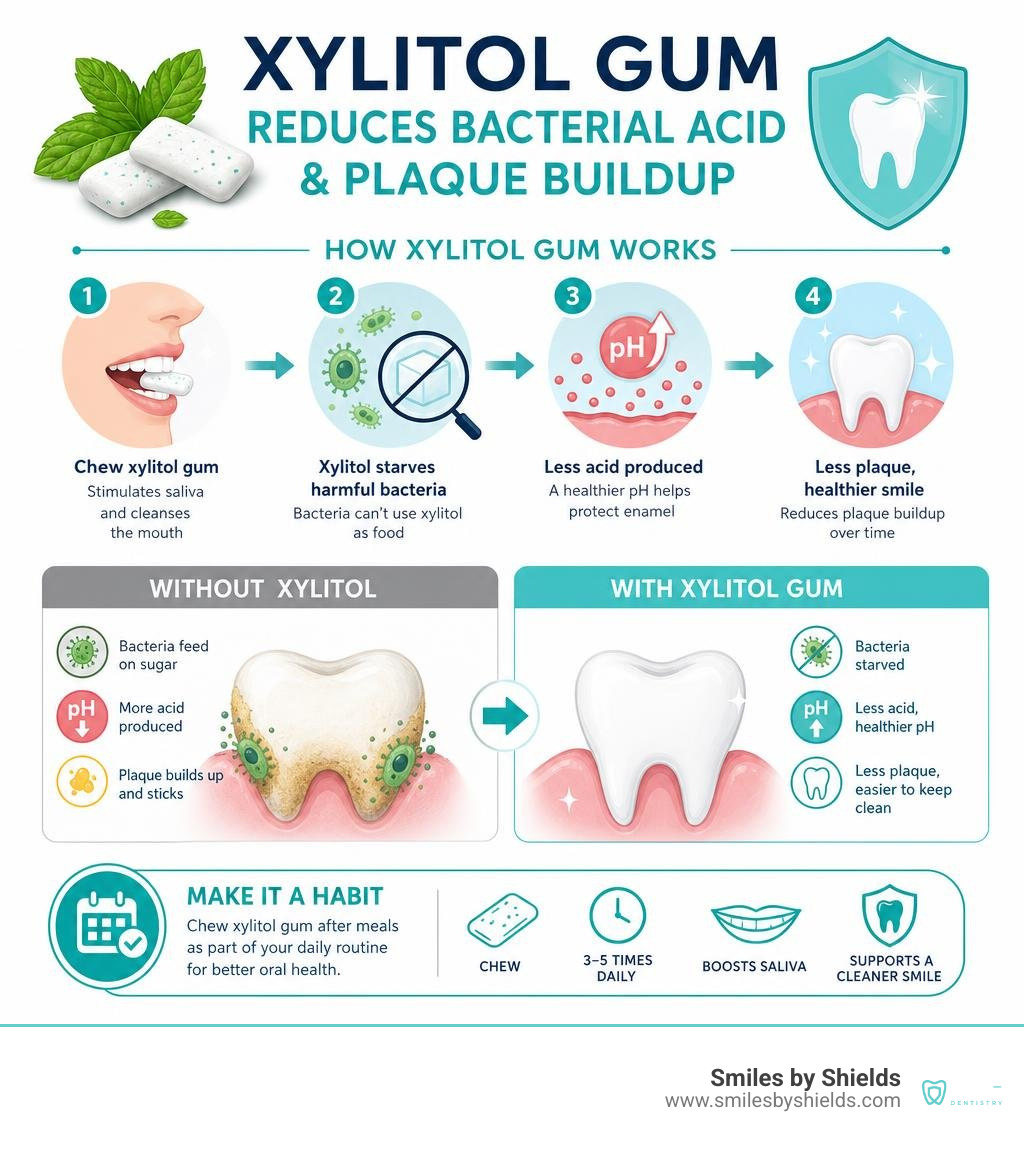
Research reviews found that regular xylitol gum use lowered plaque accumulation in 13 of 14 studies. The benefit appears strongest with gum, not candies, because chewing also boosts saliva flow. Saliva helps rinse the mouth, buffer acids, and support a healthier oral pH.
For a practical routine, choose gum with a high xylitol content and use it after meals. Studies commonly use about 5 to 10 grams daily, divided into 3 to 5 short chewing sessions. Think of xylitol as an added layer of prevention, especially when brushing is not possible right after eating.
I am Dr. Tiffany K. Shields, a Jacksonville dentist with a background in microbiology and cell science who takes an individualized, whole-person approach to oral health. Patients often ask, “does xylitol remove plaque?” and the useful answer is that it can support plaque control through changes in oral bacteria, but it works best alongside consistent mechanical cleaning.
Does Xylitol Remove Plaque or Just Prevent Accumulation?
To answer whether xylitol physically scrubs away established plaque or simply halts its growth, we need to understand the architecture of dental biofilm. Plaque is not just loose food debris; it is a complex, sticky matrix of living bacteria encased in extracellular polysaccharides (EPS). When we consume dietary sugars, organisms like Streptococcus mutans produce these sticky glucans, gluing the biofilm tightly to tooth enamel. Exploring the dangers of sugar for your teeth reveals how sucrose continually fuels this adhesive matrix.
Clinical research indicates that xylitol works primarily as an anti-adherence and growth-inhibiting agent rather than a mechanical abrasive. It does not scrape mature calculus or hardened tartar off teeth—that requires professional dental instruments. However, habitual xylitol consumption fundamentally alters the composition of biofilm. By starving cariogenic microorganisms and preventing EPS synthesis, xylitol makes dental plaque significantly less cohesive and less adhesive. As a result, existing biofilm loses its grip on enamel surfaces, allowing natural saliva flow, tongue movement, and light brushing to dislodge it with ease.
How Does Xylitol Remove Plaque Biofilm Structurally?
At a macromolecular level, xylitol impairs bacterial glucosyltransferase enzymes, which are responsible for manufacturing sticky dextrans and glucans from dietary carbohydrates. Without these binding polymers, bacteria cannot easily cross-link into a resilient biofilm.
Understanding the real cause of tooth decay acid highlights how bacterial fermentation produces lactic acid, demineralizing enamel beneath thick plaque. Xylitol disrupts this cycle entirely. In gravimetric trials measuring fresh plaque weight, xylitol regimens consistently reduce total plaque mass by 24% to 29% over a two-week period. In longer trials, plaque volume reductions reach up to 46%. Structurally, the plaque that does form in the presence of xylitol is loose, watery, and poorly organized, making it far easier to disrupt during daily oral hygiene routines.
Xylitol vs. Other Polyols: Sorbitol and Maltitol
Not all sugar alcohols exhibit identical biological effects in the oral cavity. Polyols like sorbitol and maltitol are 6-carbon molecules (hexitols), whereas xylitol is a unique 5-carbon pentitol. Certain oral bacteria can adapt over time to ferment sorbitol and maltitol, generating low levels of acid. In contrast, cariogenic bacteria lack the metabolic machinery to ferment 5-carbon xylitol.
Reviewing sugar and oral health shows why polyol selection matters. In comparative clinical trials, xylitol gum consistently outperforms sorbitol gum. In head-to-head chewing evaluations, xylitol decreased plaque accumulation in 6 out of 10 clinical studies where sorbitol showed negligible changes or slight plaque mass increases.
| Polyol Sweetener | Molecular Structure | Plaque Mass Reduction | Acid Fermentation by S. mutans | Bacterial Suppression Level |
|---|---|---|---|---|
| Xylitol | 5-Carbon Pentitol | High (24%–46% reduction) | Non-fermentable (0% acid produced) | Significant (up to 90% reduction) |
| Sorbitol | 6-Carbon Hexitol | Low to Moderate (8%–10% reduction) | Slowly fermented by adapted strains | Minimal to moderate |
| Maltitol | 12-Carbon Disaccharide Polyol | Low (primarily salivary clearance effect) | Negligible to slow fermentation | Minimal |
Biological Mechanisms: How Xylitol Neutralizes Plaque Bacteria
The primary biological pathway through which xylitol neutralizes oral pathogens is known as the futile energy cycle. When Streptococcus mutans encounters xylitol, it mistakes the 5-carbon sugar alcohol for a standard dietary sugar and transports it into the cell via the fructose phosphotransferase system.
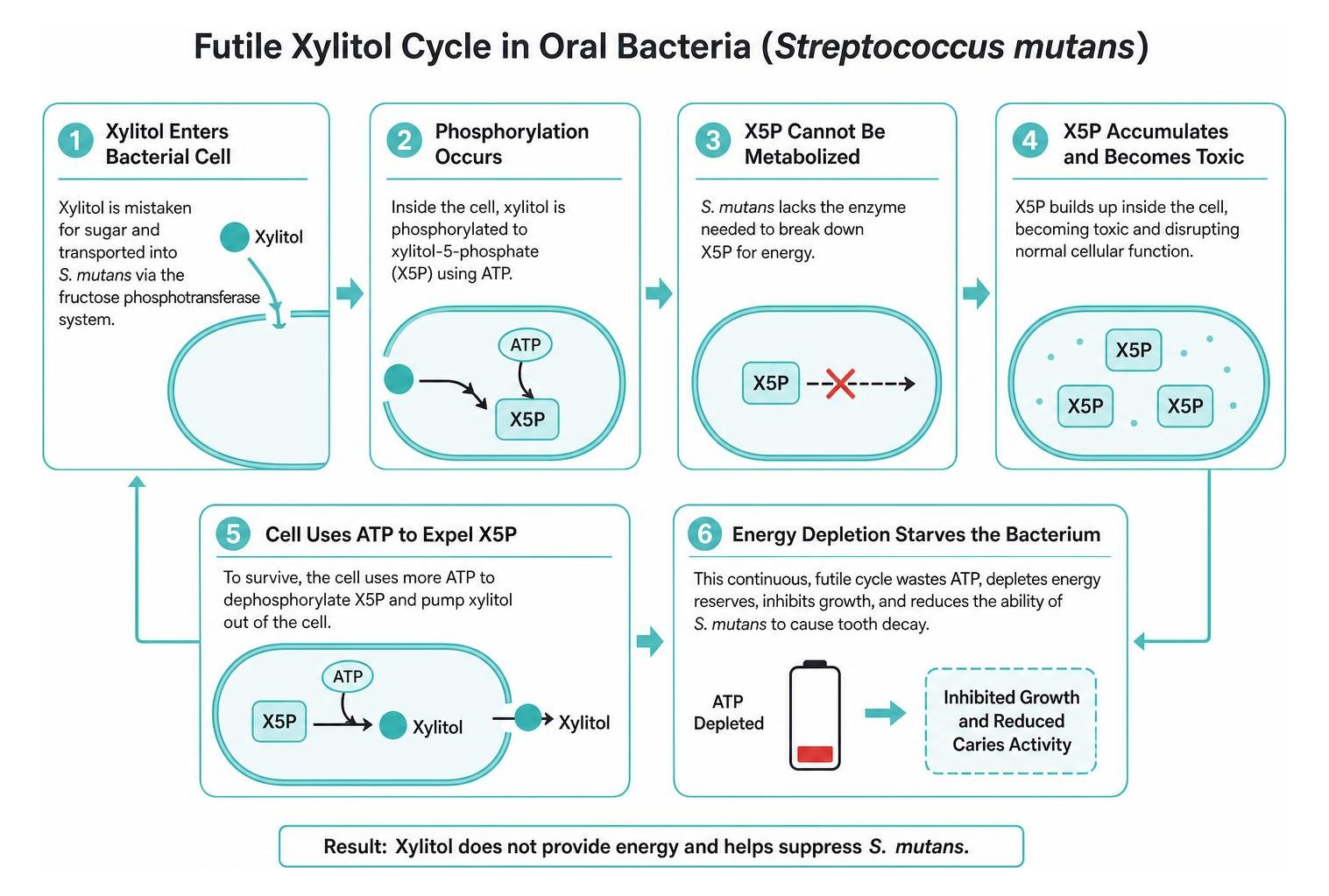
Once inside the cytoplasm, the bacterium phosphorylates xylitol into xylitol-5-phosphate (X5P). However, S. mutans lacks the enzyme needed to break down X5P for energy. The accumulation of intracellular X5P becomes toxic, forcing the bacterial cell to expend high-energy adenosine triphosphate (ATP) to dephosphorylate X5P and expel it. This continuous, futile cycle rapidly depletes cellular ATP reserves, starving the bacterium and inhibiting cellular division without harmful synthetic additives, supporting our philosophy of preventing tooth decay without harsh chemicals.
Furthermore, chewing xylitol-sweetened products stimulates the salivary glands, increasing resting saliva flow rates. Saliva contains natural bicarbonate buffers that neutralize acidity, keeping resting oral pH safely above the critical demineralization threshold of 5.5. Supersaturated with calcium and phosphate, this buffered saliva remineralizes early enamel lesions while bathing tooth surfaces in protective immunoglobulins.
Impact on Cariogenic and Periodontopathic Bacteria
Full-length 16S rDNA sequencing studies have demonstrated that xylitol significantly alters the oral microbiome ecology beyond S. mutans. In high-resolution microbiome trials, habitual xylitol chewing produced distinct shifts in microbial taxa:
- Firmicutes Reduction: Relative abundance of cariogenic Firmicutes (including Streptococcus species) dropped by 10.26%.
- Periodontopathic Decline: Destructive periodontal pathogens like Bacteroidetes and Actinobacteria decreased by 6.32% and 1.66%, respectively.
- Beneficial Proliferation: Commensal and non-pathogenic bacteria, particularly Fusobacteria, increased by 9.24%, fostering a balanced oral ecosystem.
Maintaining microbial balance is critical for whole-body wellness. Utilizing holistic strategies such as targeted probiotics to prevent cavities alongside xylitol creates a synergistic barrier against oral inflammation and tooth decay.
Clinical Evidence: Chewing Gum, Candies, and Oral Care Delivery
Extensive systematic reviews analyze how different delivery methods impact plaque and caries indices. The evidence reveals marked differences depending on how xylitol is introduced to the oral cavity. While 13 of 14 chewing gum trials demonstrated significant drops in plaque index and plaque wet weight, alternative delivery methods yielded varying results.
Examining oral health and chewing gum highlights that mastication itself provides mechanical hydrodynamic shearing forces, washing away loosened bacterial debris. When addressing whether is chewing gum bad for oral health, the answer depends on the ingredients; sugar-sweetened gums harm teeth, whereas 100% xylitol gum acts as a therapeutic oral hygiene adjunct.
Gum vs. Candies and Lozenges: Why Delivery Form Matters
Systematic reviews evaluate xylitol hard candies, pastilles, and lozenges alongside chewing gum. In three clinical trials evaluating xylitol candies, researchers observed no statistically significant reduction in dental plaque weight compared to controls.
The reason lies in salivary clearance and exposure dynamics. When sucking on a lozenge or hard candy, saliva washes the dissolved xylitol down the esophagus within 2 to 3 minutes, limiting prolonged contact with bacterial biofilms. Chewing gum, by comparison, provides sustained xylitol release over 10 to 20 minutes while maintaining continuous mechanical mastication. This extended contact time is vital for intracellular accumulation of xylitol-5-phosphate inside bacterial cells.
Does Xylitol Remove Plaque in Toothpaste and Wipes?
Beyond chewing gum, researchers have evaluated xylitol-infused dentifrices and infant oral wipes. In a 28-day double-blind clinical trial comparing xylitol toothpaste to standard fluoridated paste in pediatric patients, xylitol toothpaste demonstrated equal plaque score reductions and superior reductions in the Gingival Index and Gingival Bleeding Index.
For young toddlers, double-blind randomized trials assessing xylitol-impregnated wipes showed clinical reductions in salivary S. mutans counts. Implementing these non-toxic, gentle solutions aligns with our comprehensive guide on how to fight tooth decay naturally tips for a cavity free smile.
Optimal Dosage, Frequency, and Safety Guidelines
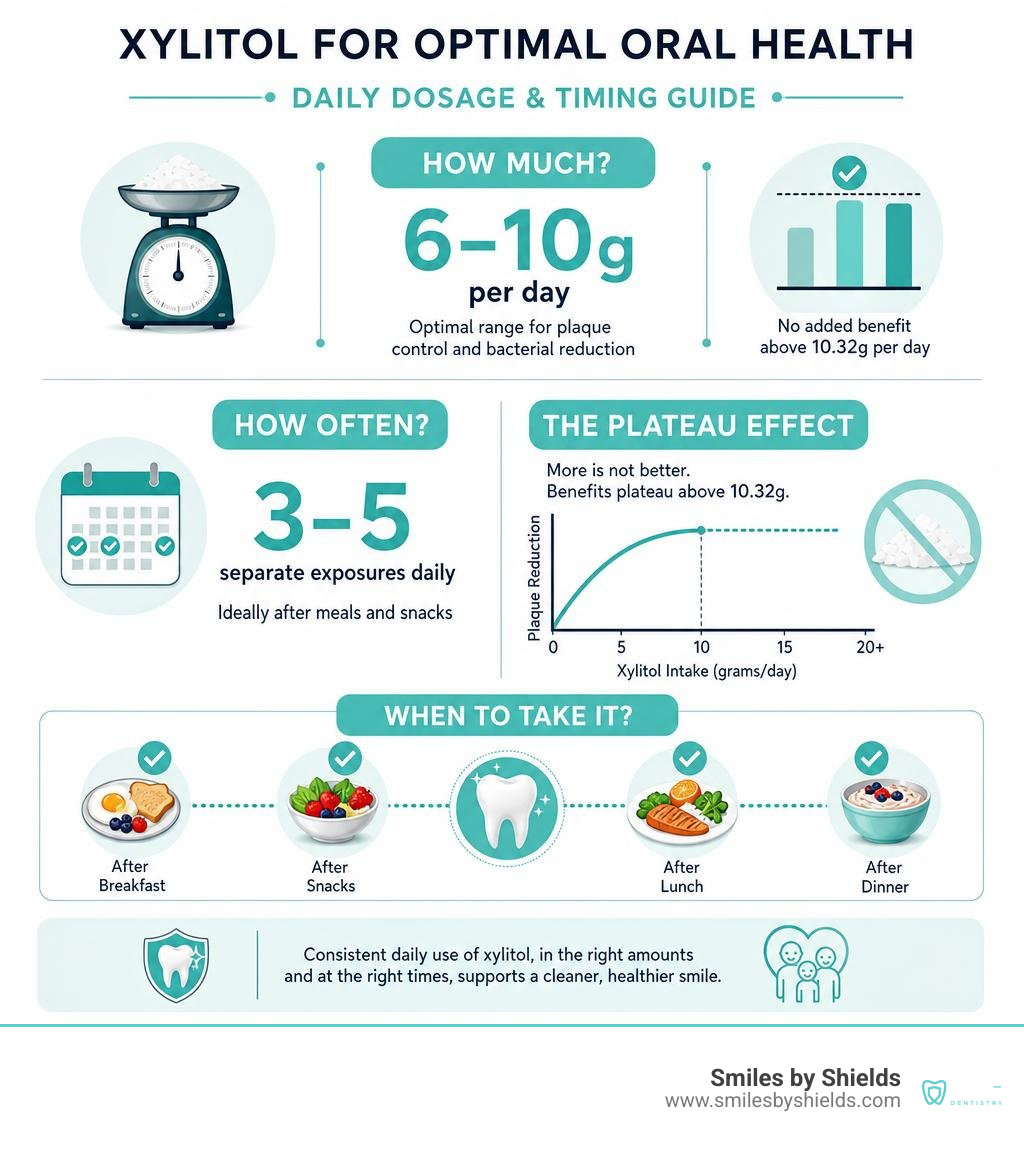
Clinical research demonstrates a clear dose-response curve for xylitol’s antimicrobial efficacy, alongside a distinct plateau effect:
- Therapeutic Daily Dose: The optimal range for plaque control and bacterial reduction is 6 to 10 grams per day. Doses below 3.5 grams daily show minimal clinical efficacy.
- Exposure Frequency: Frequency is more important than volume. Consuming 3 to 5 separate exposures daily (ideally after meals and snacks) maintains adequate salivary concentrations.
- The Plateau Effect: Research indicates no additional plaque reduction occurs at doses exceeding 10.32 grams per day. Consuming 20+ grams per day offers no extra dental advantage and increases the likelihood of digestive intolerance.
- Chewing Duration: For chewing gum, 10 to 20 minutes per session maximizes xylitol release and saliva stimulation without fatiguing the temporomandibular joint (TMJ).
Safety and Practical Precautions
- Pet Warning (Canine Toxicity): Keep all xylitol products strictly away from dogs. Even trace amounts cause a life-threatening surge in canine insulin release, leading to profound hypoglycemia and acute liver necrosis.
- Digestive Tolerance: As an unabsorbed sugar alcohol in the upper GI tract, high doses of xylitol can cause osmotic diarrhea, gas, or bloating if introduced too quickly. Adults typically tolerate up to 40 grams daily without symptoms, while pediatric daily limits should remain under 20 grams. Introduce xylitol gradually over a two-week period to allow intestinal flora to adapt.
- Adjunctive Role: Never substitute xylitol for mechanical flossing. Incorporating the real importance of flossing ensures interproximal biofilms are manually disrupted where chewing gum and rinses cannot reach.
Frequently Asked Questions About Xylitol and Plaque
Can xylitol gum replace regular toothbrushing and flossing?
No. Xylitol is an adjunctive therapy, not a mechanical replacement for brushing and flossing. While 5 daily exposures to xylitol can dramatically reduce bacterial virulence and weaken biofilm structure, physical disruption with a toothbrush and dental floss remains necessary to eliminate dislodged plaque and prevent calculus formation.
How quickly does xylitol reduce dental plaque levels?
Clinical trials demonstrate measurable plaque reductions in as little as 2 weeks of regular use, with participants showing up to a 19% to 29% reduction in fresh plaque weight. Long-term studies show that consistent use over 6 months can reduce plaque indices by up to 46%, with protective microbial shifts persisting for several months after cessation.
Are there any digestive side effects associated with xylitol?
Consuming xylitol in excessive amounts (above 40–50 grams per day in adults or 20 grams in children) can draw water into the bowel, causing mild bloating, flatulence, or loose stools. Sticking to the clinically proven therapeutic dose of 6 to 10 grams per day, spread across multiple sessions, virtually eliminates gastrointestinal side effects for most individuals.
Conclusion
The scientific consensus is clear: while xylitol does not replace mechanical hygiene, it is one of the most effective, biologically compatible tools for altering plaque architecture, suppressing cariogenic pathogens by up to 90%, and supporting remineralization. By starving pathogenic bacteria through energy depletion and reducing plaque adhesiveness, therapeutic xylitol use provides powerful defense against decay.
At Smiles by Shields in Jacksonville, Florida, we believe in whole-body-health-focused, non-toxic dental care that honors your body’s natural biology. If you are interested in personalized, biocompatible preventive strategies, explore our detailed resource on xylitol and your dental health or contact our team to schedule your integrative wellness consultation today.