
Understanding the Causes of Cold Sensitivity After Tooth Extraction
Experiencing cold sensitivity after a tooth extraction usually stems from newly exposed root surfaces on neighboring teeth or bruised periodontal ligaments from surgical pressure. To ease this thermal shock immediately, switch to room-temperature liquids, avoid icy beverages, and brush gently with a desensitizing toothpaste. While the extracted tooth and its nerve complex are gone, the surrounding jawbone, soft oral mucosa, and neighboring structures undergo significant biological restructuring, as outlined in our Tooth Extraction Recovery Guide. During this healing process, several anatomical factors can trigger sharp thermal discomfort.
Exposed Dentin and Adjacent Root Exposure
The most frequent culprit behind a cold shock is not the missing tooth, but the tooth sitting directly next to it. Teeth are nestled tightly together, sharing protective barriers of bone and gum tissue. When a tooth is removed—particularly an impacted molar—the adjacent tooth suddenly loses its neighboring support structure.
This shift often exposes the cervical margin and root surface of the adjacent tooth. Unlike the crown, which is shielded by thick, mineralized enamel, the root is covered only by a delicate layer of cementum. When this cementum is stripped or exposed to the oral cavity, underlying dentinal tubules become vulnerable.
These microscopic channels lead straight to the living pulp of the neighboring tooth. Exposure creates classic tooth sensitivity, where rapid changes in temperature cause instant discomfort.
Adjacent Tooth Irritation vs. Cold Sensitivity After Tooth Extraction in the Socket
During an extraction, surgical instruments gently luxate (elevate) the tooth to release it from the alveolar bone. Even with the most delicate, holistic surgical techniques, the adjacent teeth absorb mechanical forces.
The periodontal ligament (PDL)—the shock-absorbing sling of connective tissue anchoring each tooth—can become bruised and inflamed. An inflamed PDL causes hyperalgesia, a state where normal stimuli (like cool air or a chilled smoothie) register as intense pain.
Furthermore, extensive sensory nerve networks cross-communicate throughout the upper and lower jaws. Inflammation within the healing socket can send referred neural signals along the trigeminal nerve pathways, making it feel like the empty space itself is shivering.
The Hydrodynamic Theory and TRP Channel Activation
To understand why cold hurts so acutely, we look to the hydrodynamic theory of pulpal pain, paired with modern molecular biology. Inside open dentinal tubules, fluid constantly shifts. Cold temperatures cause this dentinal fluid to contract rapidly, creating a sudden outward fluid movement.
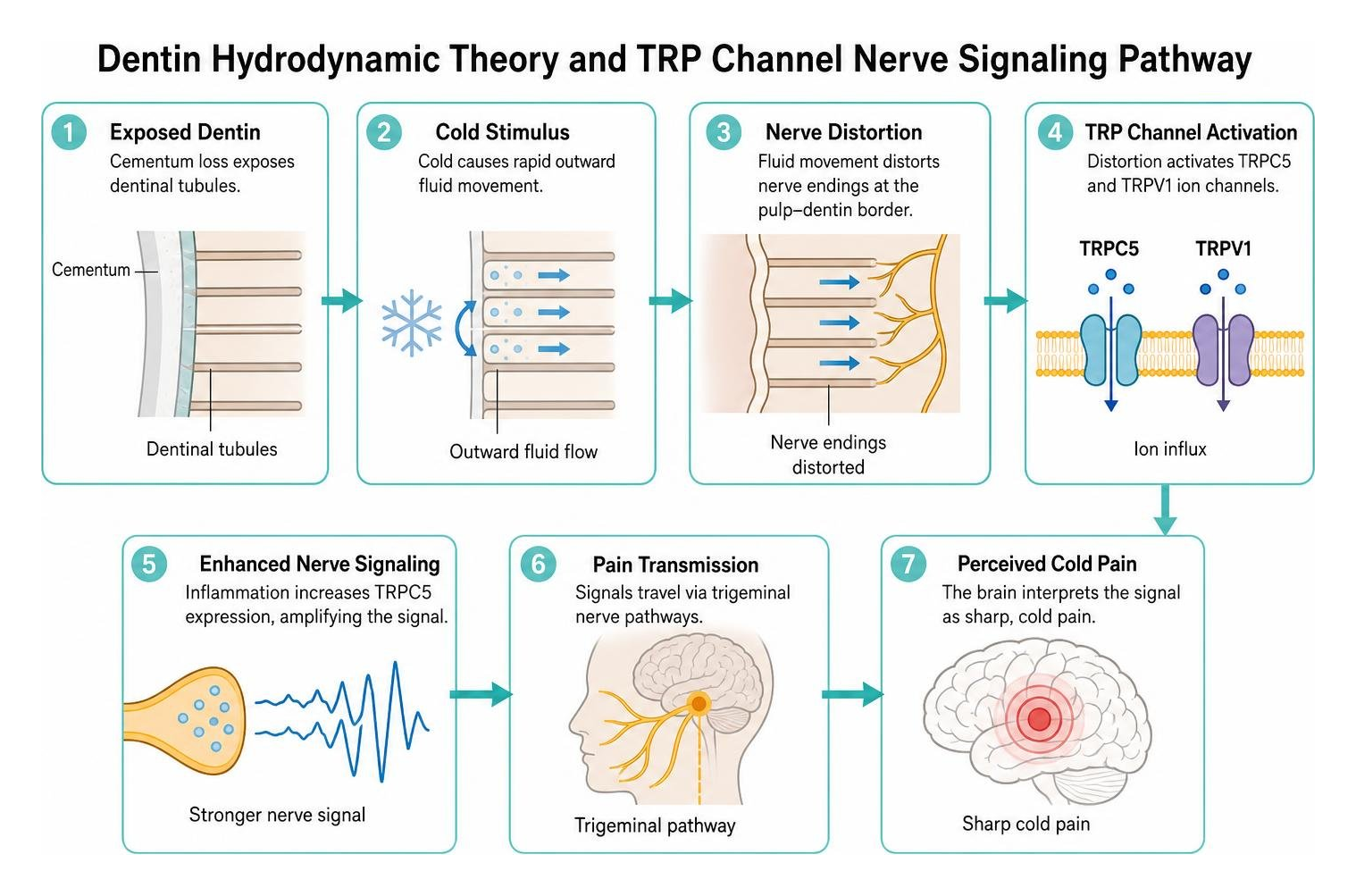
This mechanical pull distorts the nerve endings located at the pulp-dentin border. At the cellular level, specialized ion channels—specifically TRPC5 and TRPV1—act as thermal and mechanical sensors within odontoblasts and pulpal nerves. Research shows that TRPC5 expression increases dramatically in inflamed dental tissues, effectively turning up the volume on cold signaling and translating a minor temperature dip into a sharp neural shock.
When to Worry: Signs of Infection, Dry Socket, or Structural Damage
While mild sensitivity to cool liquids can be a normal part of the initial healing phase, intense or lingering reactions may signal a complication that requires clinical intervention.
| Symptom Feature | Normal Healing Response | Potential Complication (Dry Socket / Infection) |
|---|---|---|
| Pain Onset | Peaks within 24–48 hours, then gradually declines | Begins or dramatically worsens on Postoperative Days 2–4 |
| Response to Cold | Brief, sharp twinge that dissipates in 1–2 seconds | Lingering, throbbing ache that persists long after the cold source is removed |
| Response to Heat | Mild or absent | Throbbing, expanding pain (frequently signals pulpal necrosis in adjacent teeth) |
| Socket Appearance | Dark red blood clot or white granulation tissue | Empty-looking socket, visible dry bone, or yellowish pus discharge |
| Radiating Pain | Localized to immediate extraction area | Severe radiating pain to the ear, temple, neck, or entire dental arch |
| Systemic Signs | None; normal energy recovery | Fever, malaise, foul odor, bad taste, or expanding facial swelling |
When Is Cold Sensitivity After Tooth Extraction a Medical Complication?
A crucial distinction lies in how long the pain lasts. Normal dentin hypersensitivity causes a quick, sharp sting that vanishes almost instantly once the cold fluid is swallowed.
If cold triggers a deep, throbbing ache that lingers for minutes—or if the sensitivity suddenly shifts to throbbing with hot liquids—the pulp of a neighboring tooth may be experiencing irreversible pulpitis. As bacteria or trauma irritate a nerve beyond recovery, trapped gases and inflammatory fluids expand under heat, causing severe discomfort.
Additionally, if the protective blood clot dislodges from the extraction site, alveolar osteitis (dry socket) develops. Without the clot, the raw alveolar bone and localized nerve endings are laid bare to air, food debris, and cold fluids. This causes severe, radiating pain that typically peaks between days two and four post-surgery.
Cracked Roots, Microfissures, and Nerve Damage
In some instances, persistent cold pain points to structural damage within a neighboring tooth or a previously treated root-canal tooth. The mechanical pressure of chewing or surgical luxation can stress microfissures in compromised teeth.
Cracked roots can act as thermal conduits, channeling cold fluids deep into periodontal tissues. Studies have identified persistent cold sensitivity in endodontically treated teeth caused by hidden root microfractures or accessory pulpal canals that were invisible on standard 2D X-rays.
At Smiles by Shields, we utilize high-resolution 3D Cone Beam Computed Tomography (CBCT) and transillumination to detect subtle root fractures and ensure adjacent teeth remain structurally sound.
Evidence-Based Cryotherapy Protocols vs. Cold Hypersensitivity
There is an important difference between experiencing painful cold sensitivity and utilizing therapeutic cold application. While icy drinks can shock exposed dentin, applying extraoral cold therapy (cryotherapy) is one of the most effective, evidence-based ways to control postoperative swelling, pain, and muscle spasms.
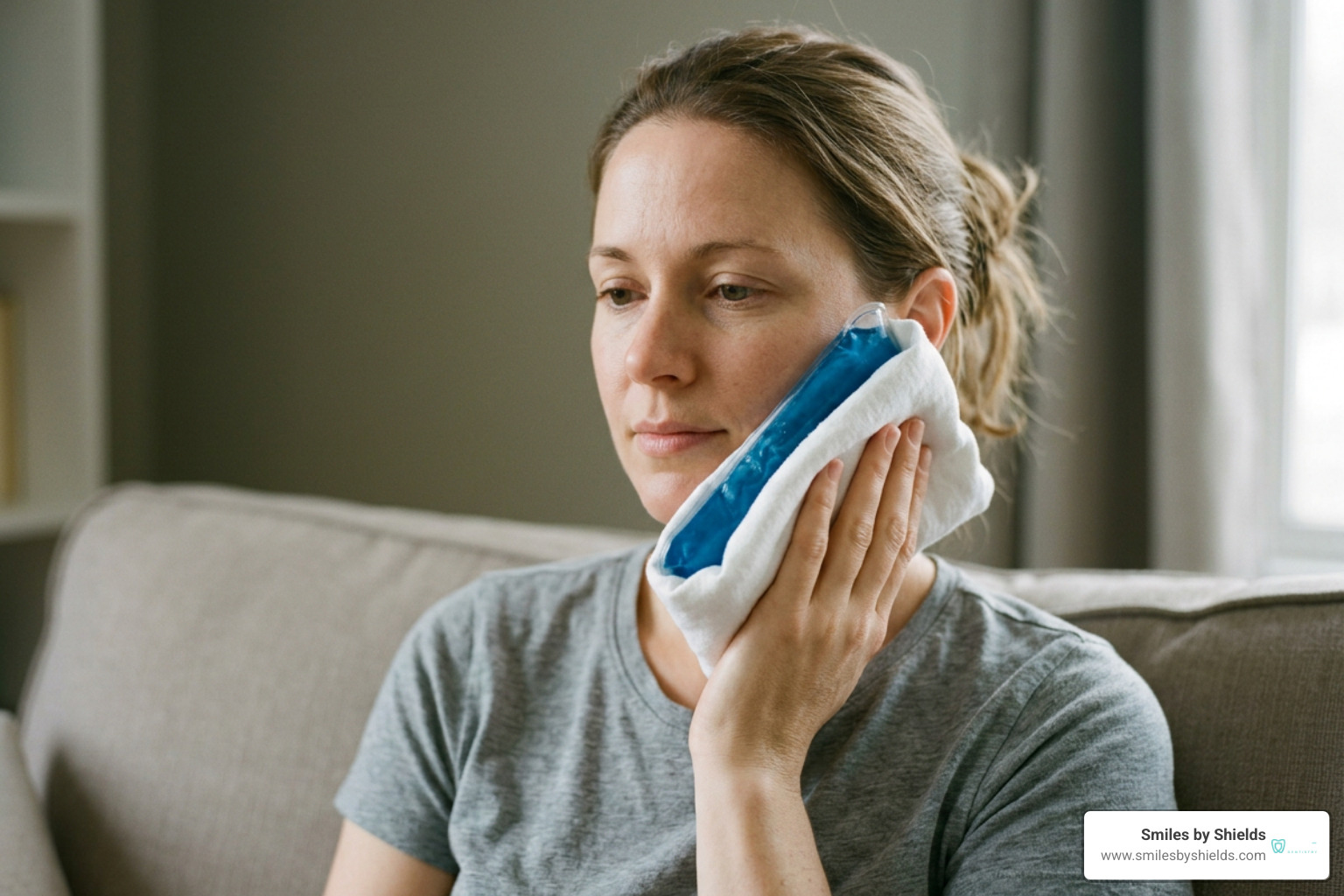
When tissue temperature drops, localized vasoconstriction reduces the flow of inflammatory mediators like COX-2 and bradykinin. Each 1°C drop in tissue temperature lowers cellular metabolic demand by roughly 6% to 7%, protecting vulnerable cells from surgical trauma.
Intraoral vs. Extraoral Cold Application Guidelines
To maximize healing while protecting your healing teeth from thermal shock, keep these research-backed protocols in mind:
- Extraoral Ice Packs (Days 0–1): Apply a cold compress wrapped in a soft cloth to your outer cheek for 20 minutes at a time, followed by a 20-minute rest period. Clinical studies show that applying continuous cold within safe limits during the first postoperative day significantly reduces visual analog scale (VAS) pain scores and facial edema.
- The Facial Tissue Barrier: Facial anatomy—including the Bichat buccal fat pad and rich blood flow—naturally insulates deeper tissues. An external ice pack cools the outer skin without over-chilling your inner dental nerves.
- Intraoperative Saline Cooling: In advanced holistic surgical settings, dentists use sterile, refrigerated (4°C) saline irrigation during bone work. This maintains bone temperatures safely below the critical 47°C threshold (the point of thermal bone necrosis) and minimizes postoperative jaw stiffness (trismus).
- Avoid Direct Ice on Sockets: Never place ice cubes, frozen packs, or ice-cold liquids directly against your healing extraction socket or bare teeth. This triggers immediate hydrodynamic shock and can interfere with blood clot stability.
For broader holistic post-surgical strategies, explore our guide on supporting your body during dental healing.
Advanced Biocompatible Solutions for Rapid Healing
Rather than relying solely on conventional pain management, holistic oral surgery harnesses your body’s innate healing potential. By drawing a small sample of your own blood before surgery, we can concentrate autologous platelets and white blood cells into a healing matrix.
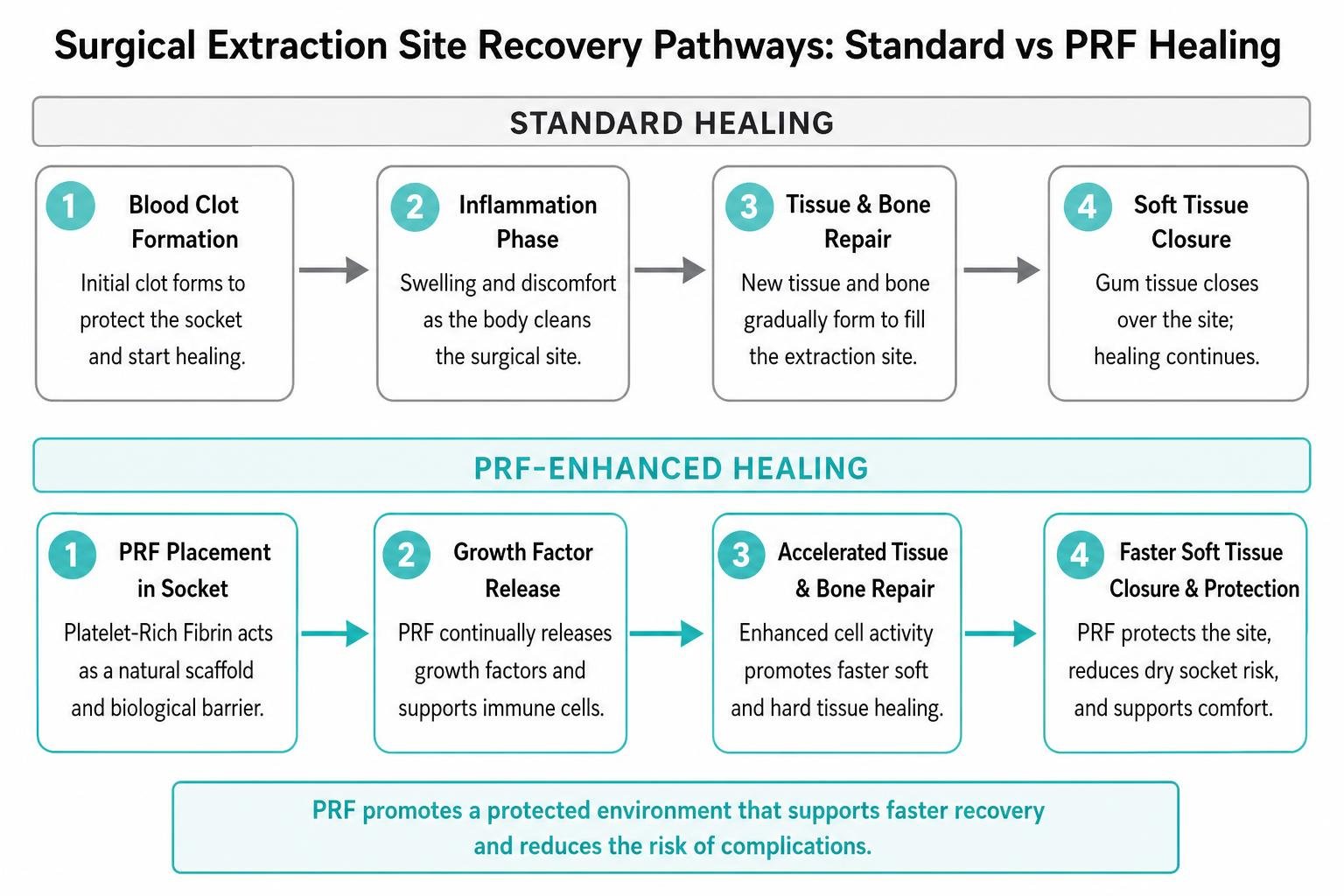
Using dental surgery with PRF (Platelet-Rich Fibrin) allows us to place an all-natural, biocompatible biological barrier directly into the extraction socket. PRF continually releases growth factors, accelerates soft-tissue closure, protects exposed bone, and significantly reduces the risk of dry socket and adjacent root sensitivity. To learn more about how platelet concentrates speed up tissue repair, read about the science behind PRP: achieve faster recovery after tooth extraction.
Effective Home Care and Clinical Solutions for Relief
If you are dealing with sensitive teeth while recovering from an extraction, a combination of gentle at-home habits and non-toxic clinical therapies can bring rapid comfort.
Modern holistic dentistry offers exceptional ways to calm agitated nerve fibers without exposing your body to harsh chemicals. Discover more in our review of treatment developments for sensitive teeth and see how healing faster: how cutting-edge therapies revolutionize dental recovery.
Immediate At-Home Relief Strategies
- Switch to Room-Temperature Liquids: For the first 7 to 14 days, avoid ice water, hot coffees, and chilled smoothies. Drink room-temperature or lukewarm water to keep dentinal fluid stable.
- Use Biocompatible Desensitizing Toothpastes: Choose natural toothpastes formulated with potassium nitrate or nano-hydroxyapatite (nHAp). Potassium nitrate calms pulpal nerve transmission, while nHAp mimics natural tooth minerals to physically seal exposed dentinal tubules.
- Warm Salt Water Rinses (After 24 Hours): Starting the day after surgery, gently bathe your mouth with a warm saline solution (1/2 teaspoon of unrefined sea salt in 8 ounces of warm water) after meals. Do not rinse vigorously or spit forcefully—simply tilt your head and let the water flow out naturally.
- Gentle Plaque Control: Keep neighboring teeth clean using an ultra-soft surgical toothbrush. Plaque accumulation produces acidic byproducts that open dentinal tubules and aggravate nerve endings.
Professional Restorative and Desensitizing Treatments
When home care is not enough, professional, biocompatible interventions can target the root cause:
- Medical Ozone Therapy: Applying medical-grade ozone gas to exposed roots and healing sockets neutralizes pathogens, boosts local oxygenation, and rapidly reduces dentin hypersensitivity.
- Biomimetic Tubule Sealers: We can apply non-toxic, resin-free bonding agents or mineralizing varnishes directly to exposed adjacent roots, instantly blocking fluid movement in the dentinal tubules.
- Laser Biostimulation (Low-Level Laser Therapy): Gentle therapeutic lasers stimulate cellular ATP production, reduce neural inflammation, and alter nerve conduction to alleviate thermal sensitivity.
- Marginal Resealing: If a neighboring crown or filling developed a micro-leak during extraction, resealing the margin with biocompatible composite materials stops temperature transfer in its tracks.
Frequently Asked Questions About Post-Extraction Sensitivity
How long does temperature sensitivity typically last after an extraction?
Mild cold sensitivity in neighboring teeth usually peaks within the first 3 to 7 days and gradually resolves over 2 to 4 weeks. As your gums heal and cover exposed root surfaces, and as the surrounding bone remodels, the dentinal tubules become naturally insulated. If sharp sensitivity persists beyond a month, schedule an evaluation to check for unresolved bite imbalances or root exposure.
Why does drinking cold water hurt teeth that were not extracted?
When a tooth is removed, the adjacent teeth lose their lateral contact and structural barrier. Cold fluids can pool around newly exposed, uninsulated root surfaces.
Additionally, the surgical instruments used to gently elevate the tooth place temporary pressure on the periodontal ligaments of neighboring teeth, causing localized, temporary hyper-responsiveness to thermal changes.
Can a tooth with a root canal still feel cold pain?
A fully treated root canal tooth has had its central pulp nerve removed, meaning it cannot perceive temperature directly. However, if you feel cold in a root-canal-treated tooth, three possibilities exist:
- A Hidden Canal: The tooth may possess an untreated accessory or branching canal containing residual, vital nerve tissue.
- A Cracked Root: A vertical fracture can channel cold fluid directly to the highly innervated periodontal ligament on the outside of the root.
- Referred Pain: The sensation may be originating from an adjacent living tooth or inflamed jawbone tissue and projecting onto the root-canal tooth.
Conclusion
Experiencing cold sensitivity after a tooth extraction is a common bump on the road to recovery. In most cases, it is simply a temporary reaction from adjacent roots and bruised ligaments adapting to their new environment. By avoiding icy triggers, practicing gentle hygiene, and supporting your body with natural, nutrient-dense recovery habits, your smile will quickly regain its comfort.
However, your body’s pain signals should never be ignored. If your cold sensitivity lingers, throbs, or is accompanied by other warning signs, finding the underlying cause is essential. For comprehensive insights on resolving long-term discomfort across your smile, explore our detailed guide on persistent tooth sensitivity after dental procedures.
At Smiles by Shields in Jacksonville, Florida, we are dedicated to providing biocompatible, whole-body dental care that supports your health at every step. If you are struggling with post-extraction discomfort or have questions about your healing journey, reach out to our team today to schedule an evaluation and get your recovery back on track.