When a Filling Is Sensitive to Sweets: What’s Happening and What to Do
A filling sensitive to sweets is one of the most common complaints after a dental restoration — and the good news is that it usually has a clear cause and a straightforward fix.
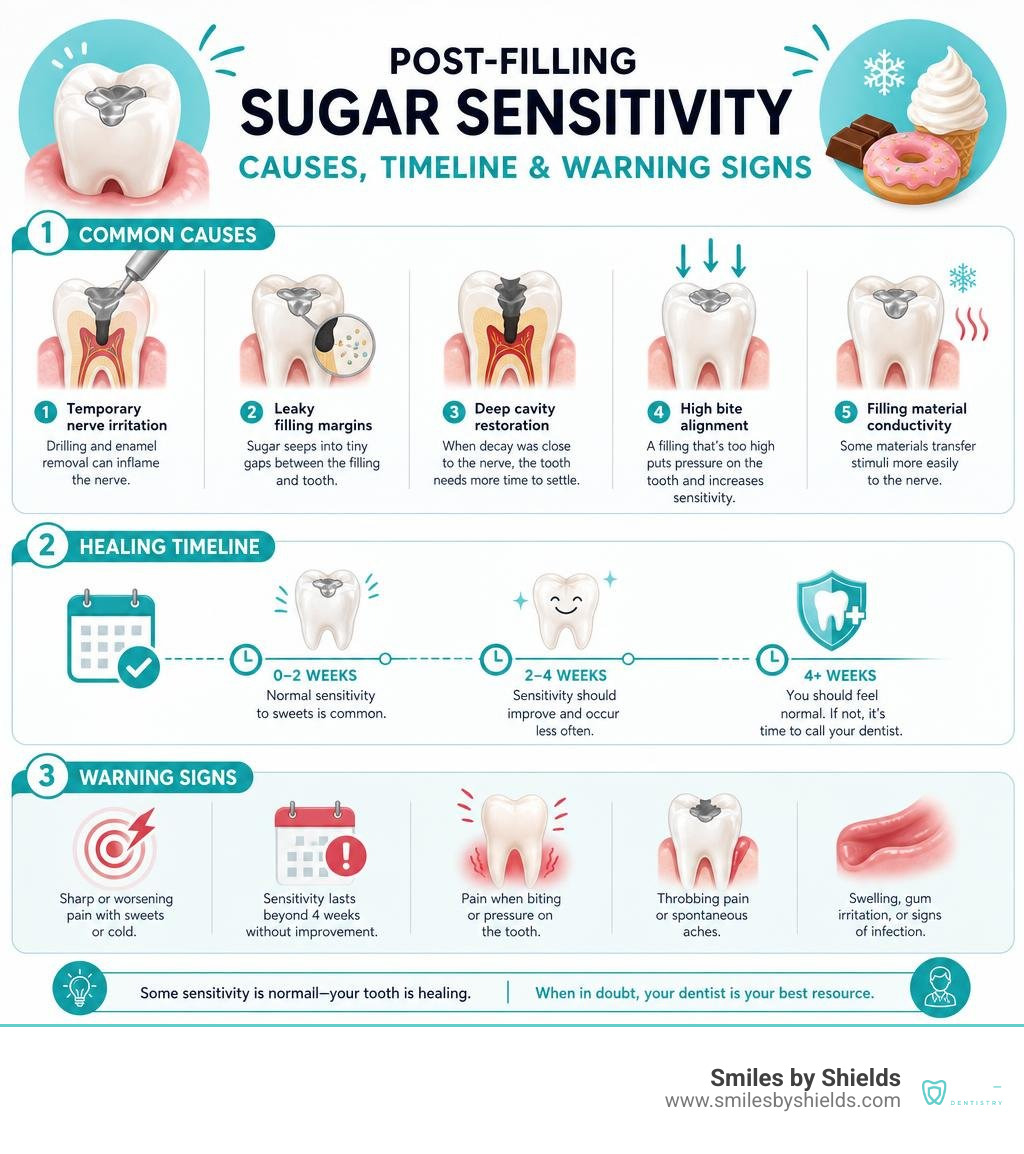
Quick answer: Sensitivity to sugar after a filling is normal for the first 2 to 4 weeks. It happens because the tooth nerve is temporarily irritated, or because sugar is seeping into microscopic gaps in the filling. If it fades gradually, you’re healing. If it gets worse or lingers beyond a month, call your dentist.
The most common reasons a filled tooth hurts when you eat sweets:
- Temporary nerve irritation — the dental drill and enamel removal inflame the nerve slightly during the procedure
- Leaky filling margins — sugar seeps into the tiny gap between the filling and tooth, triggering a pain response
- Deep cavity restoration — when decay was close to the nerve, the tooth needs more time to settle
- High bite alignment — a filling that sits even slightly too high puts pressure on the tooth and amplifies sensitivity
- Filling material conductivity — some materials, like metal-based fillings, transfer stimuli more easily to the nerve
This guide covers all of these causes in detail, how to tell normal healing from a real problem, and what your options are — from desensitizing toothpaste to replacing the restoration with a biocompatible, tooth-colored alternative.
Understanding Why Teeth React to Sugar After Restorations
When you take a bite of chocolate, ice cream, or a pastry, you expect a pleasant treat — not a zapping pain across your jaw. To understand why a restored tooth reacts so to sugar, we need to look at how teeth are constructed under the protective enamel shell.
Inside every tooth lies dentin, a porous layer composed of millions of microscopic fluid-filled channels called dentinal tubules. These tubules extend directly from the outer enamel down to the pulp chamber, where live nerves and blood vessels reside. Under normal conditions, enamel shields these tubules completely. However, when we place a restoration, remove decay, or expose underlying dentin, those tubules become pathways for external stimuli.
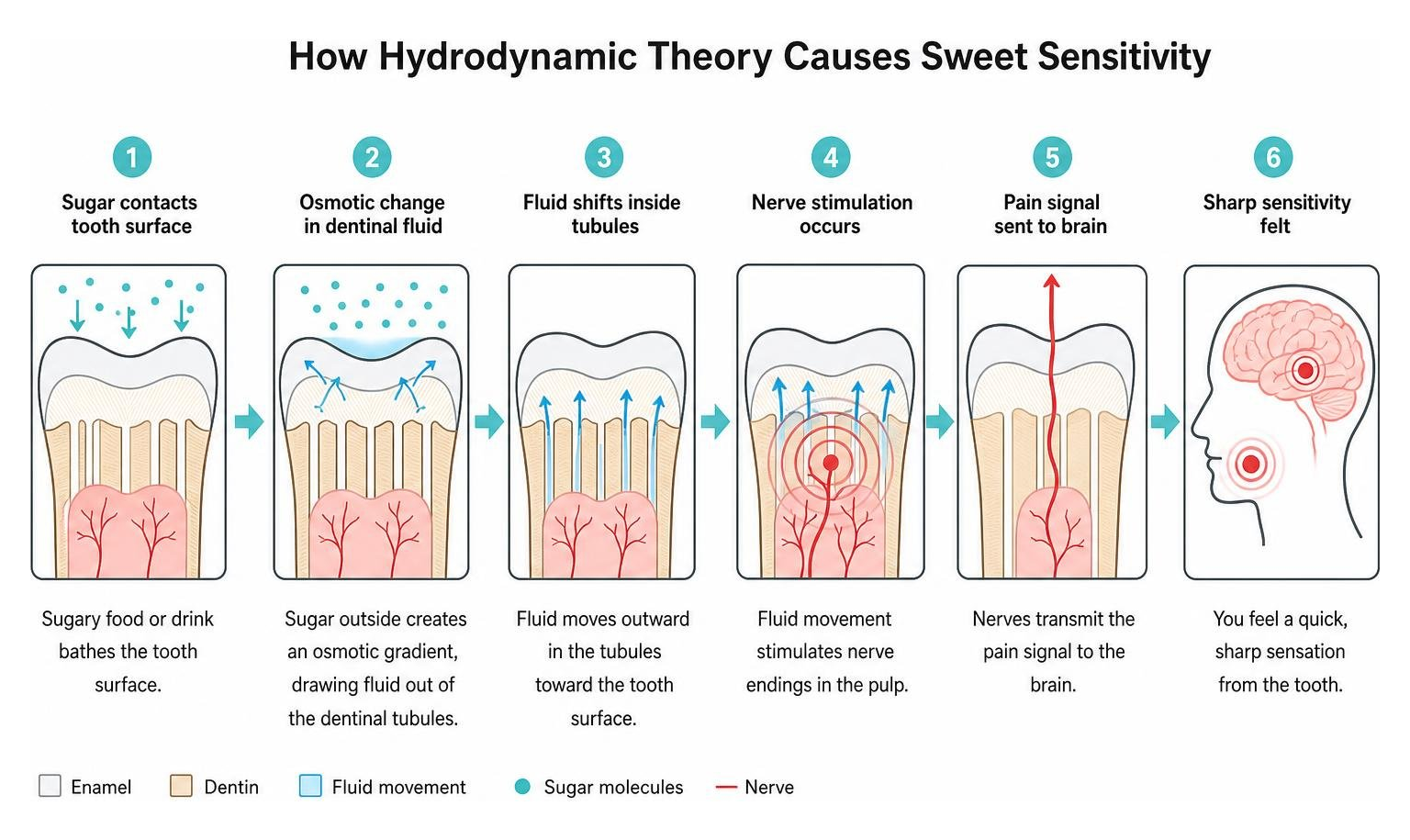
When you consume sugary foods or beverages, you introduce concentrated liquid sugars around the tooth. This triggers a biological process called osmotic pressure, which leads directly to Tooth Sensitivity. Dental scientists refer to this concept as the hydrodynamic theory of tooth sensitivity.
Beyond structural mechanisms inside the mouth, broader physiological factors can also influence how we experience taste and oral sensations. For instance, Research on sweet taste sensitivity mechanisms demonstrates how genetic variations affect sweet perception thresholds across different populations. Furthermore, studies on Suppression of Oral Sweet Sensations highlight how intricate oral sensory pathways are connected to our overall physiological responses.
Osmotic Pressure and Dentinal Tubule Movement
So, why does sugar specifically trigger such a sudden, sharp zapping sensation? The answer comes down to physics and chemistry.
Highly concentrated sugars are strong osmotic agents. When high concentrations of sugar come into contact with exposed dentinal tubules, fluid inside the tubules is instantly pulled outward toward the sugar molecules to balance the concentration difference. This sudden, high-velocity movement of fluid inside microscopic tubules tugs directly on microscopic nerve fibers situated at the pulp interface.
This rapid mechanical stimulation triggers immediate nerve depolarization — sending a quick, sharp pain signal straight to your brain. Unlike cold or heat sensitivity, which relies on thermal contraction or expansion, sugar-induced sensitivity is purely driven by fluid movement forced by osmotic pressure.
Temporary Nerve Inflammation (Pulpitis)
Another major biological factor behind a filling sensitive to sweets is temporary nerve inflammation, known clinically as pulpitis.
Preparing a tooth for a restoration is a precise procedure, but it inevitably causes mild physical stress to the living internal tissues. The friction from the dental drill, vibration, drying of exposed dentin, and removal of decayed enamel all excite the delicate dental pulp. When the pulp becomes inflamed, its nerve endings become hypersensitive to every minor stimulus — including mild osmotic shifts caused by sugars.
In most healthy teeth, this reversible pulpitis resolves naturally within 2 to 4 weeks as the tooth lays down protective secondary dentin and the nerve settles down.
Common Causes of a Filling Sensitive to Sweets
While mild sensitivity is a expected part of nerve recovery, persistent or severe pain when eating sweets points toward specific structural or mechanical issues. Knowing the precise cause helps us choose the safest, most effective solution for your tooth.
Leaky Fillings and Marginal Gap Leakage
Pain from sweets is a classic sign of a leaky filling. When a filling is placed, it must form an airtight, fluid-tight seal against the surrounding natural tooth enamel and dentin. If that microscopic seal breaks down or fails to bond properly during placement, a tiny margin or gap opens up.
When you chew sugary foods, dissolved sugar percolates directly into this space between the filling and the tooth structure. As the sugar travels into the gap, it reaches exposed dentin and triggers immediate tubule fluid movement. Worse yet, leaky margins create an ideal hidden trap for bacteria, accelerating recurrent decay beneath the new restoration.
Deep Cavity Restorations and Proximity to the Nerve
If your original cavity was deep, the decay extended close to the central pulp chamber. Removing that deep decay leaves only a thin layer of natural dentin protecting the nerve.
Without an adequate insulating base or protective liner beneath the restoration, thermal changes and osmotic fluid pulls pass easily to the nerve core. Deep fillings naturally take longer to settle down, and in some cases, the nerve remains chronically irritated if additional insulation was not used during placement.
Filling Materials and Bonding Issues
The specific filling material and bonding technique used can significantly impact post-operative sensitivity.
- Composite resin shrinkage: Tooth-colored composite fillings are applied in layers and cured with a specialized light. As composite resin hardens, it experiences minor volumetric shrinkage. If bonding protocols aren’t strictly maintained, this shrinkage can pull the filling material slightly away from the cavity wall, causing high internal tension and micro-gaps.
- Metal and amalgam thermal conductivity: Silver amalgam and gold restorations are excellent thermal conductors. While less prone to chemical osmotic pulls than unbonded materials, metal restorations easily transfer heat and cold, which can amplify underlying sugar-induced pulpitis.
- Adhesive failure: If moisture or saliva contaminates the tooth surface during composite bonding, the dental adhesive fails to etch and penetrate dentin properly, leading to micro-leakage.
For detailed information on restoration types, check out our comprehensive guide on All About Dental Fillings Types Procedures and What to Expect. You can also explore Why We Prefer Tooth Colored Fillings to see how modern biocompatible resin materials support both esthetic and structural health.
| Symptom / Feature | Normal Post-Filling Healing | Leaky or Failed Filling |
|---|---|---|
| Onset of Sensitivity | Immediately after anesthesia wears off | Can start immediately or develop weeks/months later |
| Duration of Pain | Quick flash lasting a few seconds | Lingering pain lasting 30+ seconds after sweet intake |
| Pain Trajectory | Steadily improves over 2 to 4 weeks | Stays same or progressively worsens over time |
| Bite Discomfort | Mild tender spot that rapidly fades | Sharp pain every time you bite down on food |
| Throbbing at Night | Rare | Common sign of irreversible nerve inflammation |
| Resolution | Resolves on its own with basic care | Requires dental repair or restoration replacement |
Is Sugar Sensitivity Normal and How Long Should It Last?
It is completely normal to experience mild tooth sensitivity to sweets, air, pressure, or temperature after receiving a new restoration. In the vast majority of cases, post-filling sensitivity resolves on its own within 2 to 4 weeks as the tooth’s living pulp heals.
During these initial weeks, your tooth’s nerve is busy building a protective layer of tertiary dentin underneath the restoration, creating a natural thermal and osmotic buffer.

Healing vs. Complications: When a Filling Sensitive to Sweets Signals a Problem
How do you distinguish between a healing tooth and a failing restoration? The key lies in the trend and duration of your discomfort.
- Normal healing: Pain is mild, brief (lasting only a second or two when triggered), and steadily decreases in frequency and intensity with each passing week.
- Potential complication: Pain is sharp, intense, lingers for 30 seconds or longer after swallowing a sweet food, or gets progressively worse after week two.
If you experience persistent thumping or throbbing pain — especially unprovoked pain that wakes you up at night — the pulp may have entered a state of irreversible pulpitis. In such instances, waiting will not fix the issue, and professional evaluation is essential. Read more about timeline expectations in our guide on Tooth Sensitivity After Fillings.
The First 14 Days: Expected Recovery Milestones
Here is a typical recovery outline during the first two weeks post-procedure:
- Days 1 – 3: Anesthesia wears off. Expect heightened awareness, mild tenderness upon biting, and brief sharp twinges when consuming cold liquids or refined sweets.
- Days 4 – 7: The initial post-drilling tissue inflammation subsides. Sensitivity to sweets should become noticeably milder and occur less frequently.
- Days 8 – 14: The tooth continues to settle down. Most daily activities, hot/cold drinks, and moderate sweets cause minimal to no discomfort.
- Beyond 14 Days: Sensitivity should be nearly gone. If a filling sensitive to sweets remains sharp or painful past 2 to 4 weeks, schedule a checkup so your dentist can inspect the restoration margins and bite alignment.
Effective Solutions and Treatments for Sensitive Fillings
If you are currently dealing with a sensitive restoration, several effective remedies — both at-home and clinical — can bring lasting relief.
At-Home Management and Desensitizing Products
While waiting for your tooth nerve to settle, try these gentle home care strategies:
- Use desensitizing toothpaste: Formulations containing potassium nitrate or stannous fluoride help block nerve transmission and plug microscopic dentinal tubules. For best results, use it daily for at least two weeks.
- Practice gentle brushing: Avoid scrub-brushing or using hard-bristled toothbrushes, which wear down enamel and expose sensitive tooth roots.
- Limit refined sugars: Temporarily cut back on sticky, concentrated sweets like caramel, dried fruits, and candies that easily lodge around filling margins.
- Targeted mouthwash application: Squeezing a small amount of soothing mouthwash or desensitizing gel directly onto your toothbrush can help cleanse food particles away from sensitive restoration borders without harsh friction.
Learn more about managing sensitivity at home through our educational resource on Treatment Developments for Sensitive Teeth.
Dental Procedures for a Persistent Filling Sensitive to Sweets
When at-home measures are not enough, professional dental care can resolve the underlying cause:
- Bite adjustment (occlusal polishing): If your filling sits even a fraction of a millimeter too high, every bite traumatizes the periodontal ligament and inflames the nerve. A simple 2-minute bite smoothing using articulating paper quickly redistributes chewing forces and eliminates sensitivity.
- Refinishing or sealing margins: If micro-gaps are detected around an otherwise sound restoration, applying a clear biocompatible sealant or polishing the margins can seal exposed dentinal tubules.
- Replacing a leaky filling: If marginal leakage or resin bonding failure has occurred, removing the old restoration, cleansing the cavity, and placing a new biocompatible tooth-colored filling with an insulating base will permanently eliminate the leak.
- Onlays or full coverage crowns: When decay was extensive and natural tooth structure is compromised, a crown or ceramic onlay provides complete physical protection and superior seal strength. Review our guide on When Do You Need a Filling vs a Crown Understanding the Difference to weigh your options.
- Root canal therapy: If pulp inflammation is irreversible or the nerve has died, a root canal removes infected nerve tissue while preserving your natural tooth structure.
How to Prevent Sugar Sensitivity with Future Fillings
Preventing sensitivity begins long before a restoration is placed. Modern biocompatible dentistry focuses on meticulous preparation, non-toxic materials, and precise bonding techniques to minimize tissue irritation.
At Smiles by Shields in Jacksonville, FL, our holistic dental approach emphasizes total-body wellness. We utilize mercury-free, fluoride-free, and biocompatible tooth-colored restorations that bond seamlessly with your natural tooth structure. By incorporating advanced techniques like ozone therapy prior to placement, we eliminate residual deep bacteria and soothe the tooth pulp naturally before sealing the cavity.
Here is how you can help prevent post-filling sensitivity on future visits:
- Communicate your history: Tell us if you have a history of sensitive teeth so we can apply protective insulating liners and desensitizing agents under deep restorations.
- Maintain gentle brushing habits: Aggressive brushing wears away protective enamel and recedes gum tissue, leaving delicate root dentin exposed to osmotic triggers. Learn more in our article on Aggressive Brushing Can Cause Tooth Sensitivity.
- Follow post-procedure guidelines: Avoid chewing on hard foods or consuming highly acidic, sugary treats immediately following restorative treatment.
- Maintain regular checkups: Routine cleanings and digital imaging allow us to catch minor cavities early — when fillings are shallow and sensitivity risk is lowest. Read about our restorative experience at Filling a Cavity with Dr Shields.
Understanding broader health factors can also help you manage dietary sugar intake. Resources discussing Sweet Cravings With Diabetes, research on Enhanced sweet taste perception, and discussions around Sweets & Semaglutide highlight how metabolic health and dietary habits influence our relationship with sweets.
Frequently Asked Questions About Sensitive Fillings
Why does sugar specifically cause pain when temperature stimuli do not?
Sugar triggers pain through osmotic pressure rather than temperature change. Concentrated sugars draw fluid outward through microscopic dentinal tubules at high velocity. This rapid fluid shift mechanically stimulates nerve fibers in the pulp. Cold or hot foods create thermal contraction or expansion, which follows a different pathway. Therefore, a tooth with minor marginal leakage or exposed dentin may react strongly to sugar even if thermal sensitivity is minimal.
How long after getting a filling can I eat sweets without pain?
It is best to avoid concentrated sweets, extremely hot or cold foods, and hard candies for the first 24 to 48 hours while your new restoration fully sets and initial pulp inflammation calms down. Most people can gradually reintroduce sweet treats after 1 to 2 weeks without experiencing discomfort. If sweet pain persists past 2 to 4 weeks, contact your dentist for an evaluation.
Can a leaky filling cause a cavity underneath the new restoration?
Yes. When a filling leaks, microscopic gaps form between the restorative material and your tooth structure. Food particles, sugars, and oral bacteria enter this gap, creating a hidden shelter where plaque thrives. Because toothbrushes and floss cannot reach underneath a sealed restoration, recurrent decay (recurrent caries) can develop rapidly beneath the filling. Regular dental checkups and intraoral x-rays are crucial for detecting leaky margins early before deep decay damages the nerve.
Conclusion
Experiencing a filling sensitive to sweets can be frustrating, but in most cases, it is simply a temporary sign that your tooth nerve is recovering from treatment. With a little patience, soft foods, and desensitizing care, most post-filling sensitivity fades naturally within two to four weeks.
However, if your sensitivity persists, worsens, or causes sharp pain when biting down, don’t wait and suffer through your meals. Persistent sensitivity often signals a high bite spot, marginal leakage, or a failing seal — all of which are easily corrected by your dental team.
At Smiles by Shields, we believe in patient-centered, holistic oral healthcare that prioritizes whole-body wellness, biocompatible materials, and gentle, non-toxic treatments. If you’re dealing with lingering tooth pain or want to learn more about our mercury-free restorative options, explore our guide on Tooth Sensitivity After Fillings or schedule an appointment with our Jacksonville team today!