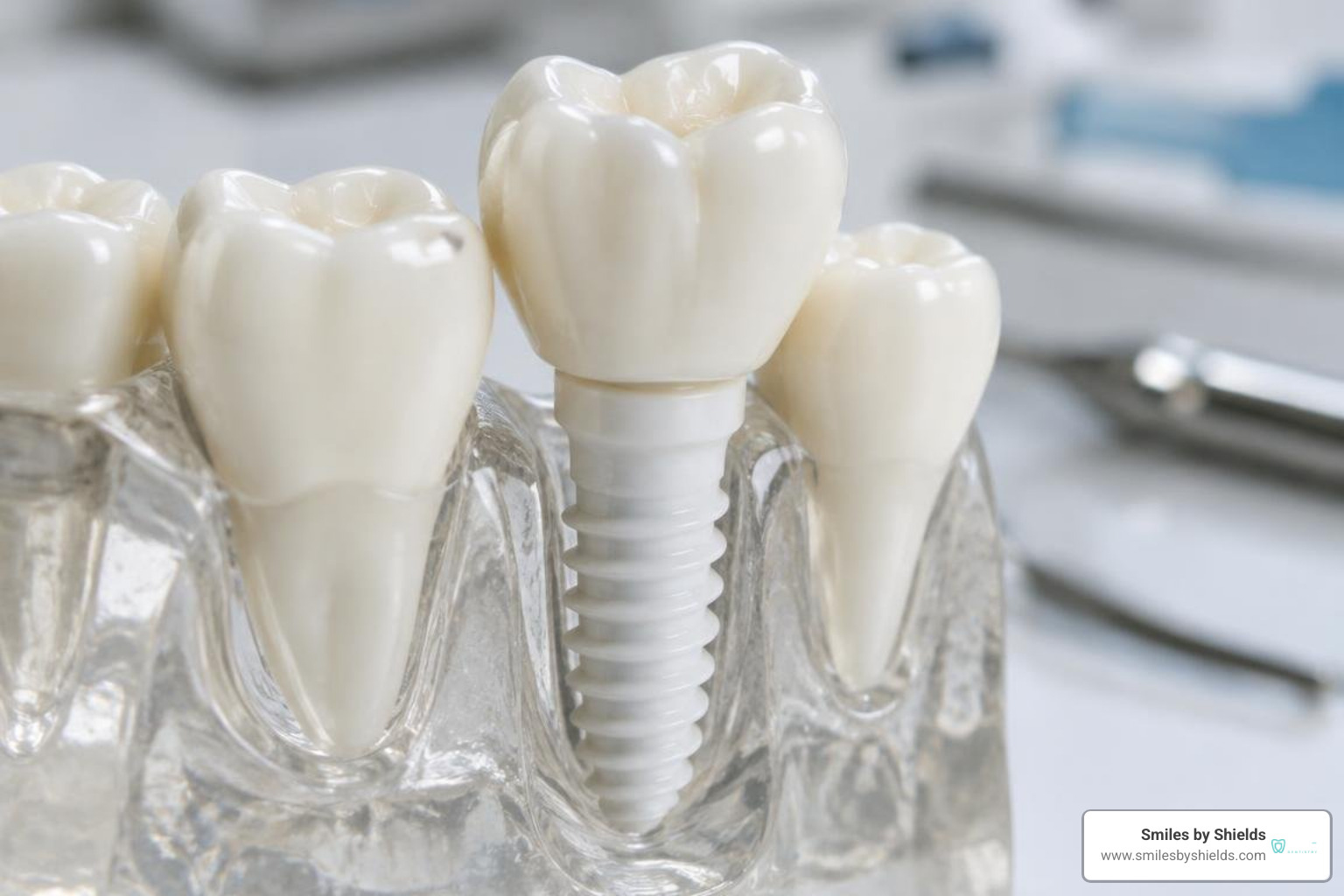
Is a Metal-Free Dental Implant Right for You?
A metal free dental implant is usually made from zirconia, a tooth-colored ceramic that can support a replacement tooth without a metal implant post. It may appeal to you if you want a natural look or prefer to avoid metal in your dental care. Zirconia implants can work well, but they are not the best fit for every jawbone or restoration. A dental exam and imaging can help you weigh them against titanium implants.
I’m Dr. Tiffany K. Shields, a Jacksonville dentist with a background in microbiology and an integrative approach to biocompatible dental care. That experience shapes how I help patients explore whether a metal free dental implant fits their health goals and oral needs.
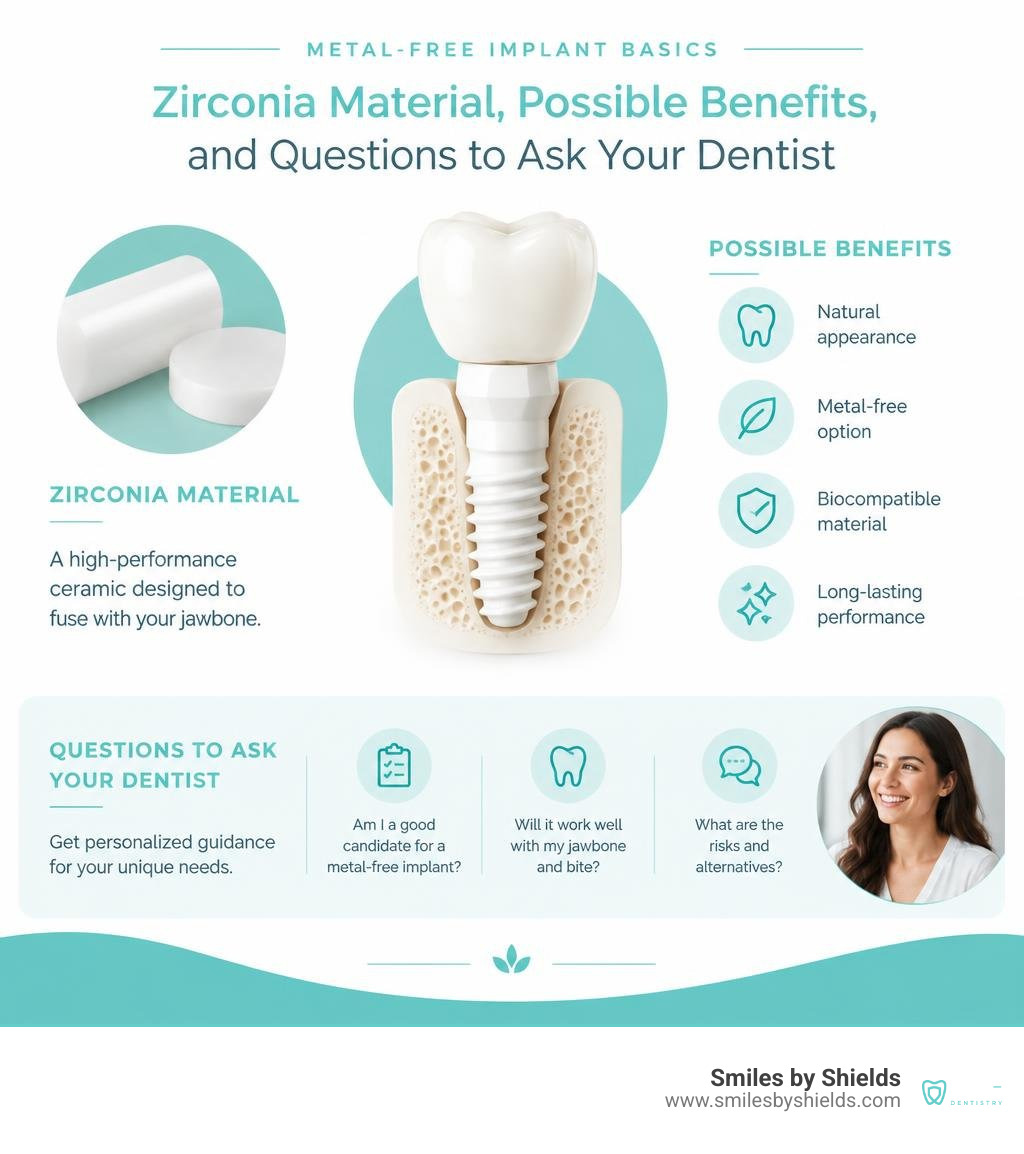
What Is a Metal Free Dental Implant and How Does It Work?
When people think about tooth replacement, they often picture a titanium screw embedded into the jawbone. While titanium has served as an industry standard for decades, modern holistic dentistry offers an innovative, natural alternative: ceramic tooth replacement. A metal free dental implant is an artificial root crafted entirely from high-performance dental ceramics designed to fuse securely with your natural jawbone.
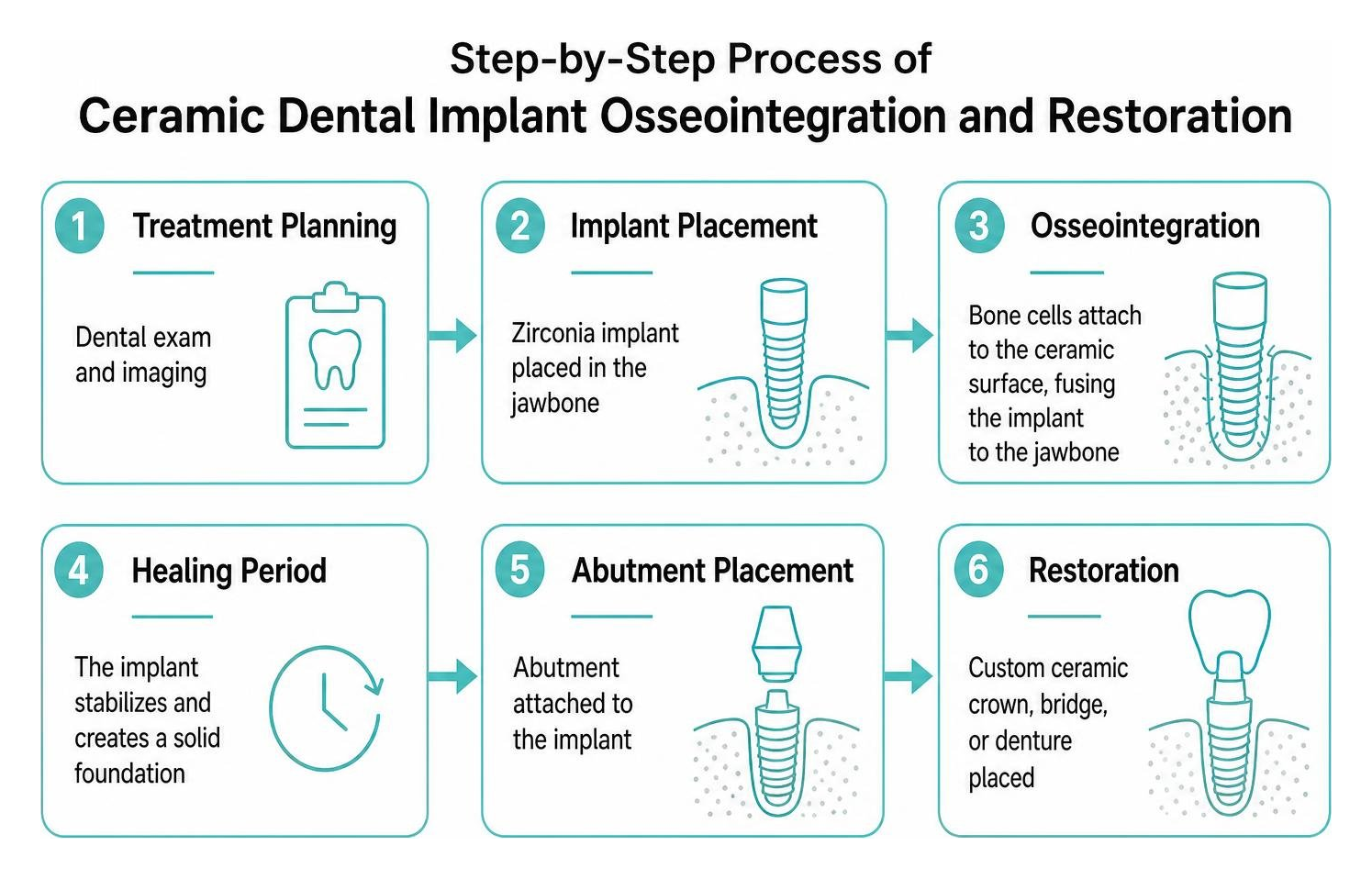
At its core, the implant functions identically to a natural tooth root. Once placed in the bone, it undergoes a biological process called osseointegration, where your bone cells actively attach to the ceramic surface. This creates a rock-solid foundation for a custom crown, bridge, or denture without introducing foreign metal alloys into your oral ecosystem.
Materials and Science Behind the Metal Free Dental Implant
The primary material powering the modern metal free dental implant is zirconium dioxide, commonly known as zirconia. Specifically, dental systems utilize Yttria-Stabilized Tetragonal Zirconia Polycrystal (Y-TZP) or Alumina-Toughened Zirconia (ATZ).
Chemically speaking, zirconium is an element on the periodic table, but when combined with oxygen, it undergoes a chemical transformation into a ceramic crystal. This crystal lattice gives zirconia its famous nickname: “ceramic steel.” It possesses extraordinary strength and fracture toughness while remaining 100% non-metallic and bioinert.
Because zirconia is bioinert, it does not conduct electrical currents, corrode, or leach metal ions into surrounding tissues or your bloodstream over time. This makes it a preferred choice for patients seeking a non-toxic lifestyle. In our practice, deconstructing dental implants means looking closely at how each component interacts with your immune system and overall biology.
Structural Designs: One-Piece vs. Two-Piece Systems
Ceramic implants generally come in two distinct structural configurations:
One-Piece Implants: The implant body (the part in the bone) and the abutment (the part that holds the crown) are manufactured as a single solid unit.
- Advantages: Because there is no junction or seam below the gum line, one-piece systems completely eliminate micro-gaps where anaerobic bacteria can hide and colonize.
- Considerations: Placement requires exact surgical precision since the angle cannot be adjusted after the ceramic integrates with the bone.
Two-Piece Implants: These modern systems feature a separate implant post and abutment, connected by advanced internal connection mechanisms such as high-strength carbon-fiber-reinforced polymer or specialized ceramic screws.
- Advantages: Two-piece designs offer exceptional prosthetic versatility, allowing clinicians to place the implant flush with or below the bone and customize the abutment angle later. Reversible screw connections make future crown adjustments straightforward.
- Considerations: Requires high-precision engineering to ensure seamless micro-gap closure at the tissue level.
Safety, Longevity, and Aesthetics of Ceramic Implants
Opting for a metal-free approach provides significant benefits that extend beyond systemic health into everyday aesthetics and long-term gum wellness.
Aesthetic and Gum Tissue Benefits of a Metal-Free Dental Implant
One of the most noticeable benefits of a zirconia implant is its brilliant, natural white color. Traditional titanium posts are dark gray. Over time, as gums naturally thin or recede with age, titanium implants can create an unsightly gray shadow or dark metallic ring along the gum line. This is especially problematic for patients with thin gum biotypes or those restoring teeth in the aesthetic zone (the front smile line).
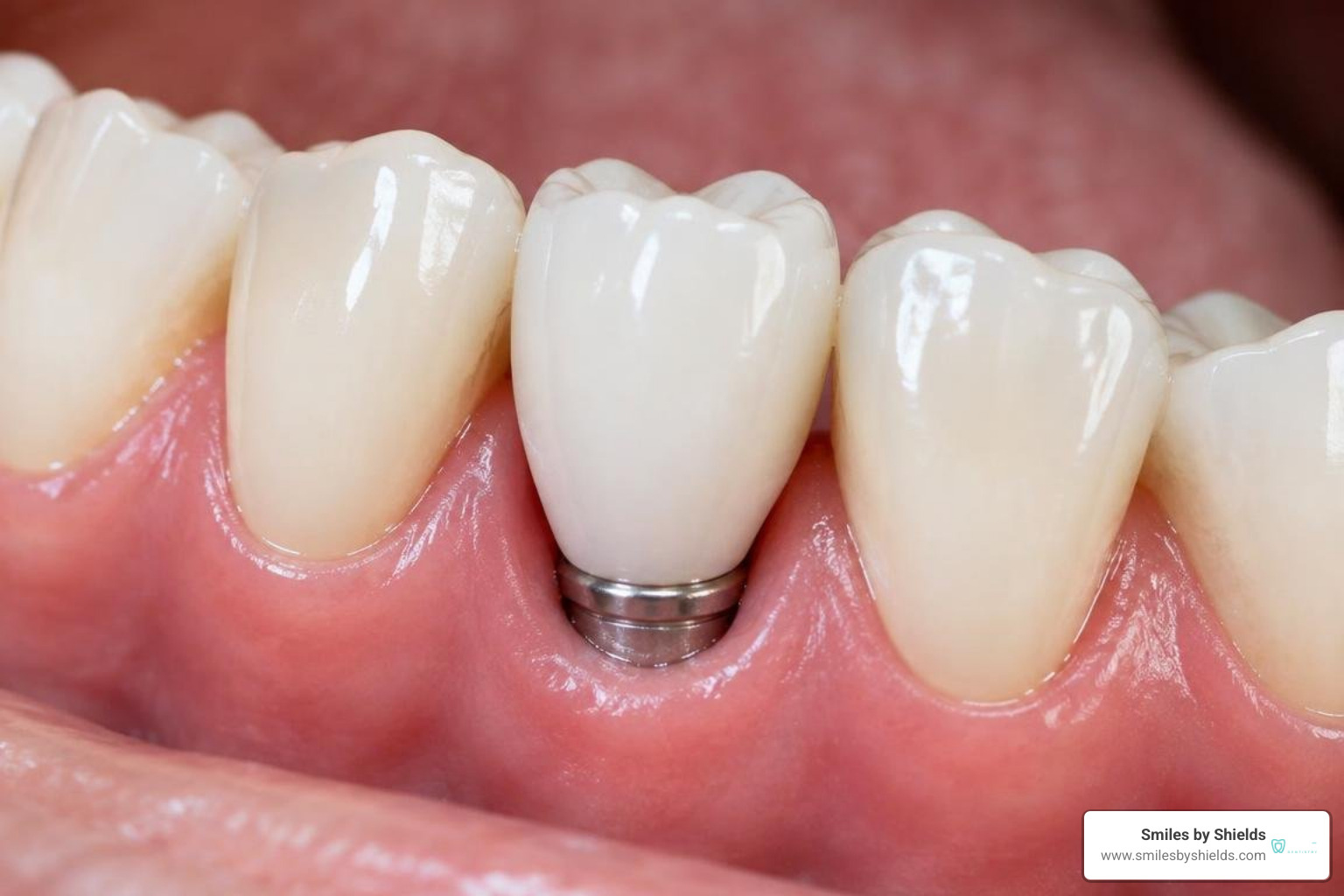
Beyond looks, soft gum tissues thrive around ceramic surfaces. Research shows that zirconia implants facilitate a functional biological attachment with the surrounding mucosa. The epithelial cells form a tight, protective seal around the ceramic collar, shielding the underlying jawbone from oral bacteria.
Furthermore, zirconia exhibits significantly lower bacterial plaque adhesion and biofilm formation compared to titanium. This biological seal and resistance to microbial colonization dramatically reduces the risk of peri-implantitis—the inflammatory condition that causes bone loss and implant failure around traditional metal posts.
Strength, Biocompatibility, and Clinical Success Rates
A common question is whether a ceramic implant can withstand the intense biting forces of the human jaw. Thanks to advances like hot isostatic pressing and micro-structured surface etching (such as sandblasting and acid etching), zirconia implants offer exceptional compressive strength and fracture resistance.
Long-term clinical investigations demonstrate that modern ceramic implants achieve a survival rate of approximately 98%—matching the clinical performance of titanium implants. In fact, comprehensive multi-year clinical studies evaluating modern ceramic implant designs have demonstrated a 98.2% survival rate over an observation period of up to 7 years.
| Feature | Zirconia (Ceramic) Implants | Traditional Titanium Implants |
|---|---|---|
| Material Composition | 100% Metal-Free Ceramic (Y-TZP / ATZ) | Titanium Alloy (often contains trace metals) |
| Aesthetics | Naturally white and translucent | Dark metallic gray (can show through thin gums) |
| Biocompatibility | Exceptional; bioinert and hypoallergenic | High; slight risk of corrosion or ion release |
| Plaque Affinity | Very low bacterial adhesion and biofilm buildup | Moderate bacterial adhesion |
| Corrosion Risk | Zero (does not oxidize or corrode) | Potential micro-corrosion over long periods |
| Long-Term Success Rate | ~98% | ~95% to 98% |
Who Is an Ideal Candidate for Ceramic Tooth Replacement?
Ceramic implants provide an exceptional solution for many individuals, particularly those who prioritize holistic health principles or have specific medical sensitivities.
- Patients with Metal Allergies and Sensitivities: If you have experienced reactions to jewelry, watches, or dental hardware, your body may be sensitive to base or trace metals (such as nickel, aluminum, or vanadium) often found in titanium alloys.
- Individuals with Autoimmune Conditions: Chronic systemic inflammation can be triggered by low-grade immune responses to foreign materials. Bioinert ceramic eliminates foreign metal ion exposure.
- Patients with Thin Gums or High Aesthetic Expectations: If you want a seamless front tooth replacement without the risk of a visible gray line, ceramic is the natural choice.
- Proactive Wellness Advocates: Those committed to a completely non-toxic, biologically compatible oral environment.
To ensure your body harmonizes with any material we place, we often recommend dental biocompatibility testing for safe materials. This simple assessment provides a personalized laboratory report identifying which dental compounds best support your unique chemistry.
If you are currently managing older restorations or suspect heavy metal sensitivity, our practice also provides protocols for safe metal removal to support total-body wellness.
The Metal-Free Implant Procedure: From Consultation to Recovery
Undergoing ceramic implant placement is a predictable, comfortable experience when guided by advanced technology and gentle surgical protocols.

Surgical Protocol and Bone Integration Timeline
Every restoration begins with thorough diagnostic planning. We utilize low-dose 3D Cone Beam Computed Tomography (CBCT) digital imaging to evaluate your jawbone volume, nerve pathways, and sinus positions. This allows us to digitally plan the precise depth and angle of your implant before treatment begins.
- Consultation & Assessment: We review your medical history, perform digital imaging, and evaluate bone density. If significant bone loss has occurred, preparatory bone grafting may be recommended to establish a stable foundation.
- Implant Placement: Under local anesthesia, a gentle osteotomy is prepared in the jawbone, and the ceramic implant is carefully positioned. In select cases with ideal bone health, an implant can be placed immediately following a gentle tooth extraction.
- Healing & Osseointegration: Over the next 3 to 6 months, natural bone cells integrate securely with the ceramic surface. Because zirconia is gentle on soft tissues, patients routinely experience less post-operative swelling and discomfort compared to traditional approaches. Over-the-counter pain relievers are typically sufficient for home recovery.
- Final Restoration: Once integration is complete, a custom, shade-matched porcelain crown is securely attached, restoring your ability to chew, speak, and smile with total confidence.
To learn more about what to expect on surgery day, explore our guide to dental implant surgery expectations.
Cost Considerations and Longevity Expectations
Choosing ceramic tooth replacement is an investment in your lifelong health, comfort, and appearance. Because zirconia implants involve advanced manufacturing processes, precision diamond tooling, and specialized surgical handling, upfront costs can run slightly higher than standard titanium alternatives.
Dental insurance plans vary widely; some policies contribute toward the surgical extraction and final crown, while coverage for the ceramic fixture itself depends on your specific carrier. When properly maintained with regular hygiene visits and daily home care, a ceramic implant is designed to provide lifetime bone stability, demonstrating how dental implants can restore your smile after tooth loss permanently.
Frequently Asked Questions About Metal-Free Dental Implants
Are metal-free ceramic implants FDA-approved and clinically proven?
Yes. Leading ceramic implant systems are cleared by the FDA as Class II medical devices. They undergo stringent dynamic fatigue testing according to ISO 14801 standards and have been used successfully across Europe and North America for well over a decade with extensive clinical documentation.
How long do metal-free dental implants last?
The zirconia implant fixture is engineered to integrate permanently into your jawbone for a lifetime. The custom ceramic crown resting on top of the implant experiences normal chewing friction and typically lasts 10 to 15 years or longer before requiring routine maintenance or replacement. You can explore our comprehensive overview of dental implants to learn more about long-term care.
Is the recovery process more painful with zirconia implants?
Patients routinely report very mild post-operative recovery following ceramic implant placement. Because zirconia is highly compatible with human physiology, surrounding gum tissue exhibits minimal inflammation. Most individuals return to work the following day and manage any minor tenderness with simple over-the-counter remedies like ibuprofen or acetaminophen.
Conclusion
Your smile is an integral gateway to your entire body’s health. Choosing a metal free dental implant allows you to restore missing teeth with a solution that honors your body’s biology, protects your gum tissue, and preserves natural aesthetics for decades to come.
At Smiles by Shields in Jacksonville, Florida, our integrative practice is dedicated to delivering whole-body-health-focused, non-toxic dental care. If you are ready to explore ceramic implants, we invite you to learn more about our philosophy on holistic dental care and whole-body wellness and schedule your personalized consultation with our team today.